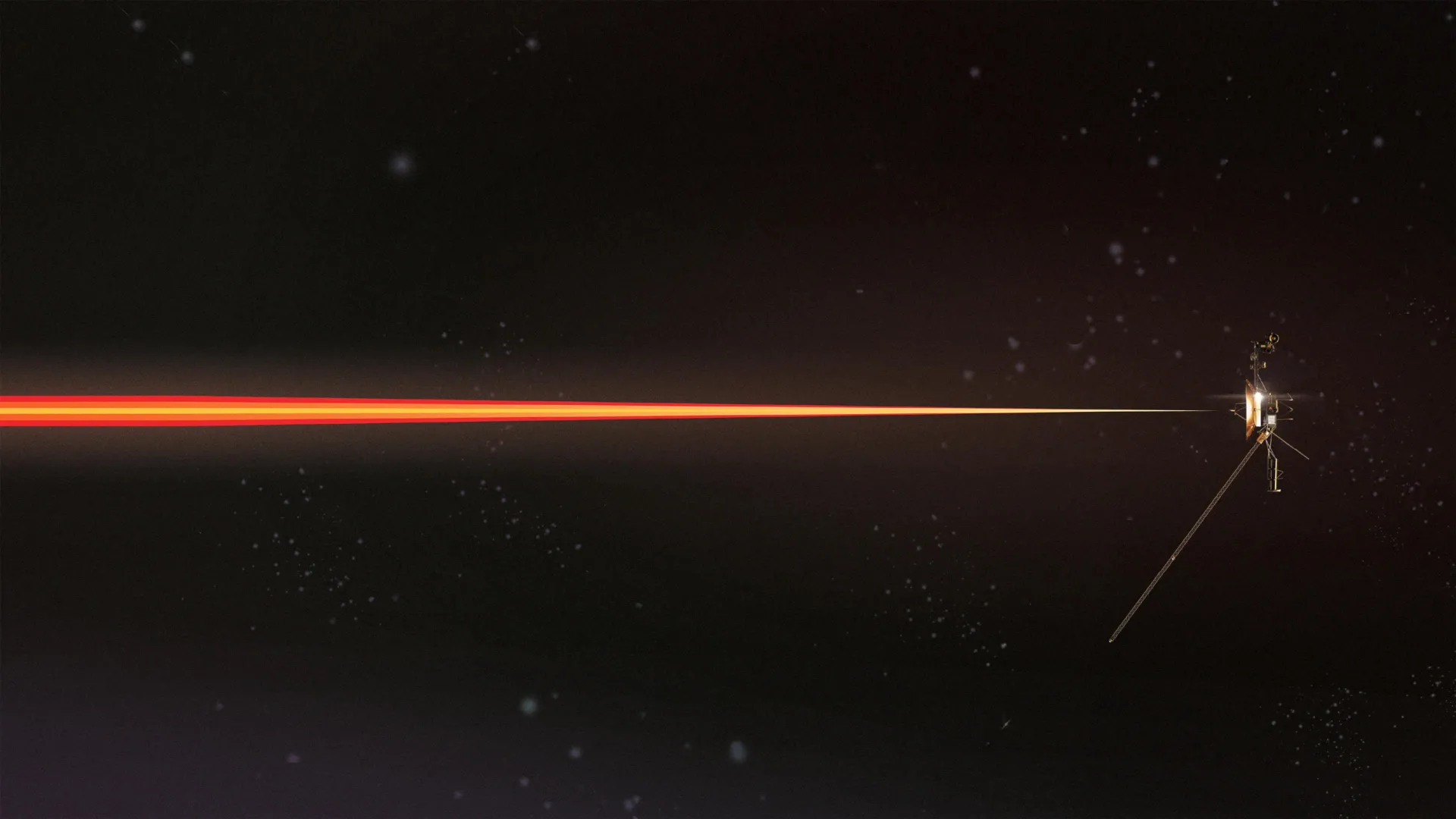
BepiColombo arrives at the solar system’s innermost planet
The European-Japanese BepiColombo mission has entered orbit around Mercury after an eight-year journey through the inner solar system, marking the first new orbital visit to the planet in more than a decade.
The paired spacecraft were slowed by a series of thruster firings until Mercury’s weak gravity could capture them. Confirmation did not come immediately: flight controllers in Germany, about 94 million miles (152 million kilometres) away, had to wait several hours as teams assessed the data returned by the spacecraft.
The mission is a joint undertaking involving the European Space Agency and Japan. Its two linked robotic explorers will separate next month, allowing them to study Mercury from different altitudes.
A long route to a difficult destination
BepiColombo launched in 2018 but did not travel directly to Mercury. Reaching the innermost planet is challenging because a spacecraft must shed a large amount of orbital energy as it falls deeper into the Sun’s gravitational influence.

To manage that challenge, the mission followed an extended, gravity-assisted path. It flew past Earth once, Venus twice and Mercury six times before achieving orbit. Those manoeuvres added more than 6 billion miles, or 10 billion kilometres, to its travelled distance.
The joined spacecraft discarded their mother ship in September for the final leg of the trip. Their arrival now starts a new operational phase after years in transit and repeated flybys.

Two spacecraft, complementary views
The mission’s European and Japanese spacecraft are designed to work as a coordinated pair. After separation, they are expected to map and investigate Mercury from distinct orbital altitudes, giving scientists complementary observations of the planet and its environment.
Mercury is the closest planet to the Sun and is only slightly larger than Earth’s Moon. Its proximity to the Sun, intense heat and weak gravitational pull make both travel to the planet and sustained operations there unusually demanding.

ESA announced the orbital arrival on social media. At the time of the initial report, teams were continuing to review data from the manoeuvre, and further operational details were not immediately available.
Returning to a rarely explored world
BepiColombo is only the third spacecraft mission to visit Mercury. NASA’s Mariner 10 made three flybys in the mid-1970s. NASA’s Messenger spacecraft later entered orbit in 2011 and remained in operation until it ran out of fuel and struck the planet in 2015.
That history makes BepiColombo’s arrival significant: it restores dedicated orbital exploration at a world that has received far less direct attention than many other planets. The mission is named for Italian mathematician Giuseppe “Bepi” Colombo, who was part of the Mariner 10 team.
With its two spacecraft preparing to operate independently, BepiColombo is positioned to expand the observational record of Mercury after a long gap in orbital missions. The immediate priority will be completing the separation process and beginning the planned mapping and scientific studies from orbit.

Why the arrival matters
- The mission has reached orbit after an eight-year, multi-flyby cruise.
- Its two spacecraft are scheduled to separate next month for observations at different altitudes.
- BepiColombo is the first mission to enter Mercury orbit since NASA’s Messenger mission ended in 2015.
- The arrival opens a new period of close study of one of the solar system’s least visited planets.
This article is based on reporting by Phys.org. Read the original article.
Originally published on phys.org