A Burial That Puzzled Scientists for Decades
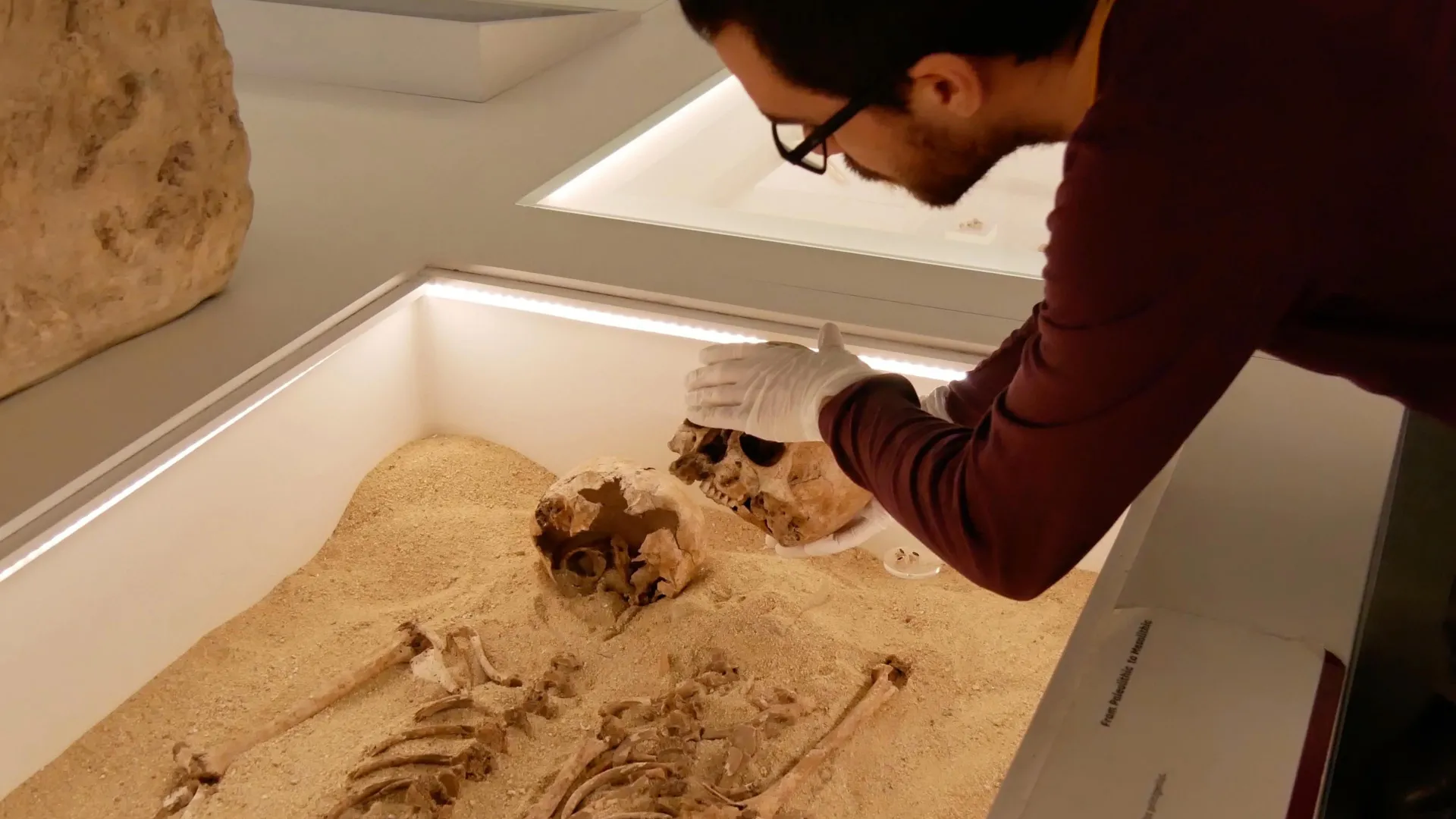
In 1963, archaeologists exploring Grotta del Romito, a cave in southern Italy, uncovered a poignant scene from the deep past: two individuals buried together in what appeared to be an embrace. The shorter of the two showed signs of severe limb shortening, standing only about 110 centimeters — roughly three feet, seven inches — tall. For more than sixty years, the nature of their relationship and the cause of their unusual stature remained a mystery. Now, an international team of geneticists has finally provided answers using ancient DNA analysis, and the findings have been published in the New England Journal of Medicine.
Researchers from the University of Vienna and the Liège University Hospital Centre extracted and sequenced DNA from both individuals, designated Romito 1 and Romito 2. The genetic analysis confirmed what had long been suspected but never proven: the two were most likely a mother and daughter who shared a rare genetic condition affecting bone development.
The Earliest Genetic Diagnosis in History
The analysis revealed that both individuals carried mutations in the NPR2 gene, which plays a critical role in regulating bone growth. Romito 2, the daughter, possessed two mutated copies of the gene — one inherited from each parent. This double mutation resulted in a condition known as acromesomelic dysplasia, Maroteaux type, a rare skeletal disorder that causes severe shortening of the limbs, particularly the forearms and lower legs.
Romito 1, the mother, carried a single mutated copy of NPR2. This explains her own shorter-than-average stature of approximately 145 centimeters — about four feet, nine inches — which was noticeably below the norm for Upper Paleolithic populations but far less severe than her daughter's condition. The single-copy mutation produced a milder phenotype, consistent with the known genetics of the disorder.
This represents the earliest confirmed genetic diagnosis of a rare growth disorder in a prehistoric human, pushing back the documented history of this condition by thousands of years. The finding demonstrates that rare genetic diseases were already present in human populations during the late Pleistocene, long before the advent of agriculture or settled communities.
What Acromesomelic Dysplasia Reveals About Ancient Genetics
Acromesomelic dysplasia, Maroteaux type is extraordinarily rare in modern populations, affecting fewer than one in a million individuals. The condition is autosomal recessive, meaning that a person must inherit two defective copies of the NPR2 gene — one from each parent — to develop the full disorder. Carriers of a single copy, like Romito 1, may exhibit mild height reduction but typically do not show the severe skeletal abnormalities seen in those with both copies.
The fact that Romito 2 inherited two copies of the mutation suggests that her father also carried at least one defective copy of NPR2. In small, isolated Ice Age populations where mate choice was limited, the probability of two carriers having children together would have been significantly higher than in larger, more genetically diverse populations. This aligns with what geneticists know about the prevalence of recessive disorders in small founder populations.
The discovery also provides valuable data for understanding the evolutionary history of the NPR2 gene and the mutations that cause skeletal dysplasias. By identifying the specific variant present 12,000 years ago, researchers can trace the mutation's lineage and determine whether it persists in modern populations or represents an extinct genetic lineage.
Evidence of Prehistoric Community Care
Perhaps the most moving aspect of the discovery is what it implies about social behavior in Ice Age communities. Romito 2's severe physical condition would have presented substantial challenges in a hunter-gatherer society that depended on mobility, physical endurance, and the ability to forage and process food. Her survival into young adulthood — she was estimated to be in her late teens or early twenties at the time of death — indicates that she received sustained care and support from her community.
This is not the first evidence of caregiving in prehistoric societies, but it is among the most genetically well-documented. The deliberate double burial, with the two individuals positioned in an apparent embrace, further suggests a community that recognized and honored familial bonds, even across generations affected by disability.
Bioarchaeologists have increasingly argued that evidence of care for individuals with disabilities or chronic conditions in prehistoric contexts challenges simplistic narratives about survival of the fittest in ancient human populations. The Romito burial adds powerful genetic evidence to this argument, showing that compassion and mutual support were features of human social life long before the emergence of civilization.
Advanced Techniques Unlock Ancient Secrets
The success of this study reflects the remarkable advances in ancient DNA technology over the past decade. Extracting usable genetic material from remains that are 12,000 years old and have been stored in a Mediterranean cave environment — not the cold, dry conditions that best preserve DNA — is a significant technical achievement. The researchers employed cutting-edge extraction and sequencing protocols developed specifically for degraded ancient samples.
The ability to identify specific disease-causing mutations in ancient genomes opens new frontiers in paleopathology, the study of ancient diseases. While previous studies have identified infectious diseases like tuberculosis and plague in ancient remains, diagnosing a rare genetic disorder from the Paleolithic era represents a new level of precision.
A Window Into Our Shared Past
The Grotta del Romito discovery reminds us that the full spectrum of human genetic variation — including rare conditions that cause suffering and require community support — has been part of the human story for far longer than recorded history. The mother and daughter buried together 12,000 years ago were cared for, mourned, and honored by a community that understood bonds of kinship and responsibility. In unraveling their genetic mystery, modern science has not only made a landmark diagnostic achievement but also illuminated the depth of human compassion in the ancient world.
This article is based on reporting by Science Daily. Read the original article.
Originally published on sciencedaily.com