A Pivotal Shift in Strategy
Stellantis, the world's fourth-largest automaker, is exploring deals with Chinese automakers Xiaomi and Xpeng through which they would invest in its struggling European operations. The discussions, which include the possibility of Chinese companies acquiring stakes in brands like Maserati, represent a dramatic strategic realignment for a company formed just five years ago through the merger of Fiat Chrysler Automobiles and PSA Group.
The talks underscore the diverging trajectories of Stellantis' businesses on opposite sides of the Atlantic. In the Americas, the company is pouring $13 billion into refreshing its Jeep, Ram, Chrysler, and Dodge lineups. In Europe, its mass-market brands are saddled with overcapacity, intense competition, and the enormous cost of the electric vehicle transition.
What the Chinese Bring
For Stellantis, deeper ties with Chinese automakers would provide access to advanced technology for electric vehicles and software, two areas where Chinese companies have established clear leads over legacy Western automakers. Chinese manufacturers have driven EV costs down through massive domestic supply chains and aggressive technology development, achieving capabilities that companies like Stellantis have struggled to match internally.
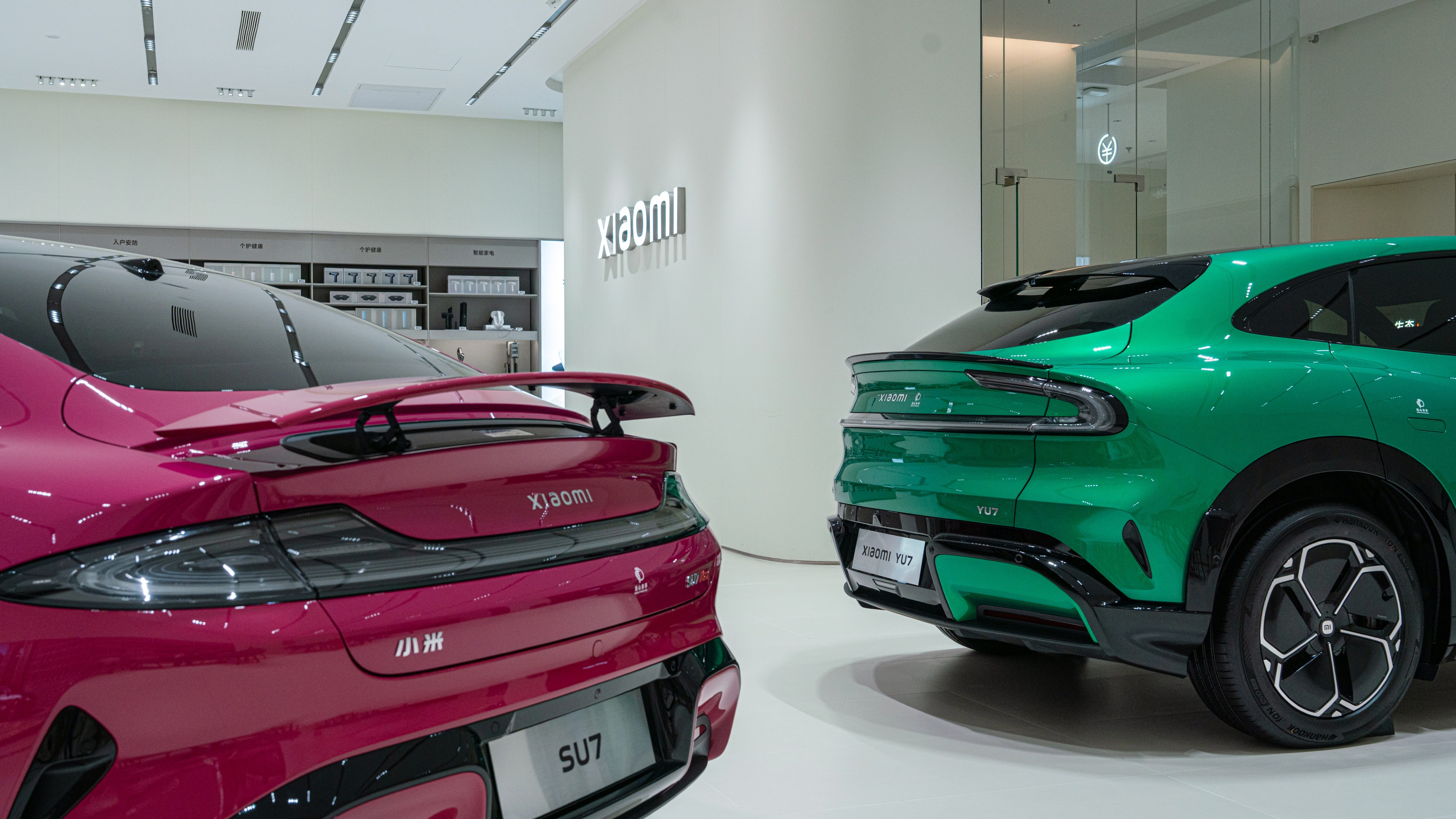
Xiaomi, better known for smartphones, entered the auto market in 2024 with the SU7 sedan and has rapidly established itself as a serious competitor through its integrated software-hardware approach. Xpeng has been a leader in autonomous driving technology among Chinese automakers, with driver-assistance capabilities that rival those of Tesla in many scenarios.
For the Chinese companies, investment in Stellantis' European operations would provide something equally valuable: better access to the European market. Despite European Union tariffs on Chinese-made EVs, Chinese automakers are determined to establish a presence in Europe. Access to Stellantis' existing factory capacity and distribution networks would provide a faster and less politically fraught path to European consumers than building new facilities from scratch.
The European Challenge
Stellantis' European business centers on mass-market brands including Fiat, Opel, Peugeot, and Citroen. These brands face a crowd of competitors in an increasingly difficult market. Traditional rivals like Volkswagen Group and Renault Group are fighting for the same customers, while BYD and other Chinese manufacturers are entering the European market with competitively priced EVs that undercut local offerings.
The cost of transitioning to electric vehicles has hit Stellantis' European business particularly hard. The company recently announced record charges and write-downs of 22.2 billion euros, many related to its decision to walk back its EV push. The strategy reversal, which included cancellation of battery ventures and future models, wiped out a quarter of the manufacturer's value in a single day.
Stellantis management sees better future returns in the Americas and is reluctant to make significant additional investments in Europe. This creates the opening for Chinese partners who could provide both capital and technology to revitalize the European operations.
Maserati as a Bargaining Chip
The possible inclusion of Maserati in the discussions is particularly notable. The Italian luxury brand has struggled for years, with sales volumes far below what would justify the investment required to compete with established luxury rivals like Porsche, BMW, and Mercedes-Benz. For a Chinese investor, Maserati would offer an established luxury brand name with strong heritage value, something that Chinese automakers have found difficult to build organically.
Xiaomi in particular has positioned itself as a technology brand with premium aspirations, and a connection to Maserati's luxury heritage could accelerate its positioning in the automotive market. However, any Chinese ownership of an iconic Italian brand would face intense public and political scrutiny in Italy, where automotive heritage is deeply intertwined with national identity.
The Separation Question
The discussions may eventually lead to a further separation between Stellantis' US and European businesses, according to people familiar with the matter. While the company has categorically denied considering a full breakup, the strategic logic of the two businesses is increasingly divergent.
In the Americas, Stellantis has strong brands with pricing power and a product pipeline focused on trucks and SUVs that generate high margins. In Europe, its brands are primarily volume-oriented, competing in the most price-sensitive segments against an increasingly capable field of Chinese competitors.
A formal separation or significant Chinese investment in the European operations would represent an acknowledgment that the 2021 merger's promise of global scale benefits has not materialized as expected. Instead, the two regional businesses may be better served by different ownership structures and strategic partners.
Broader Industry Implications
The potential Stellantis-Chinese automaker deals reflect a broader shift in the global automotive power balance. Chinese companies, once dismissed as copycats producing low-quality vehicles for their domestic market, are now being sought as technology partners and investors by some of the world's most established automakers.
The development also highlights the challenge facing European automakers caught between American market strength and Chinese technological capability. Without the resources to compete on both fronts simultaneously, companies like Stellantis may increasingly be forced to choose, or to find partners who can fill the gaps. The outcome of these discussions could establish a template for how the Western and Chinese automotive industries interact in the years ahead.
This article is based on reporting by Automotive News. Read the original article.
Originally published on autonews.com