Nvidia Becomes Uber's Full-Stack Autonomous Driving Partner
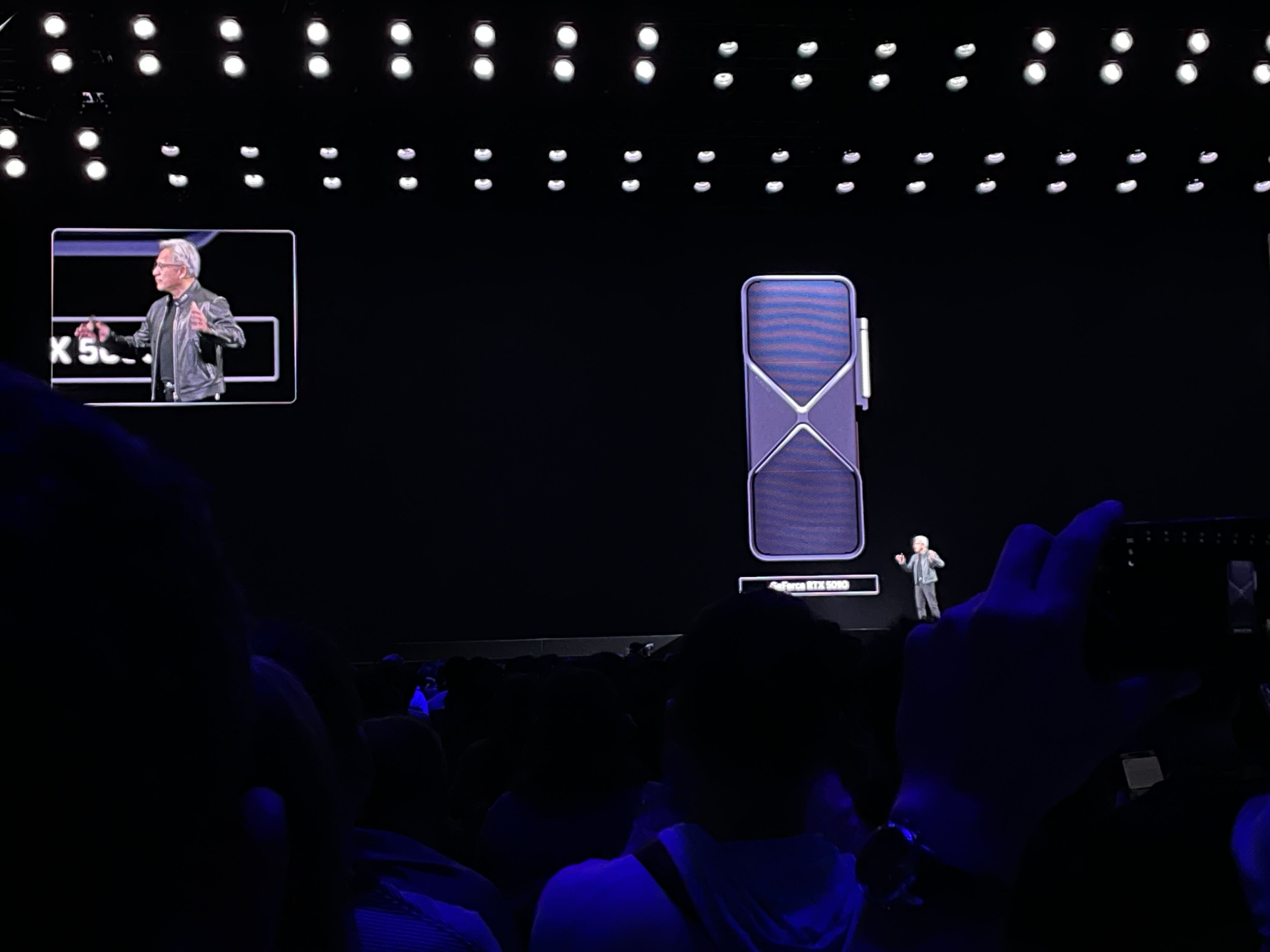
Nvidia and Uber have announced an expanded partnership that will see Nvidia's complete autonomous vehicle software platform power Uber robotaxis at commercial scale starting in the first half of 2027. The companies plan to target 28 markets across four continents by the end of 2028, beginning with Los Angeles and San Francisco. The announcement was made by Nvidia CEO Jensen Huang during his keynote at GTC 2026, Nvidia's annual artificial intelligence conference in San Jose.
The scope of the agreement marks a significant evolution from the companies' existing collaboration. Uber had previously agreed at CES this year to feed real-world driving data into Nvidia's AI training pipeline. That arrangement has now expanded into something far more comprehensive: Nvidia will build the full autonomous vehicle stack for Uber at scale — covering perception, prediction, planning, and control — while also handling the training infrastructure and simulation validation that underpin any commercial AV deployment.
What Nvidia's AV Stack Actually Does
Autonomous vehicle development requires solving several interconnected engineering problems simultaneously. The Nvidia platform addresses each layer of the stack. The perception system processes data from cameras, lidar, and radar to construct a real-time 3D model of the vehicle's surroundings. The prediction module anticipates the movements of pedestrians, cyclists, and other vehicles. The planning system charts a path through complex traffic scenarios, and the control layer translates that plan into steering, acceleration, and braking inputs.
Behind the deployed system sits a vast training and simulation infrastructure. Nvidia's DRIVE platform enables AV companies to train neural networks on synthetic data generated in simulation, allowing developers to expose their systems to rare or dangerous scenarios that would be impractical to collect in the real world. Once models perform satisfactorily in simulation, they can be validated against real-world data and progressively deployed.
Ali Kani, Nvidia's vice president of automotive, described the arrangement: Uber is asking Nvidia to be the software partner in 28 cities, starting with Los Angeles and San Francisco. The phrasing reflects Uber's evolving strategy — rather than developing autonomous technology in-house after divesting its AV unit to Aurora in 2020, the company has positioned itself as the distribution network for whoever builds the best self-driving technology.
Uber's Multi-Partner Robotaxi Marketplace
The Nvidia partnership fits within a broader Uber strategy of becoming a marketplace for autonomous ride-hailing. Uber has existing partnerships with Waymo, Zoox, Nuro, May Mobility, and Wayve. The Nvidia partnership is distinct because it involves Nvidia building the complete autonomous stack rather than Uber simply distributing rides generated by a third-party AV operator.
This structure could give Uber more flexibility in scaling robotaxi service globally. Rather than depending on individual AV companies to expand city by city, Uber could deploy the Nvidia-powered platform wherever regulatory approvals allow. The 28-market target by end of 2028 is ambitious — Waymo currently operates paid robotaxi service in roughly four US cities.
Competing With Waymo
The partnership explicitly positions Uber to compete more directly with Waymo, which has built its own full-stack AV system and operates standalone robotaxi service through Waymo One. Waymo has attracted significant capital and is valued at over $45 billion, reflecting the perceived long-term value of vertically integrated AV operations.
Public acceptance of robotaxis remains an open question, however. The National Highway Traffic Safety Administration is investigating after a Waymo vehicle struck and injured a child in Santa Monica in January. Such incidents shape public perception and regulatory timelines, potentially affecting the Uber-Nvidia rollout schedule.
Market Timing and the AI Chip Advantage
Nvidia's dominance in AI training chips gives the company a structural advantage in the AV space. Autonomous vehicle development is fundamentally a data and compute problem — the more miles a system trains on, the safer and more capable it becomes. Companies operating at Nvidia's scale in AI infrastructure can potentially apply that advantage to AV training, shortening development timelines relative to competitors.
The announcement comes as the AV industry emerges from a period of retrenchment, with several high-profile programs scaled back between 2022 and 2024. The Nvidia-Uber partnership signals renewed confidence that both the technology and regulatory environment are maturing toward commercial viability at scale.
This article is based on reporting by Automotive News. Read the original article.
Originally published on autonews.com