The Rise of Repair Cafés
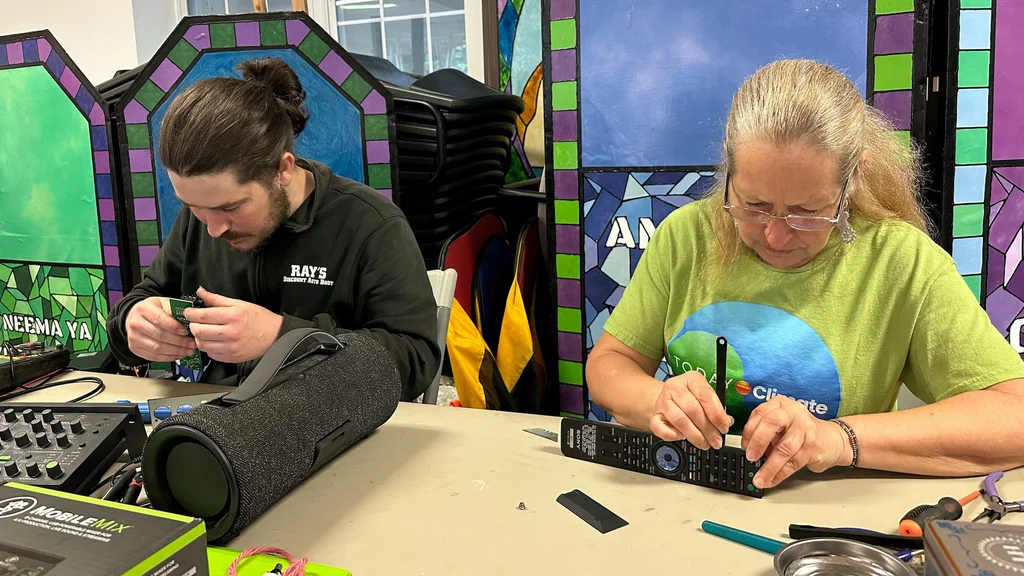
On a drizzly Saturday morning late last month, the basement of the New Paltz United Methodist Church was filled with old lamps, blunt knives, malfunctioning sound mixers, and balky zippers. About a dozen volunteers welcomed the broken goods and their owners to a worldwide movement that’s evangelizing new relationships between people and their things.
Repair Cafés—free events where volunteers with technical know-how help neighbors fix myriad household items—are part of a new brand of anti-consumerism that’s trying to offer an alternative to the mass-produced disposable goods that have dominated the global economy for the last half-century. Helping fuel that move to repairing, not buying, are U.S. consumer prices, which climbed sharply again last month as the war with Iran delivered higher gasoline prices and more pain for Americans.
From a Single Event to a Global Movement
After starting in the Netherlands with a single event in 2009, Repair Café has grown into a global nonprofit with more than 59,000 members, some 4,000 cafés, and close to 850,000 items fixed a year. The organization’s founder, Martine Postma, emphasizes the need for a fundamental shift in mindset and economy. “We need to change our mindset. We need to change the economy,” Postma said. “Even if Repair Cafés can’t solve the problem alone, then still they are a very clear sign that change is needed on a much higher level.”

Community and Sustainability in Action
Repair Cafés are both a way to fix things and to form community. In New Paltz, a Hudson Valley college town about two hours from New York City, 50 people brought about 85 items to the Repair Café: an antique fan that required rewiring, shirts, pants, jackets, stuffed animals. There were old family photos that needed restoring and jewelry awaiting work, like restringing beads and replacing clasps. Repair experts waited behind long cafeteria tables to teach alternatives, giving people chances to learn that flawed goods aren’t automatically junk.
The events foster a sense of shared purpose and skill-building. Volunteers not only repair items but also teach owners how to perform basic fixes themselves, empowering them to extend the life of their belongings. This hands-on education is a cornerstone of the movement, reducing waste and promoting self-reliance.
Economic Pressures Drive Participation
The recent surge in Repair Café attendance correlates with rising consumer prices. The war with Iran has driven up gasoline costs, squeezing household budgets and making repairs more attractive than replacements. For many, the choice to repair is no longer just an environmental statement but a financial necessity. The cost of new goods, from electronics to clothing, has become prohibitive for some, while repair services can be expensive or hard to find. Repair Cafés fill that gap by offering free, skilled labor and a welcoming environment.
A Challenge to Throwaway Culture
The Repair Café movement challenges the throwaway culture that has defined consumer society for decades. By keeping items in use, these events reduce the demand for new products and the resources needed to manufacture them. They also cut down on waste sent to landfills. According to the nonprofit, the nearly 850,000 items fixed annually represent a significant reduction in environmental impact. Each repair saves the energy and materials that would have gone into a replacement, as well as the emissions from production and transport.
Looking Ahead
As Repair Cafés continue to multiply, they are becoming a visible symbol of a broader shift toward sustainability and community resilience. Founder Martine Postma hopes the movement will inspire policy changes that support repairability, such as right-to-repair laws and incentives for durable design. For now, each Saturday event brings together neighbors, tools, and a shared belief that fixing is better than replacing. The New Paltz Repair Café, like thousands of others around the world, is proving that small actions can add up to a powerful alternative to consumerism.
This article is based on reporting by Fast Company. Read the original article.
Originally published on fastcompany.com