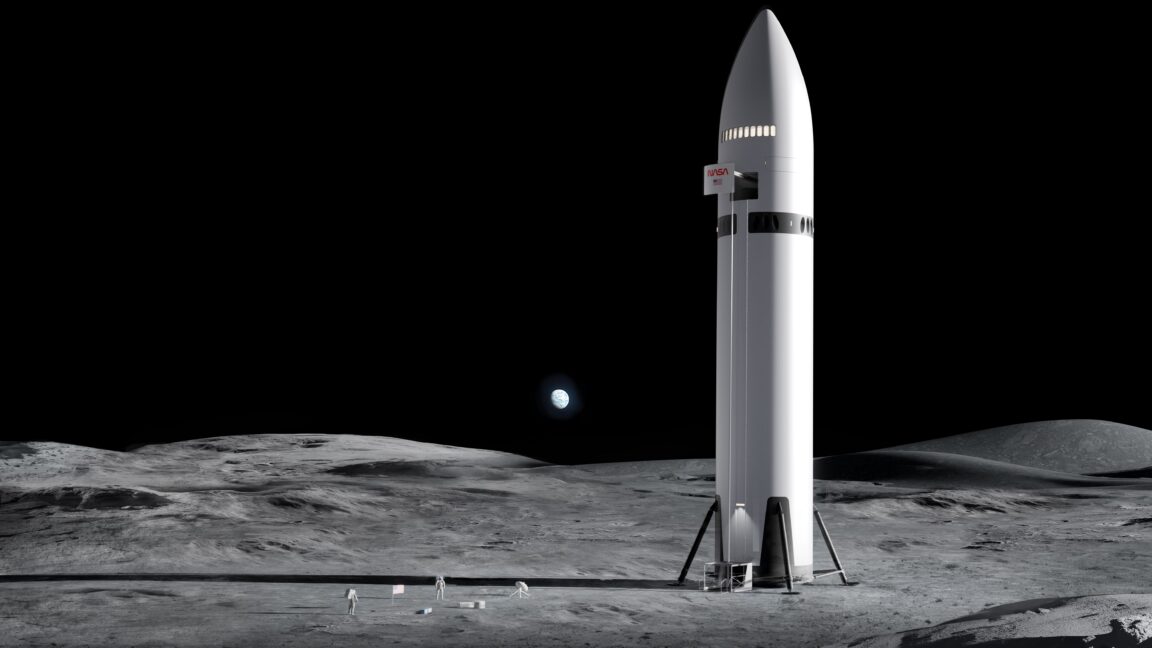
A Critical Design Dispute
NASA's inspector general has released a new report revealing a deepening disagreement between the space agency and SpaceX over the design of the Starship lunar lander. At the heart of the dispute is whether astronauts should have manual controls to pilot the lander during Moon landings, or whether the vehicle should rely entirely on autonomous systems, as SpaceX prefers.
The report states that NASA's tracking of SpaceX's manual control risk indicates a worsening trend, suggesting that the two organizations are moving further apart on this fundamental design question rather than converging toward a solution. The disagreement touches on core questions about human spaceflight philosophy, the role of astronaut agency in critical operations, and the practical trade-offs between automation and human control.
The Case for Manual Controls
NASA has a long institutional tradition of giving astronauts the ability to take direct control of their vehicles during critical phases of flight. This philosophy dates back to the Mercury program, when the original astronauts fought for manual control capabilities, and was dramatically validated during Apollo 11 when Neil Armstrong took manual control of the lunar module to avoid a boulder-strewn landing site.
The space agency argues that manual controls provide a critical safety backup:
- Astronauts can respond to unexpected situations that automated systems may not handle correctly
- Manual override provides redundancy in case of sensor or computer failures
- Human judgment may be superior to algorithms in novel or ambiguous scenarios
- The psychological confidence of knowing they can intervene helps astronaut performance
NASA's human spaceflight programs have consistently required manual control capabilities in crew vehicles, from the Space Shuttle to the Orion capsule. The agency sees this as a non-negotiable safety requirement for vehicles carrying astronauts to the Moon.

SpaceX's Automation Philosophy
SpaceX, by contrast, has built its engineering culture around the principle that autonomous systems can be more reliable than human pilots. The company's Crew Dragon spacecraft, which carries astronauts to the International Space Station, features manual controls but is designed to operate entirely autonomously under normal conditions. SpaceX's experience with thousands of rocket landings, including the precise touchdown of Falcon 9 first stages on drone ships, has reinforced its confidence in automated flight control.
For the Starship lunar lander, SpaceX argues that full automation is the safest and most reliable approach. The company contends that the complexity of manually piloting such a large vehicle in the low-gravity lunar environment, with reaction times measured in fractions of a second, makes human control more dangerous than helpful. Starship is significantly larger and more complex than any previous lunar lander, and the control dynamics are fundamentally different from the relatively small Apollo lunar module.
The Inspector General's Concerns
The inspector general's report examines NASA's management of both the SpaceX and Blue Origin Human Landing System contracts. The report flags the manual control disagreement as a significant risk to the program, noting that unresolved design disputes could delay missions or create safety concerns if compromises satisfy neither party's engineering judgment.
The report also highlights broader challenges with the Starship development program, including the complexity of orbital refueling, which requires multiple tanker flights to fill Starship's propellant tanks in orbit before it can depart for the Moon. Each additional technical challenge that remains unresolved increases the risk to NASA's Artemis program timeline.

Blue Origin as Alternative
The dispute adds significance to NASA's decision to award a second Human Landing System contract to Blue Origin. The Blue Origin lander, based on the company's Blue Moon design, provides NASA with an alternative path to the lunar surface if the SpaceX partnership encounters insurmountable obstacles. However, the Blue Origin lander is on a different development timeline and is not expected to be ready for the earliest Artemis landing missions.
Historical Precedents
The tension between automated systems and human control has been a recurring theme throughout spaceflight history. Soviet spacecraft were originally designed for fully automated flight, with cosmonauts given sealed envelopes containing manual override codes for use only in emergencies. American spacecraft, by contrast, were designed from the beginning to give astronauts significant piloting authority.
Modern spaceflight has generally moved toward greater automation, but always with human override capability preserved. The NASA-SpaceX disagreement represents a potential inflection point in this evolution, where the increasing capability and reliability of autonomous systems may finally challenge the assumption that human control should always be available as a backup.

What Happens Next
The dispute will need to be resolved before astronauts can safely fly the Starship lander to the Moon. NASA and SpaceX continue to work through the issue, but the inspector general's finding that the trend is worsening suggests that a technical or contractual intervention may be needed to break the impasse. The outcome will have implications not just for Artemis but for the broader future of human spaceflight, where the balance between human control and machine autonomy will be increasingly tested as missions become more complex and distant.
This article is based on reporting by Ars Technica. Read the original article.
Originally published on arstechnica.com


