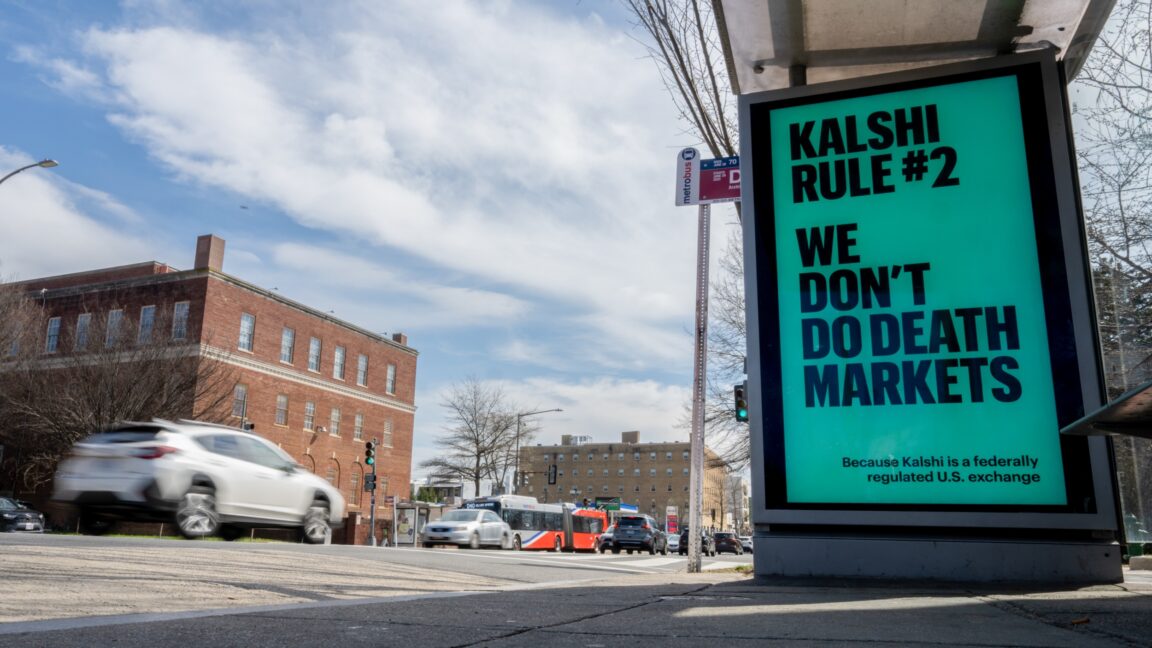
Minnesota criminalized prediction markets and immediately set up a federal clash
Minnesota has passed a law that would make it a felony to create, operate, or advertise a prediction market, and the federal government has responded with a lawsuit before the measure has even taken effect. The challenge, brought by the U.S. Commodity Futures Trading Commission, turns the state’s new law into a test case over whether states can directly prohibit markets the CFTC says fall under its regulatory jurisdiction.
According to the supplied source text, Governor Tim Walz signed the legislation on Monday, and the CFTC sued the next day. The law is scheduled to take effect on August 1, but the federal agency is seeking both preliminary and permanent injunctions to stop Minnesota from enforcing it. The case has been filed in the U.S. District Court for the District of Minnesota.
The pace of the dispute signals how significant both sides consider the issue. This is not a matter of slow rulemaking or indirect pressure. Minnesota has moved to criminalize an entire class of activity, and the federal regulator has responded by asserting that the state is intruding on a domain governed by Congress decades ago.
What Minnesota’s law covers
The statute defines a prediction market as a system allowing consumers to place a wager on the future outcome of a specified event not determined or affected by the performance of the parties to the contract. The source text says the law covers events including sports games, wars, mass shootings, acts of terrorism, elections, court cases, deaths or assassinations, weather conditions, and pop culture events such as awards or release dates.
That scope is broad enough to sweep in many of the markets that have become increasingly visible in recent years, including platforms that frame event contracts as regulated financial instruments rather than conventional gambling products. Minnesota’s law does not appear to carve out that distinction in the way the CFTC would prefer. Instead, it treats the activity as something the state can prohibit outright.
Because the law also bans advertising, it is aimed not just at operators but at the ecosystem around them. That makes it unusually aggressive compared with narrower restrictions or consumer-protection measures.

The federal argument: exclusive jurisdiction
The CFTC’s lawsuit rests on a core legal claim: that federal law gives the agency exclusive authority over these markets. In the source text, the commission says Minnesota’s legislation is the most aggressive step any state has taken to shut down CFTC-regulated markets and to undermine the federal framework established by Congress more than 50 years ago.
CFTC Chairman Michael Selig framed the issue in economic as well as legal terms, arguing that the Minnesota law would turn lawful operators and participants into felons overnight. He also linked prediction markets to hedging uses, saying Minnesota farmers have long relied on event-linked products tied to weather and crop risks. That framing is important because it places prediction markets within a broader derivatives tradition rather than treating them solely as speculative entertainment.
The agency’s case therefore appears to be about preemption and market structure. If a state can criminalize markets that the CFTC considers federally regulated, then the national framework for event contracts becomes much less coherent. The lawsuit is designed to stop that precedent from taking hold.
Minnesota’s argument is about harm
Minnesota Attorney General Keith Ellison, who will defend the law, offered a very different rationale in the statement quoted by the source. He said he is concerned about the harms prediction markets pose to Minnesotans, describing them as addictive and especially harmful to young people and low-income residents. He also argued that they enrich the ultra-wealthy at others’ expense.
That statement clarifies the political logic behind the ban. Minnesota is not presenting the issue primarily as a technical debate over derivatives law. It is framing prediction markets as socially damaging products that resemble or function like predatory wagering systems. Under that view, a state prohibition is a public-interest intervention rather than a challenge to federal market design.
The conflict between those frames is exactly why the case matters. One side sees regulated contracts with legitimate uses, including hedging. The other sees a harmful consumer product that states should be free to suppress.

Why this case could matter nationally
The supplied article describes Minnesota as the first state to ban prediction markets outright, which makes the case unusually important even before a ruling arrives. Other states have imposed restrictions, but a felony prohibition is a sharper instrument. If Minnesota prevails, it could encourage additional states to pursue similar bans or adopt tougher laws around event-contract platforms. If the CFTC prevails, the decision could reinforce a more centralized federal approach to oversight.
The legal fight may also shape how the public and policymakers classify prediction markets going forward. Are they mainly tools for price discovery and hedging, or are they best understood as a new form of gambling wrapped in financial language? The answer will influence not only this lawsuit but likely future legislation and enforcement.
For now, the facts are simple. Minnesota has enacted a sweeping prohibition. The federal regulator says the state has crossed a line. And because the law has not yet taken effect, the courts may decide the balance of power before anyone in Minnesota can actually be prosecuted under it.
That makes this more than a state policy dispute. It is an early and consequential test of who gets to define the legal status of prediction markets in the United States.
This article is based on reporting by Ars Technica. Read the original article.
Originally published on arstechnica.com


