A Long-Standing HDR Headache Finally Addressed
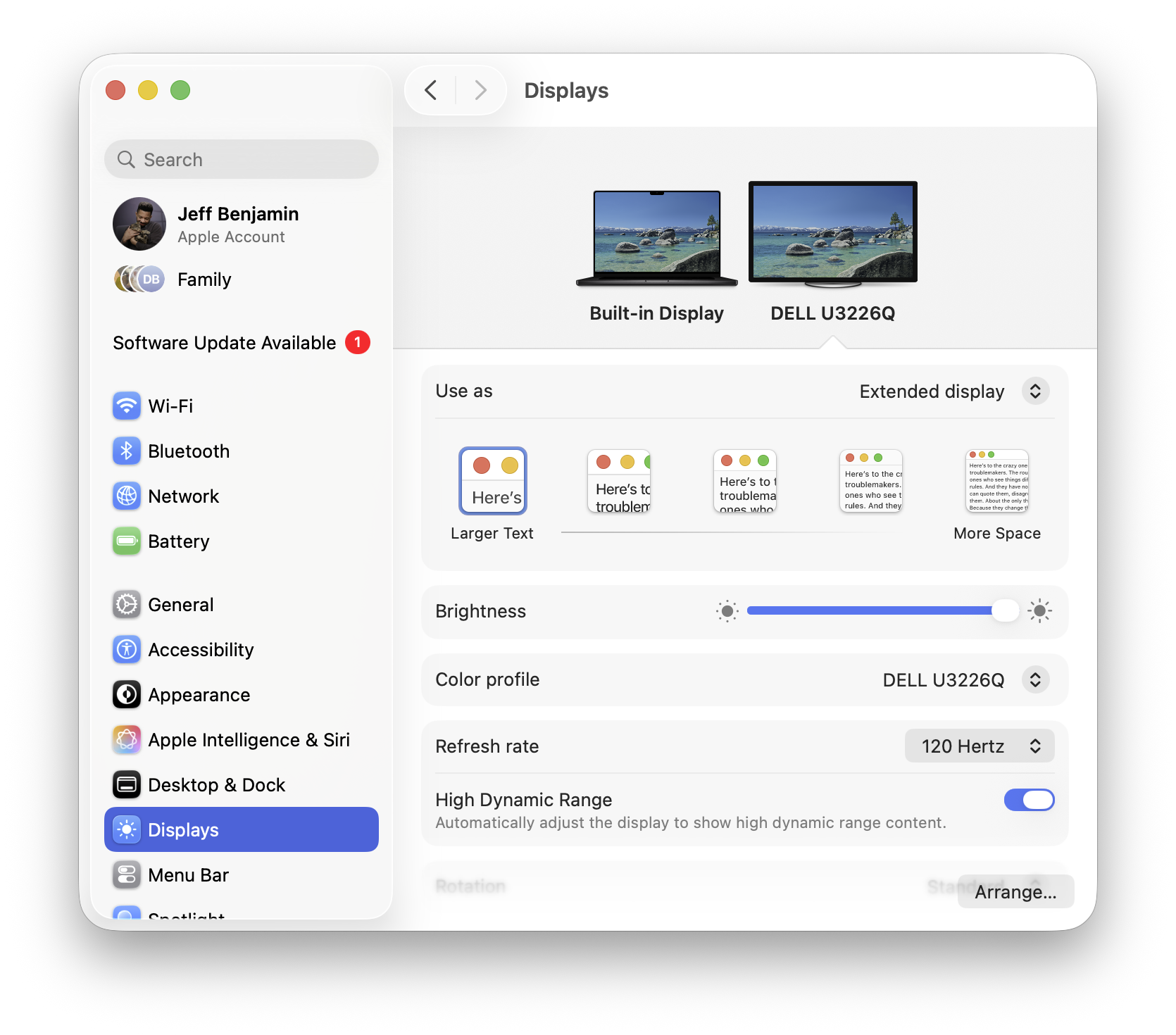
For Mac users who pair their machines with monitors that Apple didn't build, HDR support has long been a source of quiet irritation. According to reporting from 9to5Mac, that frustration may finally be over: macOS 27 is said to fix what the outlet describes as the most annoying problem facing third-party HDR displays.
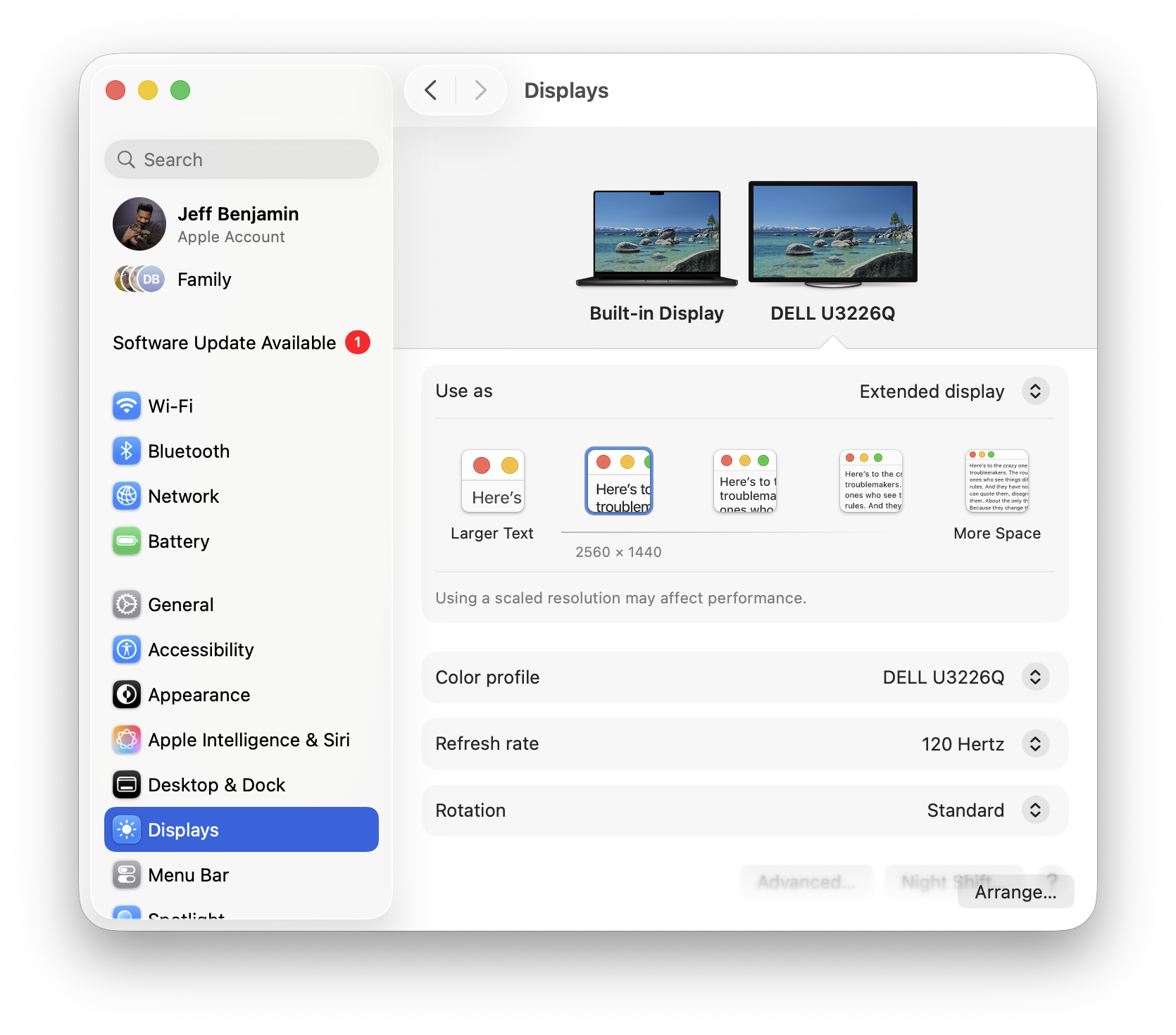
The claim arrives not from a spec sheet but from hands-on testing. The reviewer notes being in the middle of evaluating Dell's 32-inch UltraSharp U3226Q, and reports that first impressions are extremely positive — with the OLED panel's picture quality standing out in particular once HDR is enabled on the Mac.
It's a small-sounding change with an outsized impact. For anyone who has invested in a capable HDR monitor only to watch macOS handle it poorly, the update represents the kind of fix that matters more in daily use than any headline feature.
What macOS 27 Changes in Practice
The significance here is less about raw capability and more about reliability. A display that supports HDR is only as good as the operating system feeding it content, and the Mac has historically been a stubborn partner for monitors outside Apple's own lineup. The new version of macOS reportedly closes that gap.
Based on the impressions shared, the practical results include:
- HDR content rendering properly on a third-party monitor rather than being mishandled by the system.
- Picture quality that the reviewer characterizes as impressive, specifically with HDR switched on.
- A workflow in which the display's strengths are actually reachable from a Mac, instead of being left on the table.
That last point is the one that will resonate with professionals. Buying an HDR-capable panel is an investment in color, contrast and highlight detail. When the operating system doesn't cooperate, that investment sits idle.

Inside the Dell UltraSharp U3226Q
The monitor at the center of the testing is Dell's 32-inch UltraSharp U3226Q, an OLED display positioned in the company's premium UltraSharp line. The reviewer's early assessment is unambiguous: the panel delivers impressive picture quality, and HDR is where it shines brightest.
Key details from the hands-on account include:
- A 32-inch OLED panel, the technology most associated with deep blacks and high contrast.
- Membership in Dell's UltraSharp family, aimed at productivity and creative work.
- Notably strong image quality when HDR is enabled through macOS.
- Testing that was still ongoing at the time of publication, meaning a full review is yet to come.
The pairing matters because it tests two things at once. It evaluates Dell's hardware, and it evaluates whether Apple's software can finally get out of the way and let that hardware perform. On the evidence so far, both sides appear to be holding up their end.
Why HDR on the Mac Has Been Such a Pain Point
The Mac ecosystem has always been at its most predictable when Apple controls both the screen and the software. MacBook Pro and Pro Display XDR owners get a tightly integrated experience, with the system tuned to the exact characteristics of the panel in front of them.
Step outside that arrangement and things get messier. Third-party monitors arrive with their own HDR implementations, their own brightness behavior and their own handshakes with the operating system. Historically, that has meant inconsistent results on macOS — sometimes subtle, sometimes obvious enough to make users question whether HDR was worth enabling at all.
That is why a fix delivered in macOS 27 carries weight beyond a single monitor review. It signals that Apple is paying attention to the large population of Mac users who rely on displays from Dell, LG, Samsung and others. For a platform that markets itself on creative and professional workflows, that matters.
A Redesigned, Lighter OLED MacBook Pro in the Works
The display story extends to Apple's own hardware as well. A separate report published on the site, credited to Michael Burkhardt and dated October 4, 2026, indicates that a redesigned MacBook Pro equipped with an OLED display will feature a "significantly lighter" design.
If accurate, that would represent a meaningful shift for the laptop line. MacBook Pro models have long been prized for their screens, and moving to OLED would push contrast, black levels and HDR performance further than the current panels allow. Combining that with a lighter chassis addresses one of the most common complaints about the lineup — that capability has often come at the cost of portability.
Taken together, the two threads point in the same direction: Apple is investing in display quality across its hardware, and macOS 27 is being shaped to support it, whether the screen in question carries an Apple logo or not.
What Mac Users Should Take Away
For anyone running a third-party HDR monitor on a Mac, the practical guidance is straightforward:
- Watch for macOS 27 before concluding your monitor is the problem — the bottleneck may have been software all along.
- Re-test HDR settings after updating, since the experience described is markedly better than before.
- Keep an eye on full reviews of the Dell UltraSharp U3226Q, as the initial testing described was still in progress.
- Follow the OLED MacBook Pro reporting for a sense of where Apple's own displays are heading.
It's also worth tempering expectations. The impressions published so far are explicitly early-stage, drawn from an evaluation that hadn't concluded. Full verdicts on both the monitor and the operating system's behavior will arrive with more testing.

The Bottom Line
A software fix rarely generates excitement, but this one addresses a problem that has quietly degraded the experience of a sizable group of Mac owners. By resolving the most annoying issue for third-party HDR displays, macOS 27 lets users get the performance they paid for from monitors Apple didn't make.
Pair that with reports of a lighter, OLED-equipped MacBook Pro redesign, and the broader theme becomes clear: display quality is moving up the priority list at Apple — in software, in third-party compatibility and in its own hardware roadmap.
This article is based on reporting by 9to5Mac. Read the original article.
Originally published on 9to5mac.com