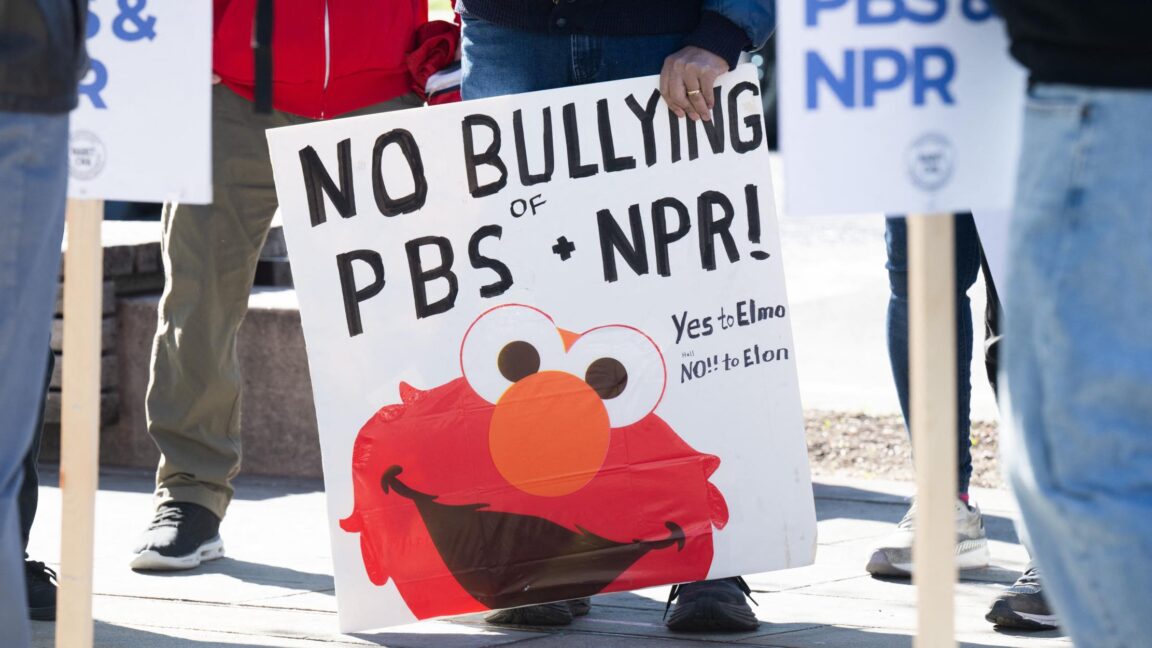
A legal win with limited immediate relief
A federal judge has ruled that President Donald Trump’s executive order defunding NPR and PBS violated the First Amendment, issuing a permanent injunction that bars executive branch agencies from enforcing it. On paper, that is a major rebuke. In practice, however, the ruling arrives after Congress already rescinded the Corporation for Public Broadcasting’s budget for fiscal years 2026 and 2027, leaving public media with a courtroom victory but a financial landscape that remains severely damaged.
The decision, issued by Judge Randolph Moss of the U.S. District Court for the District of Columbia, centered on viewpoint discrimination. According to the supplied report, Moss found that the order penalized NPR and PBS for speech disfavored by the president and could not lawfully be implemented by executive agencies. That is a direct constitutional finding, and it goes to the heart of whether the federal government can use funding decisions to retaliate against protected expression.
The First Amendment issue was clear
The court’s reasoning appears straightforward. The order instructed agencies to stop funding NPR and PBS regardless of the merits of any particular program or request. In Moss’s view, that amounted to retaliation based on viewpoint. The ruling described the move as sending a message that NPR and PBS need not apply for federal benefits because of presidential disapproval of their coverage.
That principle matters beyond public broadcasting. If allowed to stand, such a framework would give the executive branch broad power to punish organizations not because they failed to qualify for support, but because the White House disliked their editorial perspective. By issuing a permanent injunction, the court rejected that approach decisively.

Why the damage is still real
Yet the practical consequences of the ruling are limited by events that followed the executive order. Congress separately rescinded the entire $1.1 billion CPB budget for fiscal years 2026 and 2027. The CPB then voted to dissolve itself in January 2026 after distributing the remaining funds Congress had already provided.
That sequence is crucial. Even if the executive order is unconstitutional, the broader public broadcasting system has already been stripped of its main federal funding structure through legislative action. NPR, PBS, and local stations are still operating with other revenue sources, but they have had to cut budgets. In other words, the legal ruling may clarify the constitutional boundary, but it does not restore the money that supported the system.
The source material also notes that the executive order had immediate operational effects well before Congress acted. PBS said the order led the Education Department to cut millions of dollars in support for children’s programming, forcing the network to lay off one-third of the PBS Kids staff. That detail underscores how executive action can inflict institutional damage quickly, even when later challenged successfully in court.
A case about power as much as media
The dispute is not only about NPR and PBS. It is also about the balance of power between the presidency, Congress, and the constitutional protections that constrain both. Congress has broad authority over appropriations. The executive branch does not have equivalent authority to deny benefits on the basis of viewpoint. The court’s ruling reinforces that boundary.
Still, the case also shows how fragile legal victories can be when politics moves faster than litigation. By the time the injunction arrived, Congress had already taken action that changed the system’s financial reality. Public broadcasters can point to a strong First Amendment win, but the institutional architecture that once distributed federal support has already been dismantled.

The stakes for local media
The long-term consequences may fall hardest on local stations. National brands like NPR and PBS have name recognition and diversified fundraising options. Smaller member stations often rely more heavily on the broader public broadcasting ecosystem and may have less capacity to absorb sudden funding shocks. The supplied article notes that stations continue to operate, but only after budget cuts and in a much harsher environment.
That matters because public media’s local footprint has always been central to its public value. National programming gets most of the headlines, but rural, regional, and educational coverage often depends on station-level budgets. When those are squeezed, the loss is not only cultural. It can also affect civic information, children’s programming, and local reporting capacity.
A constitutional line has been drawn
The most durable result of the ruling may be doctrinal rather than financial. The court has made clear that an administration cannot direct agencies to cut off federal benefits to media organizations simply because it dislikes their editorial stance. That principle may prove important in future disputes, even if it does little to reverse the immediate losses public broadcasters have already suffered.
For now, the public media system sits in an unusual position: constitutionally vindicated, financially wounded, and structurally diminished. The judge blocked the order. The funding crisis remains. Both facts define the story.
This article is based on reporting by Ars Technica. Read the original article.

Originally published on arstechnica.com


