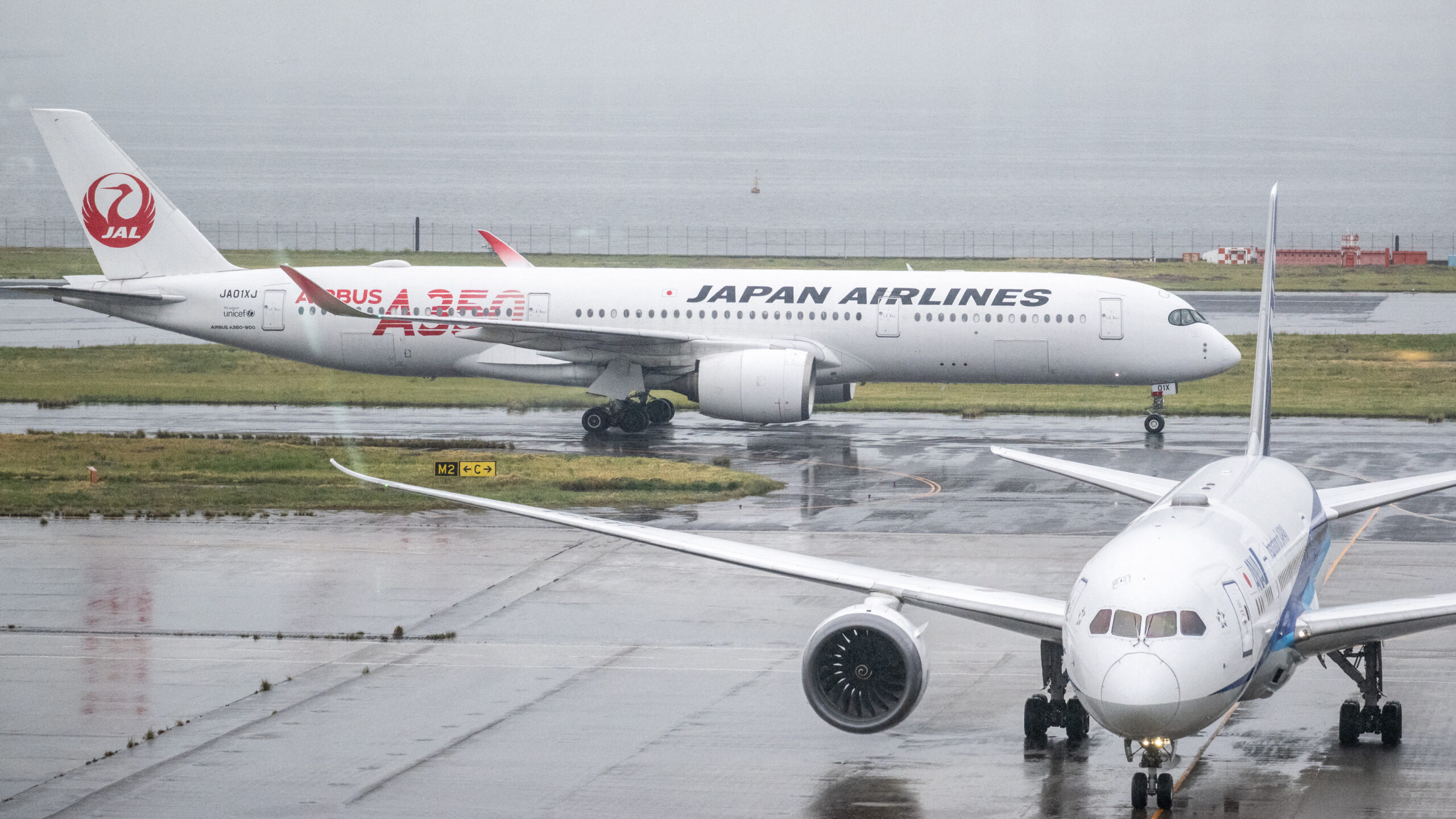
Humanoid robots move from factory spectacle to airport experiment
Japan Airlines is preparing a long-running test of humanoid robots at Tokyo’s Haneda Airport, where the machines are expected to help sort luggage, load cargo, and potentially take on other support tasks such as aircraft cabin cleaning. Ars Technica reports that the demonstration is scheduled to begin in May 2026 and run through 2028, making it more than a one-off publicity stunt.
The experiment is notable because airports are difficult environments for automation. They are busy, variable, safety-sensitive workplaces built around human movement, irregular objects, and changing schedules. Unlike fixed industrial stations, they do not easily reduce to one repetitive motion. If humanoid robots can perform even limited utility tasks there, it would mark a meaningful step in the effort to deploy general-purpose machines in real service settings.
Why airports are an attractive test case
Japan Airlines is framing the trial around labor shortage and rising visitor numbers. That combination is important. Labor scarcity can justify investment in automation even when the technology is imperfect, and transportation hubs provide a high-visibility setting in which operational gains are easy to notice. If a robot can move baggage, handle cargo-adjacent work, or assist with cleaning without requiring major infrastructure changes, the economics become easier to test.
According to Ars Technica, JAL Ground Service is working with GMO AI & Robotics Corporation to oversee the demonstration, and the companies plan to test humanoid robots from Unitree Robotics and UBTECH Robotics. The report says Japan Airlines is interested in whether such systems, powered by recent AI models, can adapt to human workspaces without dedicated stations or significant workplace modification.
That is the central promise of the humanoid form factor. Factories have long succeeded with specialized robots because the environment is shaped for them. Humanoid robotics makes a different bet: shape the machine for existing human environments instead. Airports, with their ramps, carts, compartments, and mixed indoor-outdoor logistics, are a strong proving ground for that claim.

The challenge remains real
The article is also careful not to overstate current capability. Humanoid robots remain far less proven than robotic arms or conventional warehouse systems. Their tasks are harder, their environments more open-ended, and their physical reliability less certain. Ars notes that while robotic productivity is already well established in more predictable settings, humanoids face a stiffer challenge in places where conditions shift constantly.
That realism is essential. A staged demo in a hangar is not the same thing as dependable shift work in a live airport. Baggage handling involves irregular shapes, time pressure, physical maneuvering, and safety constraints. Even when tasks appear simple, the combination can be demanding for machines that still struggle with balance, manipulation, and consistent operation.
Cost is another factor. The report notes that humanoid robots still typically cost tens of thousands of dollars per unit, though some manufacturers have pushed prices lower. That means the business case depends not only on technological success but on utilization, maintenance, and the value of replacing or augmenting scarce human labor.
Why a multi-year trial matters
The planned duration through 2028 is one of the strongest indicators that the airline sees this as a serious evaluation rather than a novelty deployment. Multi-year tests allow operators to assess not just whether robots can perform a task once, but whether they can be integrated into scheduling, supervision, maintenance, and safety routines over time.
They also allow the broader industry to watch for a more meaningful signal: does humanoid automation reduce friction in a real transport environment, or does it create new layers of complexity that outweigh the labor benefits? That answer will matter beyond aviation. Logistics hubs, warehouses, and service operations all want the same thing: adaptable machines that can work where people already do.
Japan is a logical place for that question to be pushed forward. The country has long combined a strong robotics industry with demographic and labor pressures that make automation strategically attractive. An airport trial by a major airline fits that larger context.
The significance of this experiment is therefore not that humanoid robots are about to replace baggage crews everywhere. They are not. It is that one of the world’s busiest transport settings is being used to test whether humanoid systems can graduate from attention-grabbing prototypes to useful operational tools. If they can handle even a narrow slice of airport work reliably, it will be a meaningful milestone for real-world robotics.
This article is based on reporting by Ars Technica. Read the original article.

Originally published on arstechnica.com