A rare rollback on a fast-moving surveillance rule
The federal government has rescinded a controversial drone restriction that temporarily created no-fly zones around Department of Homeland Security vehicles, even while those vehicles were moving and even if they were unmarked. Ars Technica reports that the policy was expanded in January 2026 during protests in Minneapolis and was later revised after a challenge from a local drone pilot, Rob Levine.
The reversal matters because the original rule represented a remarkable extension of airspace control into a mobile, opaque, and potentially unknowable category. Traditional no-fly zones are usually tied to fixed places or clearly announced operations. This one, by contrast, could attach to ground vehicles in motion. For journalists, documentary photographers, and legally operating drone pilots, that created a compliance problem bordering on impossibility.
If a drone operator cannot know where a protected vehicle is, cannot know whether it is marked, and cannot know where it is going, then the practical effect is not targeted regulation. It is a moving hazard zone backed by the threat of civil or criminal penalties.
How the rule emerged
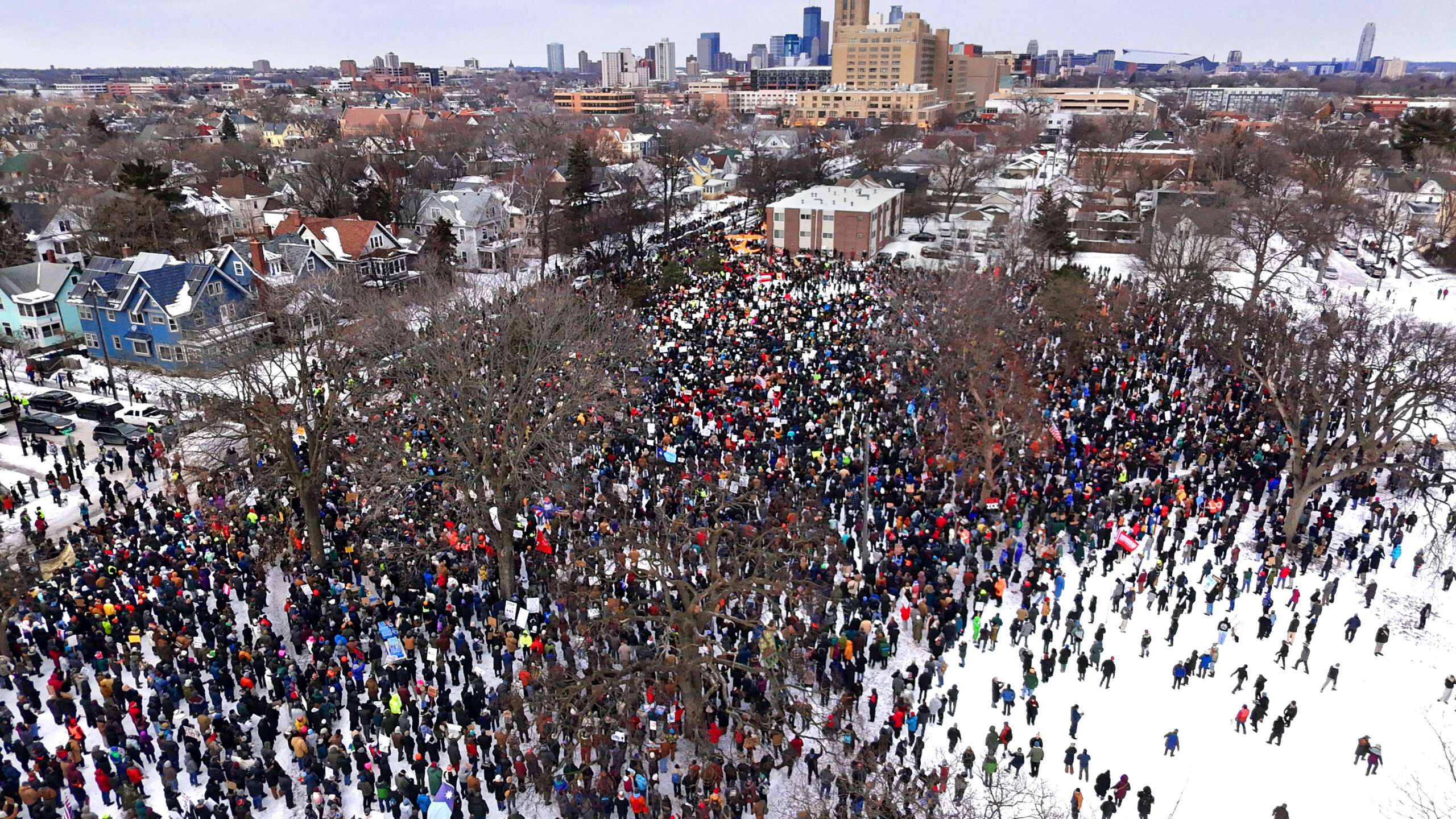
According to Ars Technica, the January expansion came shortly after protests in Minneapolis following the killing of Renee Good by an ICE agent. The no-fly order prohibited drones from flying within 3,000 lateral feet and 1,000 vertical feet of certain federal facilities and, for the first time, extended restrictions to DHS ground vehicles. The notice also warned that agencies could seize or shoot down drones considered a credible threat.
That language had an immediate chilling effect on observers such as Levine, a longtime Minneapolis photographer and FAA-certified remote pilot. He stopped flying after seeing the notice, telling Ars that recent events made it easy to imagine aggressive enforcement against people documenting federal activity.
The significance of the story is not limited to one operator. The ability to document public events from the air has become part of modern journalism, protest coverage, and public-interest observation. When the state creates an ambiguous drone exclusion zone around mobile enforcement activity, it directly affects who can witness that activity and under what risk.

The constitutional and practical stakes
The strongest criticism of the original policy is that it combined broad power with weak notice. Restrictions on aircraft and drones are already serious because violations can trigger penalties or direct intervention. But most aviation compliance depends on clarity. Pilots need to know where they can and cannot operate. A rule tied to unmarked moving vehicles undermines that principle.
It also raises a civil-liberties question. Drone restrictions framed as security measures can still function as barriers to oversight if they block visual documentation of law-enforcement conduct. That concern appears to have been central to the backlash against the rule.
In that sense, the rollback is notable not merely as a technical FAA adjustment but as a boundary-setting moment. It suggests there are limits to how far emergency-style operational logic can extend into ambiguous controls over public documentation.
Why the reversal matters beyond Minneapolis
The case arrives at a time when drones occupy an unstable legal and political position. They are tools of journalism, inspection, and photography, but also objects of suspicion in security settings. Regulators are under pressure to accommodate both realities. That tension can produce rules that seem reasonable in a narrow threat frame and alarming when viewed from the standpoint of constitutional observation or normal airspace use.
The now-rescinded moving-vehicle restriction was a particularly stark example because it asked pilots to avoid hazards they could not reliably identify. For freelance visual journalists and independent documentarians, that uncertainty can be enough to stop lawful activity altogether. The chilling effect does not require an arrest. The threat itself can do the work.
Ars Technica’s reporting therefore captures something larger than a local dispute. It shows how quickly extraordinary restrictions can be introduced in a moment of unrest, and how important it is for affected operators to challenge rules that are both expansive and vague.
The federal retreat does not settle the broader debate over drones near law-enforcement operations. That issue will keep returning as agencies try to protect personnel while the public seeks to monitor state power. But this episode establishes at least one useful limit: no-fly zones cannot be so mobile, hidden, and indeterminate that ordinary compliance becomes unrealistic.
For drone pilots, journalists, and civil-liberties advocates, that is the substance of the victory. The government attempted to create a moving aerial blind spot around unmarked enforcement vehicles. It was forced to back down.
This article is based on reporting by Ars Technica. Read the original article.

Originally published on arstechnica.com


