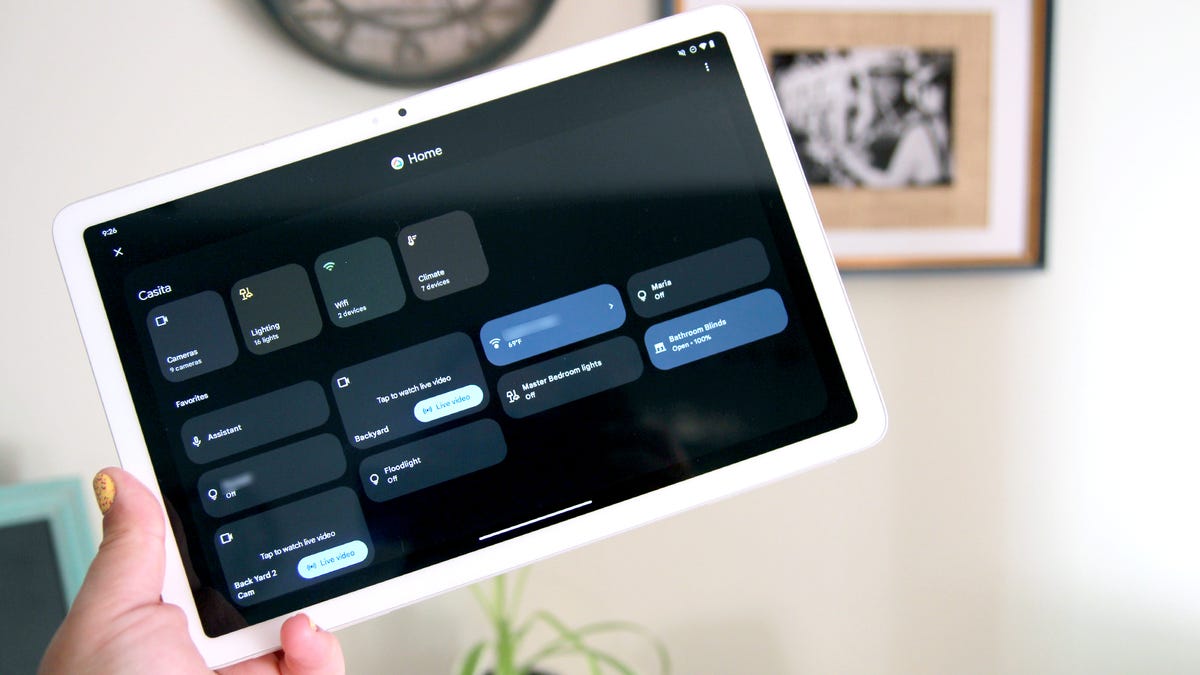
Google is trying to make Gemini feel less awkward at home
Google Home’s April 2026 update is centered on a simple problem: voice assistants are only useful when they feel natural. According to the supplied ZDNET report, the latest release is meant to reduce friction in Gemini interactions by helping the assistant respond faster, avoid interrupting users mid-sentence, and work more reliably in noisy conditions. That may sound incremental, but it addresses one of the most persistent weaknesses in consumer AI: even capable models can feel clumsy when placed inside everyday routines.
The most important change in the update is conversational timing. ZDNET says Gemini will be better at recognizing when a user has finished speaking, making it less likely to cut in too early. Anyone who has used a voice assistant long enough knows that interruption is not a minor annoyance. It breaks trust in the interface. When users feel they have to adapt their speech patterns to the system rather than the other way around, the promise of hands-free computing starts to erode.
Google is also aiming to speed up responses to simple questions, including basic requests such as asking for the date or time. Faster handling of short queries matters because those low-complexity interactions are the bread and butter of smart-home use. Users may tolerate a thoughtful delay for a difficult command, but they are far less forgiving when a basic request takes too long or returns the wrong thing.
Noise, music, and everyday reliability
Another notable part of the update is improved behavior in noisy environments. ZDNET reports that Gemini should be better at finding playlists even when users mispronounce a name or when background noise interferes. The practical significance is straightforward: homes are messy environments for speech systems. Televisions are on, people speak over one another, and commands are often issued from another room. Small improvements in recognition under those conditions can do more to increase real-world usage than splashier demo features.
The update also promises fewer playback errors, including cases where the wrong song or artist starts. That again points to a broader trend in consumer AI. The competitive differentiator is increasingly not whether an assistant can technically generate language, but whether it can consistently connect language to device controls, media services, and household context without creating extra work for the user.
ZDNET says Google is also improving natural language handling for note and list editing. Users will not need to be as precise when giving commands, and Gemini should be able to perform more complex manipulations such as turning notes into lists and moving or removing groups of items. This matters because list management is one of those deceptively hard smart-assistant tasks: it blends language understanding, memory, and app integration. If Google has meaningfully improved that flow, it is addressing a high-frequency domestic use case rather than chasing novelty.

Context is becoming the real product
One of the most consequential details in the update is Google’s focus on improved context clues across integrations. ZDNET reports that Gemini will use context more effectively to infer what a user means and deliver more consistent results. That suggests Google is trying to shift the smart-home experience from command parsing toward intent resolution.
This is where modern AI assistants either become genuinely useful or remain glorified remote controls. A household assistant should not require a rigid command language. It should know that a request about music differs from a request about a thermostat, and that a follow-up instruction may refer to the most recent action or device. Google’s framing here indicates it understands that reliability now depends less on the novelty of model output and more on the quality of cross-service interpretation.
If these improvements hold up in practice, the upgrade could matter more than a headline-grabbing feature launch. Consumer trust in voice AI has been shaped by years of partial success: assistants often work just well enough to remain installed, but not well enough to become indispensable. Fixing interruptions, latency, and ambiguity is the kind of work that actually moves products closer to habitual use.
Beyond Gemini: the rest of the smart home stack
The release is not only about conversation quality. ZDNET says Google Home is expanding parental controls so users can set content filters, limit screen time, pause devices, and schedule downtime. Those tools fit into a broader pattern in connected-home software, where platforms increasingly need to serve as household management layers rather than just voice endpoints. For many families, the usefulness of a smart-home app is measured as much by control and visibility as by automation.
Other improvements in the update are more technical but still meaningful. The report says the Google Home app on iOS is getting a more stable camera experience with clearer timeline scrubbing and more reliable live streams. Thermostat controls are also being refined with a more precise temperature slider for advanced setups. These are not glamorous changes, but they target real pain points in the day-to-day experience of managing connected devices.
Taken together, the release reads like a platform maintenance update informed by practical usage rather than speculative AI marketing. That is important. In the smart home, reliability usually wins over ambition. Consumers remember the command that failed in the kitchen far more than the one impressive demo they saw in a product keynote.

A sign of where consumer AI is heading
The April 2026 Google Home release suggests a maturing phase for AI assistants. The central challenge is no longer proving that the assistant can generate fluent language. It is making the system interrupt less, understand more, and complete tasks with less user effort. Google appears to be focusing on those fundamentals.
The success of that strategy will depend on whether the improvements are noticeable in ordinary use. Voice interfaces are unforgiving because users evaluate them instinctively, not analytically. If Gemini feels smoother, quicker, and more dependable across music, lists, cameras, and home controls, the update will have done exactly what Google needed. If not, the company risks reinforcing the same frustration that has shadowed smart assistants for years.
For now, the significance of this update lies in its priorities. Google is not presenting the home as a showroom for AI spectacle. It is trying to make AI less intrusive and more competent in a space where friction is immediately visible. That is the right problem to solve, and probably the only path by which household AI becomes genuinely mainstream.
This article is based on reporting by ZDNET. Read the original article.
Originally published on zdnet.com


