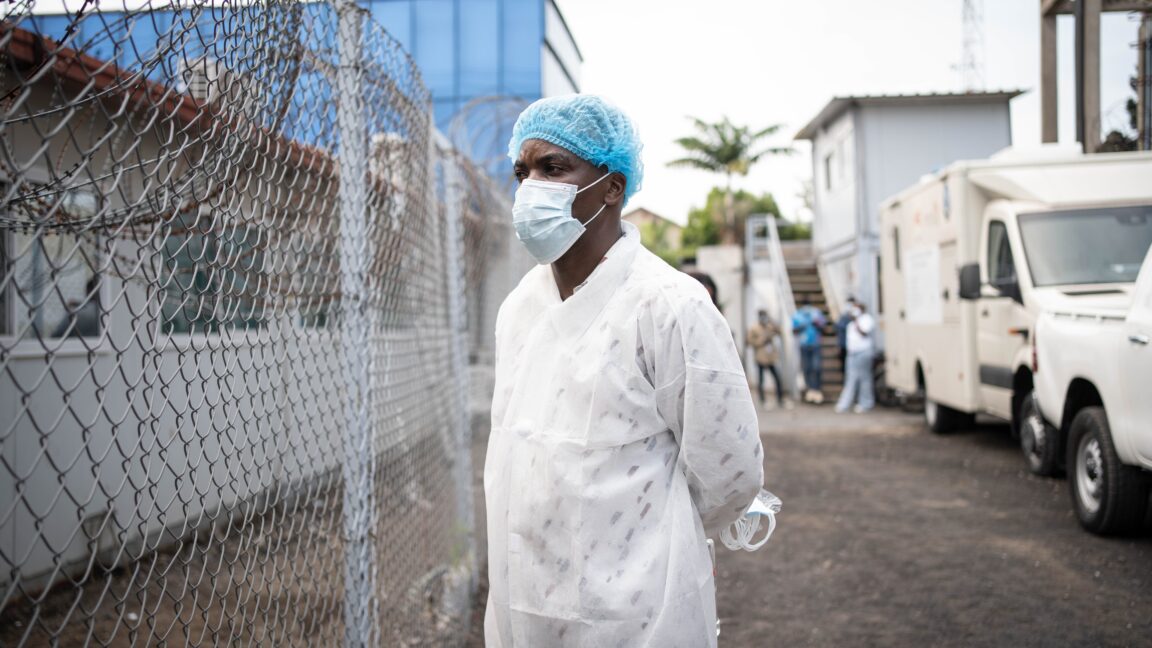
An evacuation dispute with public health consequences
A dispute over where Ebola-exposed Americans should be sent for treatment and monitoring has opened a new fault line in U.S. outbreak response. According to reporting cited by Ars Technica, an American doctor infected with Ebola was treated in Berlin while another exposed doctor was sent to Prague after the White House reportedly resisted allowing them to return to the United States.
Officials denied that the administration refused entry, but key questions remained unresolved in public comments, including why the Americans did not come back to the U.S. in the first place. In a disease outbreak where hours can matter, that distinction is not bureaucratic trivia. It goes directly to whether evacuation decisions are being made primarily around medical urgency or political risk.
The cases at the center of the controversy
The infected American, Peter Stafford, is a 39-year-old surgeon who was working in the Democratic Republic of the Congo during an Ebola outbreak. According to The Washington Post account summarized in the Ars article, five people close to the response said the administration resisted allowing his return over the weekend, delaying evacuation and care at a moment when early treatment was especially important.
By Monday, the Centers for Disease Control and Prevention said Stafford had developed symptoms over the weekend and tested positive for Ebola late Sunday. During a Wednesday briefing, CDC incident response manager Satish Pillai said Stafford had arrived in Germany and was in stable condition.
Stafford’s wife, Rebekah Stafford, also a doctor, was exposed to the virus in the DRC but remained asymptomatic. She and the couple’s four children were also flown to Germany. Another doctor, Patrick LaRochelle, who worked with the same Christian missionary group, was exposed as well and was being transferred to Prague for monitoring and care. According to the report, his wife and children were sent to the United States after the CDC concluded they had not been exposed.

Why timing matters so much with Ebola
Ebola is not a disease that tolerates political drift. Experts have long stressed that early supportive care can make a critical difference, while delays in diagnosis, transport, or isolation can quickly compound both patient risk and public anxiety. That is one reason the reported back-and-forth over Stafford’s evacuation has drawn such concern.
The outbreak involved the Bundibugyo strain of Ebola virus, which the World Health Organization had already classified as part of a rapidly escalating public health emergency. The figures in the article show how quickly the situation was changing. On Friday there were 246 suspected cases and 65 deaths. By Wednesday, WHO’s numbers had climbed to 528 suspected cases and 132 deaths.
Those numbers create a backdrop in which evacuation and treatment decisions are not isolated incidents. They become signals about how a country plans to handle infectious disease risk when its own citizens are involved abroad.
The policy question underneath the headlines
The public controversy is not only about one administration’s handling of one evacuation. It is about whether the United States still has a clear operating principle for medically receiving exposed or infected citizens during dangerous outbreaks overseas.
Historically, specialized U.S. facilities have treated high-consequence infectious disease patients under tightly controlled conditions. That capability was designed precisely to make difficult cases manageable without turning them into political theater. If Americans are instead routed to foreign hospitals because domestic entry becomes contentious, that could suggest hesitation in a system built to project confidence and competence.
At the same time, officials may calculate that sending patients elsewhere reduces domestic panic or avoids reopening debates over quarantine and border control. But if that calculation delays care or creates confusion about public health authority, the tradeoff becomes more troubling.
What the CDC confirmed and what remains unclear
The CDC publicly confirmed the core medical facts: Stafford tested positive, reached Germany, and was stable; LaRochelle was exposed but asymptomatic; family members who were not considered exposed could travel to the United States. What remains less clear is the decision chain that led the exposed and infected Americans away from U.S. medical systems.
The Washington Post account, as described in the article, says officials resisted Stafford’s return and delayed his evacuation. Officials denied refusing entry, but the article notes they did not clearly answer why the patients were not brought back. That gap matters because public trust in outbreak response depends heavily on visible procedural clarity.
When governments appear evasive during health emergencies, uncertainty itself becomes a source of risk. It can erode confidence among aid workers, complicate future overseas medical deployments, and leave families wondering whether citizenship guarantees access to domestic care in an emergency.

A warning for future outbreaks
The most immediate lesson from this episode may be that outbreak readiness is not only about vaccines, labs, or treatment protocols. It is also about governance under pressure. A response system can have world-class expertise and still falter if leadership cannot make timely decisions about transport, jurisdiction, and public communication.
The administration’s critics will likely see the Berlin and Prague transfers as evidence that political optics interfered with medical judgment. Supporters may argue that the patients did receive expert care and that alternative facilities were available. Both points can be true in part. But neither erases the larger problem: in a high-stakes infectious disease event, ambiguity is costly.
With the outbreak in Congo escalating quickly, the case is no longer just a story about two doctors and a delayed evacuation. It is a stress test of how prepared the United States is to act decisively when global health emergencies intersect with domestic politics. The answer, at least from what is public so far, looks less settled than it should.
This article is based on reporting by Ars Technica. Read the original article.
Originally published on arstechnica.com


