A shell substitute with implications beyond de-extinction
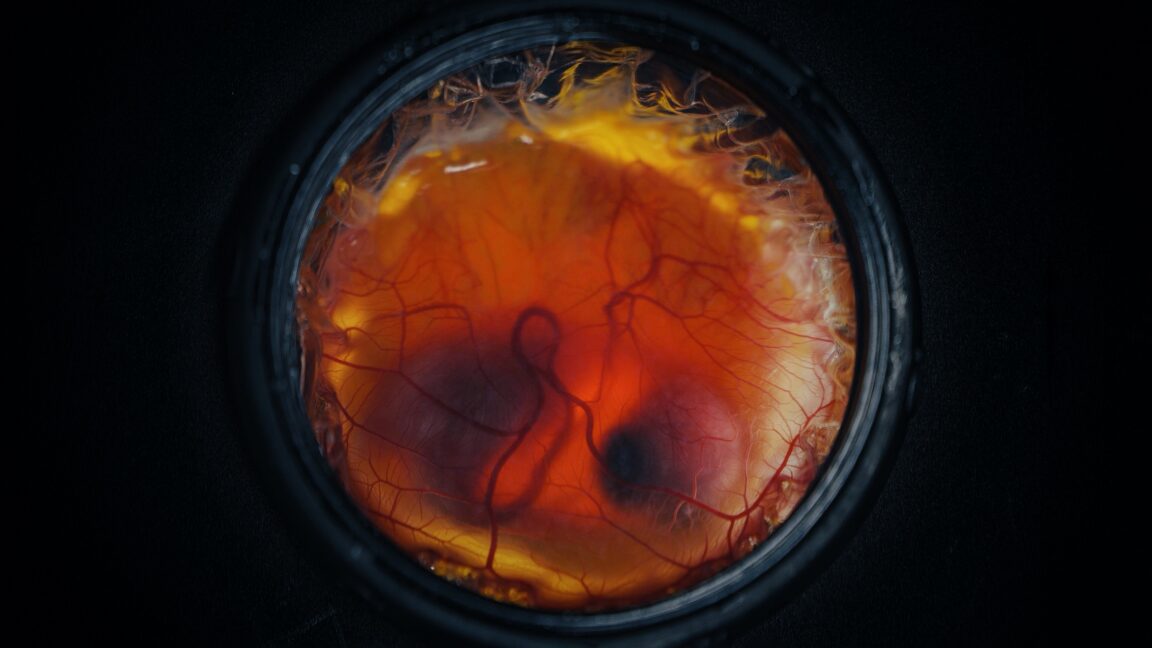
Biotech startup Colossal says it has built an artificial eggshell system that can support nearly the full development of a chicken embryo after the contents of an egg are transferred into a specially designed container. According to the supplied source text, the company moved egg contents into the device within a day or two of laying and was able to produce normal chicks that later walked away from the setup.
The announcement is framed by Colossal as a step toward its broader goal of reversing the extinction of species, especially avian ones. But the technical significance may reach further. If the system reliably supports development while allowing continuous visual access, it could become a useful platform for developmental biology, where researchers have long struggled to observe dynamic changes inside eggs in real time.
That dual significance is what makes the development notable. It is both a species-engineering tool and a potential research method.
Why chicken embryos matter in biology
Chicken embryos have long been a mainstay of vertebrate developmental research. They share many core developmental processes with mammals, but unlike mice they develop outside the mother’s body, making them easier to manipulate experimentally. Researchers can open an egg, alter tissues or signals, and then reseal it to observe later outcomes.
The limitation is visibility over time. As described in the supplied source text, traditional methods often force scientists into two snapshots: the moment of intervention and the endpoint when the embryo is examined. Development, however, is continuous. Cells migrate, tissues fold, and structures rearrange. That means important intermediate events can be missed even when the final outcome is known.
An artificial eggshell could change that by giving researchers prolonged optical access to the embryo while it develops in a controlled environment. If so, it would not simply replicate a natural egg. It would create a more tractable experimental window into one of biology’s most dynamic processes.

How the device changes the research problem
The breakthrough, as described in the source text, is less about replacing the egg as a product and more about replacing the eggshell as a developmental container. By transferring the contents of a recently laid egg into a specially designed vessel, Colossal appears to have preserved the conditions needed for normal embryonic growth while removing the visibility barrier imposed by the shell.
That matters because many developmental experiments are limited by access rather than by lack of conceptual questions. Scientists often know what they want to watch, but not how to keep the embryo alive and stable while watching it unfold. A system that maintains viability and improves observation could widen the range of experiments that are practical.
The supplied text does not provide detailed performance metrics, success rates, or experimental constraints, so the claims should be read as an early report rather than a comprehensive validation package. Even so, achieving normal chick development after transfer is a meaningful proof of concept.
What it could mean for de-extinction efforts
For Colossal, the appeal is straightforward. Avian de-extinction or species restoration projects may require more flexible ways to culture and manipulate embryos than natural eggs allow. An artificial shell system could help researchers work with edited or specially prepared embryos in a more observable and possibly more controllable setting.
That does not mean the hardest problems are solved. The source text itself indicates that the company still faces key hurdles. Supporting development in a shell substitute is one challenge; generating the right embryos for extinct or endangered birds is another. The technology therefore looks more like an enabling platform than a complete path to de-extinction.

A tool with broader scientific value
The strongest near-term case for the technology may be in basic and applied research. Developmental biology, toxicology, regenerative studies, and embryo manipulation workflows could all benefit from better access to living embryos over time. A robust artificial eggshell system might also improve teaching and imaging applications, provided it proves reliable and reproducible.
The supplied source text emphasizes that perspective by connecting the device to a long-standing experimental frustration: not being able to watch development continuously. That is a real scientific bottleneck, and one that a successful shell substitute could ease.
For now, the announcement should be seen as an intriguing technical step rather than a settled platform. The available source material supports the conclusion that chick development outside a natural shell has been demonstrated in a custom device. It also supports the inference that the method could be useful well beyond the company’s de-extinction branding.
If follow-up work confirms the approach at scale, the artificial eggshell may end up mattering less for its symbolism and more for its utility: a new way to observe, manipulate, and understand how vertebrate life takes shape.
This article is based on reporting by Ars Technica. Read the original article.
Originally published on arstechnica.com


