Apollo-era mark falls as Artemis II sets a new deep-space record
NASA’s Artemis II mission has added a new entry to the history of human spaceflight: its four-person crew traveled farther from Earth than any people before them. According to Ars Technica’s report, the spacecraft reached 252,756 miles from Earth, passing the 248,655-mile record set by Apollo 13 in April 1970.
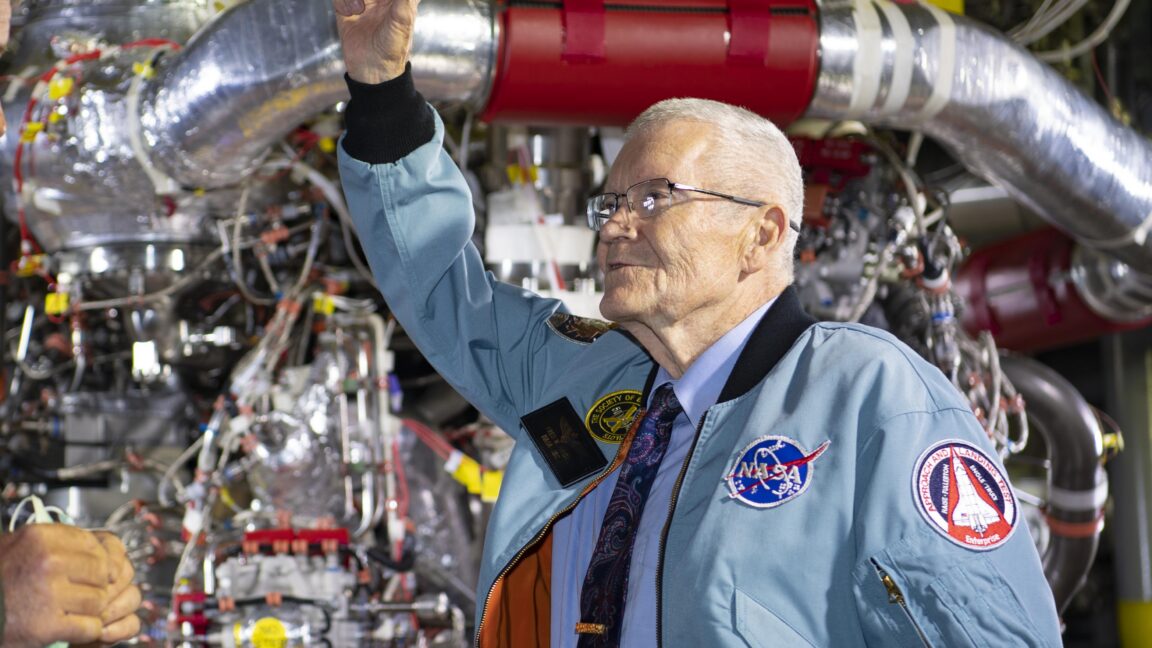
The record had stood for almost 56 years. It was established during one of NASA’s most dramatic missions, when Apollo 13 looped around the Moon and returned to Earth after an onboard explosion ended its planned landing attempt. Fred Haise, one of the Apollo 13 astronauts, is among the last living members of the small group of people who flew to the Moon during the Apollo era. Artemis II now links that earlier generation to a new one.
Why Artemis II went farther
The new record does not necessarily mean Artemis II represented a more ambitious lunar destination than every Apollo mission in a simple linear sense. The distance figure was shaped by mission design and orbital mechanics. Ars Technica notes that Artemis II used a free-return trajectory, allowing the Moon’s gravity to sling the Orion spacecraft back toward Earth for reentry. That path carried the crew a little more than 4,000 miles beyond the Moon.
The Moon’s orbit around Earth also matters. It is not a perfect circle, and the distance between Earth and the Moon changes over time. Ars reports that this range runs from about 225,800 miles to 252,000 miles between their centers. That means the same kind of lunar mission can produce different maximum distances depending on where the Moon is in its orbit at the time of flight.
In practical terms, Artemis II’s record reflects both mission planning and celestial timing. The crew traveled high above the lunar surface and benefited from geometry that let them edge past Apollo 13’s long-standing benchmark.

A symbolic handoff from Apollo to Artemis
The milestone is notable not only for the number itself, but for what it represents. Between 1968 and 1972, 24 astronauts flew to the Moon and 12 walked on its surface. Ars Technica points out that only five Moon-flying Apollo astronauts are still alive, all now in their 90s. With Artemis II, the experience of human lunar flight is no longer confined to living memory of the Apollo generation alone.
That symbolic transition matters for NASA’s broader goal. Artemis II was a circumlunar flight rather than a landing mission, but it marked the return of astronauts to deep space around the Moon. It also expanded the list of people who can speak firsthand about what it means to leave low Earth orbit and travel into cislunar space.
For Haise, the passing of the record appears less important than the continuation of exploration itself. Ars frames the moment as a generational handoff rather than a competition over statistics. The larger story is that human lunar exploration is active again after decades of absence.
What comes next for the record
Whether future Artemis missions will break Artemis II’s distance mark is not guaranteed. Missions bound for the lunar surface may not need to travel as far beyond the far side of the Moon, because their trajectories will be optimized for landing operations rather than a free-return loop. In other words, a mission can be more operationally complex without setting a new “farthest from Earth” record.
That distinction is useful. Records can be compelling shorthand, but they do not always track mission importance. A lunar landing, habitat deployment, or sustained surface campaign would be more consequential than a raw distance number. Artemis II’s record is therefore best seen as a milestone within a larger architecture rather than the central measure of success.
Even so, it offers a clear reminder of how little human activity has ventured beyond Earth orbit since Apollo. For decades, crews flew no farther than low Earth orbit aboard the space shuttle, Soyuz, and later missions to space stations. Artemis II changed that in a single flight.

Why the milestone resonates now
The record arrives as space agencies and commercial companies push toward a more durable human presence beyond Earth. NASA’s Artemis program is intended to return astronauts to the Moon and use those missions to build experience for eventual journeys farther afield. In that context, Artemis II’s achievement is both concrete and narrative: concrete because a measurable Apollo-era record has finally fallen, and narrative because it shows that deep-space human flight has resumed.
It also underscores how difficult such missions remain. Only a tiny number of people in history have left Earth far enough behind to circle the Moon. Artemis II added four names to that short list. However future trajectories are designed, that alone makes the mission historically significant.
The Apollo 13 record endured for nearly six decades because human exploration beyond low Earth orbit effectively paused. Artemis II did more than move the line outward by a few thousand miles. It reopened a frontier that had been dormant since the early 1970s.
- Artemis II reached 252,756 miles from Earth, according to Ars Technica.
- The previous record of 248,655 miles was set by Apollo 13 in April 1970.
- The mission’s free-return path and the Moon’s variable orbit both affected the final distance.
- The milestone marks a generational transition from Apollo veterans to a new cohort of lunar explorers.
This article is based on reporting by Ars Technica. Read the original article.
Originally published on arstechnica.com


