A funding deal shaped by compute demand
Google plans to invest at least $10 billion in Anthropic, with the total potentially reaching $40 billion if the AI company hits specified performance targets, according to reporting cited by Ars Technica from Bloomberg. The arrangement follows Amazon’s separate $5 billion initial investment in Anthropic just days earlier, and both deals value the company at $350 billion.
The headline number is large, but the strategic logic is familiar. In the current AI market, money is not just money. It is a way to secure a long-term relationship around chips, cloud capacity, and the infrastructure needed to train and serve increasingly popular models. Anthropic’s rise has created demand that appears to be outpacing its available compute, and Google and Amazon both have something critical to sell into that gap.
Anthropic’s Claude models and related products, including Claude Code, have seen rapid growth. Ars notes that Claude Code has been promoted as a way to speed software development, though with results that vary depending on project and organizational context. Whatever the practical variability, customer demand appears strong enough that Anthropic has reportedly faced outages and other supply-side constraints.
Cloud giants are financing their own future customers
The structure of the deal highlights a defining pattern in the AI economy. Large platform companies invest in model developers, then provide those developers with the computing hardware and cloud services required to scale. The startup gains capital and access to infrastructure. The platform gains a major customer and tighter strategic alignment.
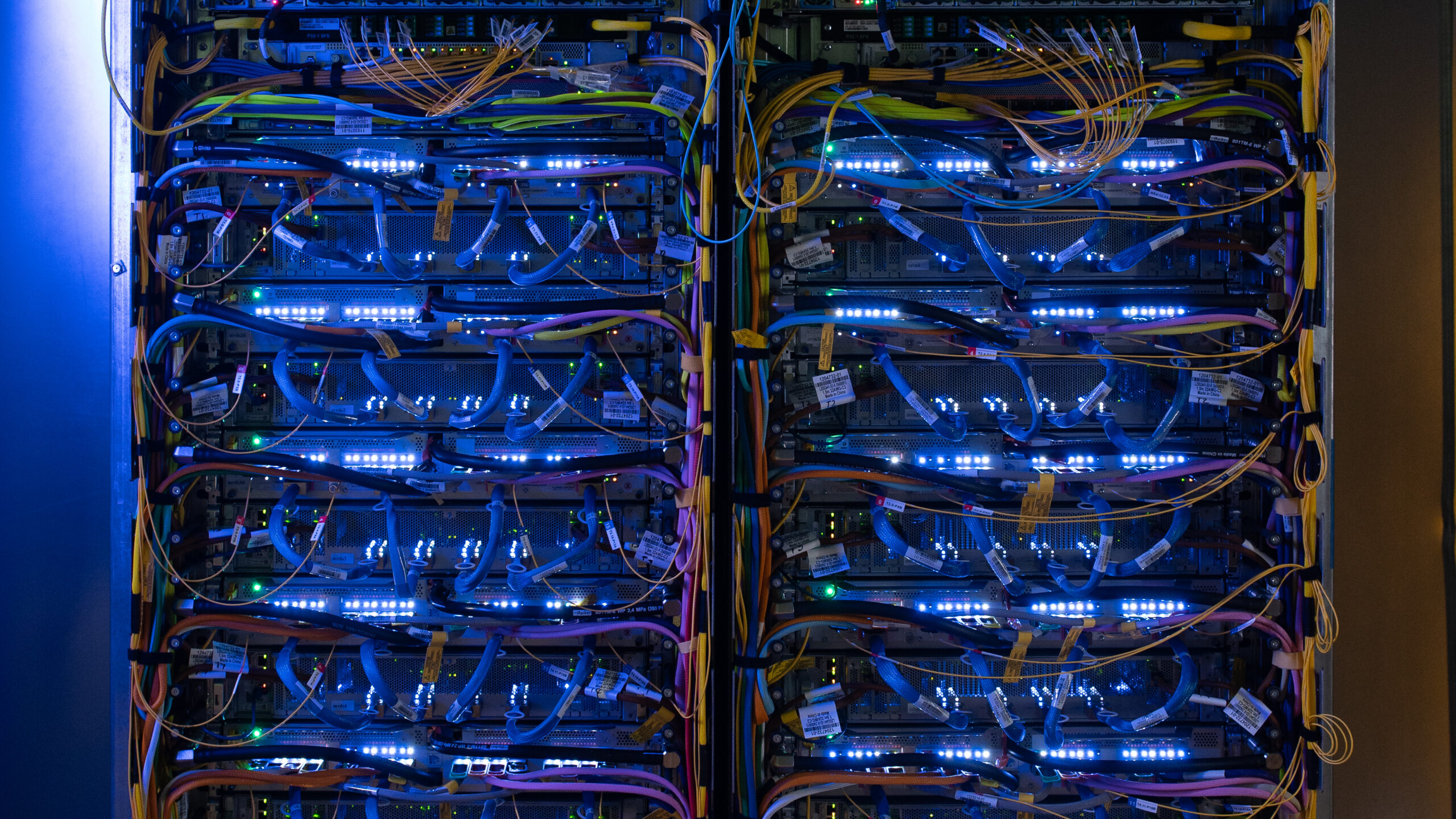
Google and Amazon are both supplying chips suitable for AI training and inference, along with cloud compute capacity to help Anthropic expand. That means the investment is also a route to channel massive infrastructure spending back into the investors’ own ecosystems. Rather than a passive financial stake, it is a vertically linked bet on demand.
This is particularly relevant now because demand for advanced AI systems has become constrained less by user interest than by available compute. Anthropic has reportedly been testing ways to reduce pressure, including limits during peak hours and possibly removing some of the most compute-intensive tools from cheaper service plans. Those are not the actions of a company struggling to find use cases. They are the actions of a company trying to ration scarce capacity.
Google’s willingness to deepen its exposure, even while competing against Anthropic in foundation models, underscores how infrastructure economics can blur competitive lines. In AI, a rival model company can still be an attractive customer if the infrastructure bill is large enough.

Why Anthropic has become so valuable
Ars attributes Anthropic’s recent momentum to several factors, including controversies around OpenAI and ChatGPT, more robust agentic workflows, and product additions such as Claude Cowork for general knowledge work. Together with Claude Code, those offerings seem to have expanded Anthropic’s reach beyond a narrow enterprise niche into a broader productivity and software development market.
That growth has translated into a valuation that rivals some of the most significant private technology companies in the world. A $350 billion valuation, supported by back-to-back commitments from Amazon and Google, suggests investors believe Anthropic is not merely a strong model lab but a durable platform business capable of monetizing heavy enterprise and developer usage.
It also signals that access to AI customers is becoming expensive. The leading model providers are no longer just raising capital for research talent and training runs. They are becoming central nodes in a larger market for cloud lock-in, inference revenue, and developer workflow integration.
The larger battle is about who captures AI demand
From the outside, the deal looks like another giant financing round. In practice, it is part of a broader scramble over where AI workloads live. If Anthropic serves more customers, writes more software assistance into developer pipelines, and powers more enterprise workflows, someone has to host and accelerate those workloads. The companies that provide the chips and cloud platforms want to make sure that someone is them.
That is why the arrangement matters even beyond Anthropic. It is evidence that the market is entering a new phase in which model popularity can quickly become an infrastructure problem, and infrastructure providers are willing to pay large sums to secure the right relationships. Capital expenditure and venture-style investment are collapsing into the same strategic playbook.
The development also adds pressure to every other major player. If Google and Amazon are both prepared to spend at this scale on one model company, competitors will have to decide whether to back their own ecosystems more aggressively, pursue partnerships, or accept a more fragmented role in the stack.

An investment story that is really about supply
The most revealing element in the Anthropic story may be what the money is supposed to fix. According to Ars, these investments are meant to help close the gap between demand and supply of compute for products such as Claude Code. That framing matters. The bottleneck is not simply better marketing or more features. It is the physical and operational capacity to meet demand.
That makes Google’s proposed investment a marker of where the AI race now stands. Performance still matters. Model quality still matters. But if customers arrive faster than a company can provision inference and training resources, scale itself becomes the strategic contest.
Anthropic has become valuable partly because many users and companies want its products. Google’s willingness to commit up to $40 billion shows how valuable it may be to control the infrastructure behind that demand.
This article is based on reporting by Ars Technica. Read the original article.
Originally published on arstechnica.com


