A paused program now has a hardware problem
NASA’s Lunar Gateway was already struggling with delay, cost, and a shifting strategic rationale. On April 24, Ars Technica reported that the program’s primary habitation elements are affected by corrosion, adding a major technical concern to a project that had already been paused by the agency.
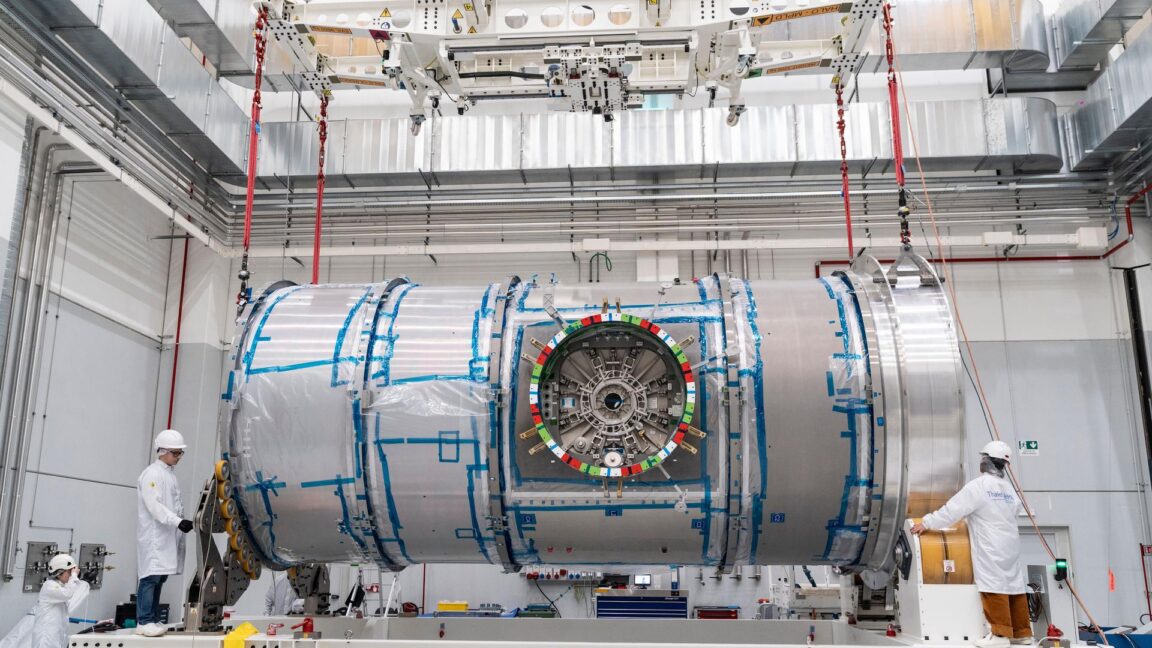
The report centers on the two main pressurized modules intended to anchor the lunar-orbiting outpost: HALO, the Habitation and Logistics Outpost led by Northrop Grumman, and I-HAB, the international habitation module. During testimony before the US House Committee on Science, Space, and Technology, NASA Administrator Jared Isaacman publicly confirmed rumors that corrosion had been found in both modules.
That matters because Gateway was supposed to be more than a symbolic station near the Moon. For years, NASA described it as a platform for lunar operations, international cooperation, and long-duration deep-space habitation testing. Even before this disclosure, those ambitions had slipped well behind schedule.
A decade of schedule drift
Gateway’s first component had once been expected to launch in 2022. The plan later evolved so that the power and propulsion element would launch together with HALO in 2024. A second pressurized module, I-HAB, was expected to follow in 2026. As the article notes, those dates have all passed.
In March, Isaacman announced that Gateway was being “paused” so NASA could focus more directly on the lunar surface. That shift reflected a broader argument against the station: critics said NASA and its partners were spending billions on an architecture that could complicate, rather than simplify, trips to the Moon’s surface.
The corrosion issue does not replace those strategic concerns, but it does reinforce them. A program that was already under pressure over relevance and timing must now also answer harder questions about hardware condition and rework.

What was said in Congress
The new disclosure emerged in response to questions from Rep. Suhas Subramanyam of Virginia, whose district includes major Northrop Grumman operations tied to HALO. He asked what would happen to the investment already made in the module after NASA canceled its order for the outpost.
Isaacman replied that NASA could explore whether hardware might be repurposed for surface applications on the Moon. That answer alone would have signaled that Gateway components were being reconsidered for a different role. But his further public confirmation that both HALO and I-HAB have corrosion problems turned a budget-and-industrial-base exchange into a much more serious technical revelation.
Ars Technica cited preliminary findings indicating the issue likely stems from a combination of factors. The supplied source text does not detail those factors, and NASA had not, in the excerpt provided, laid out a public corrective path. Even so, the admission is significant because it shifts part of the Gateway debate from program design to physical condition.
Why the corrosion matters
Space hardware programs can survive delay. They can sometimes survive changing political support. They have a much harder time surviving a perception that foundational hardware may not be ready for flight without costly remediation.
HALO and I-HAB were supposed to form the beginning of a sustained human-tended presence in lunar orbit. If both require substantial inspection, repair, redesign, or repurposing, the remaining justification for preserving Gateway in its original form weakens further.
The effect is also reputational. Gateway was presented for years as a flagship international project and a central part of Artemis-era planning. Corrosion in its primary modules is not a minor slip; it suggests that even after years of development and missed milestones, the program still faces basic readiness concerns.

What comes next
Based on the supplied reporting, NASA appears to be looking at whether at least some Gateway hardware can be redirected to lunar surface use. That would be a practical outcome if the agency wants to salvage value from work already funded while moving away from the original orbital-station concept.
Repurposing, however, is not the same thing as continuity. A station designed for lunar orbit and a surface habitat or logistics role are not interchangeable missions. Any attempt to reuse HALO hardware would still depend on technical suitability, cost, and NASA’s evolving Moon architecture.
For Gateway’s international partners, the corrosion report also complicates the politics of next steps. I-HAB was meant to reflect multinational participation. If the project is frozen, scaled back, or transformed into a surface-support effort, those partnerships may need to be renegotiated around a different mission objective.
A revealing end to an already troubled concept
Gateway was never a simple build. It sat at the intersection of exploration strategy, industrial policy, international commitments, and budget constraints. By the time NASA paused it, the station had already become an argument about whether the agency was overengineering a path to the Moon.
The corrosion disclosure gives that argument a new edge. It suggests that Gateway’s troubles are not limited to delay or changing priorities. They now include a direct concern about the condition of the very modules meant to make the outpost habitable.
That does not automatically mean the hardware is unusable, nor does the supplied source text establish the full cause or extent of the problem. But it does mean the program’s future is even less likely to resemble the long-promised station orbiting the Moon. NASA may still extract useful hardware, lessons, or partnerships from the effort. What looks increasingly doubtful is that Gateway, as sold for much of the past decade, will fly as envisioned.
This article is based on reporting by Ars Technica. Read the original article.

Originally published on arstechnica.com


