A New Health App Lands on Apple Watch
Apple Watch is gaining an all-new health-related application called Readiness, according to reporting from 9to5Mac. The app is described as fitness-focused, which places it squarely inside a product category that has spent the better part of a decade evolving from basic step counting and heart-rate readouts toward something closer to everyday health monitoring.
The news arrives in a busy stretch for Apple's software platforms. The company has also pushed out iOS 27, a release headlined by Siri AI and a collection of new iPhone features. A new watch-side health app alongside a major iPhone software cycle fits a familiar pattern: the wrist and the phone are updated in tandem, with the wearable absorbing capabilities that depend on richer sensor data and more capable on-device processing.
Specifics about Readiness remain limited at this stage. The report confirms the name and its general orientation toward fitness and health, but does not spell out how the app is surfaced, which metrics it consumes, or whether it is tied to particular hardware generations. Developments Today has not independently verified the app's feature list.
Why the Word "Readiness" Carries Weight
In the wearables industry, "readiness" is close to a term of art. It usually refers to a single summarized score that answers one practical question for an athlete or an everyday exerciser: is today a day to push hard, or a day to ease off?
Companies such as Garmin, Whoop and Oura have built significant portions of their identity around that idea, blending sleep quality, heart-rate variability, resting heart rate, recent training load and other signals into one digestible number. The appeal is straightforward. Most people do not want to interpret a dashboard of overlapping metrics before a morning run. They want a verdict.
Apple has historically taken a more conservative route, presenting raw and lightly interpreted measurements — rings, trends, cardio fitness estimates, sleep stages — and letting users draw their own conclusions. A dedicated Readiness app would represent a shift toward synthesis, packaging multiple streams of biometric data into a single recommendation-shaped output.
How It Fits Apple's Broader Health Strategy
Apple has steadily expanded the health surface area of its wearable. What began as activity tracking grew into heart-rate monitoring, electrocardiograms, blood-oxygen readings, temperature sensing, fall detection and sleep tracking, with each addition accompanied by regulatory clearances in various markets and careful language about what the features can and cannot diagnose.
A readiness-style feature would sit at the intersection of that clinical caution and mainstream fitness appeal. It does not require a new sensor to be meaningful; it requires good software on top of data the watch already collects. That makes it a comparatively low-risk addition with potentially high engagement value, because a daily score gives users a reason to open the app every morning.
It also dovetails with the direction of Apple's platform. Siri AI in iOS 27 points to a company betting that contextual, assistant-driven experiences will differentiate its devices. A readiness score is exactly the kind of compact, personalized signal an assistant can surface proactively — a morning nudge, a suggestion to take a rest day, or a note that recovery looks strong ahead of a planned workout.
The Open Questions
Because details are still emerging, several important questions remain unanswered:
- Whether Readiness arrives as a standalone app or as a section nested inside an existing health or fitness experience.
- Which inputs feed the score, and whether users can see the underlying data rather than just a summary.
- Whether the feature requires a specific Apple Watch model or watchOS version.
- How Apple frames the feature's intent — athletic performance guidance, general wellness, or both.
- Whether the app offers recovery suggestions or simply reports a status.
- What privacy and on-device processing claims accompany it, given the sensitivity of biometric data.
Until those points are clarified, the practical value of Readiness is difficult to assess against the established competition.
Why a Single App Matters More Than It Sounds
Wearables are a retention business. The hardware sale is a one-time event, but the daily habit is what keeps a device on a wrist and inside an ecosystem. Health features are among the strongest drivers of that habit because they produce a reason to look at the device before the day has really started.
A readiness score is particularly sticky. It changes from day to day, it responds to behavior, and it creates a light sense of accountability. Users who check it tend to adjust their training, which in turn changes the data, which brings them back. That loop is why so many fitness platforms have converged on the same concept under different names.
There is a competitive dimension as well. Dedicated recovery-focused wearables have carved out a loyal audience by doing one thing well. If Apple folds a comparable capability into a device millions of people already own, the calculus for buying a second wearable changes for some users. Apple does not need to win the specialist market outright; it only needs to make the incremental feature good enough that a separate subscription or device feels unnecessary.
The iOS 27 Backdrop
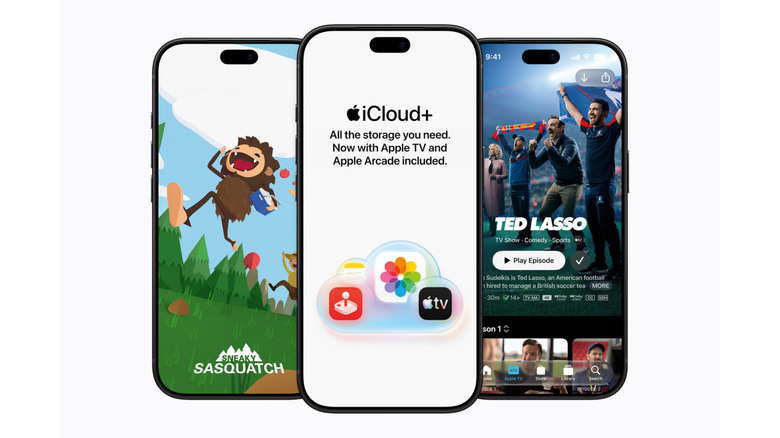
It is worth reading the Readiness news in the context of the wider iOS 27 launch, which centers on Siri AI. Apple's pitch increasingly rests on intelligence layered across its devices rather than on any single application. A health score generated on the wrist and interpreted by an assistant on the phone is a tidy illustration of that strategy — sensors collecting data, software making sense of it, and an assistant delivering it at the right moment.
That combination also raises the stakes on accuracy and messaging. Health-adjacent guidance carries expectations that a weather widget does not. Regulators in multiple markets have scrutinized wellness claims before, and Apple has generally responded by keeping language measured and positioning features as informational rather than diagnostic.
What to Watch Next
The clearest signal will come when Apple publishes feature documentation or demonstrates the app directly. At that point, the meaningful comparisons will be about scoring methodology, transparency and whether the company lets users interrogate the number rather than simply accept it.
For now, the takeaway is modest but real: Apple Watch is adding a fitness-oriented Readiness app, and its arrival alongside the iOS 27 release with Siri AI shows a company continuing to treat health and intelligence as its two most important wearable differentiators. The name tells us the intent. The details will tell us whether it delivers.
This article is based on reporting by 9to5Mac. Read the original article.

Originally published on 9to5mac.com