Federal prosecutors in the Northern District of Texas have charged six lawful permanent residents and one undocumented immigrant with casting ballots in federal elections over the past eight years, a case the Justice Department presented as a significant advance in its crackdown on voting by non-citizens.
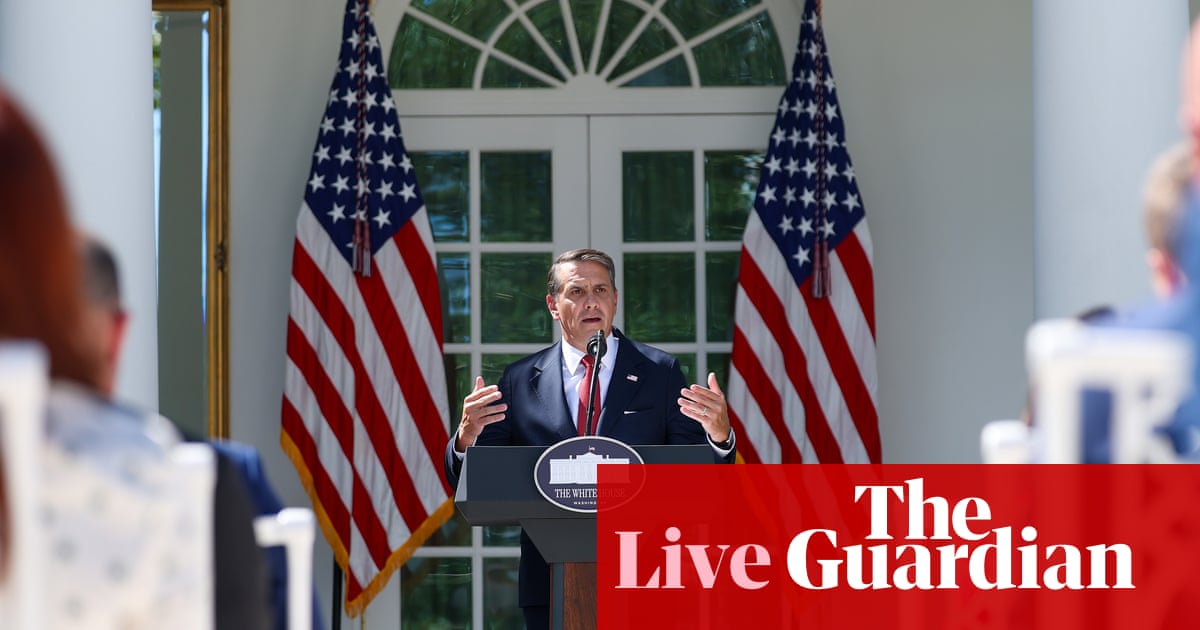
The charges were announced on Tuesday by Ryan Raybould, the US attorney for the Northern District of Texas. Earlier in the day, Attorney General Todd Blanche had alerted reporters at the White House to stand by for what he described as "a big development" in the federal effort to prosecute voting by non-citizens.
When the announcement finally arrived, the numbers behind it were considerably smaller than the buildup suggested. Six of the seven people charged voted in the 2024 general election, and two of those ballots were provisional and were never counted.
How much did the alleged votes matter?
For scale, 11,388,670 other Texans voted in that election. Donald Trump, whose unfounded claim that voting by non-citizens is rampant helped inspire the investigation, carried the state by a margin of 1,558,347 votes over his nearest rival, Kamala Harris.
Of the four ballots that were apparently counted in error, three were cast by green card holders from Nigeria, India and Mexico who may have wrongly believed they were eligible to vote. The fourth came from an undocumented immigrant from Mexico. Two of the seven accused voters submitted provisional ballots that election officials ultimately did not count, leaving the practical effect of the remaining ballots on any federal contest vanishingly small.
Prosecutors did not present evidence that the ballots changed the outcome of any race. The charges instead rest on the act of voting itself by people who are not permitted to take part in federal elections.

Key details at a glance
- Seven people were charged: six lawful permanent residents and one undocumented immigrant.
- The allegations cover voting in federal elections spanning roughly eight years.
- Six of the accused voted in the 2024 general election, and two of those ballots were provisional and uncounted.
- Four ballots were apparently counted in error, including one from an undocumented immigrant from Mexico.
- More than 11.3 million other Texans voted in the 2024 election, which Trump won by a margin exceeding 1.5 million votes.
Who is allowed to vote, and who is not
Lawful permanent residents are barred from voting in federal elections. They are, however, permitted to cast ballots in local elections in the District of Columbia and in certain jurisdictions within three states: California, Maryland and Vermont. That patchwork of local rules can leave some green card holders uncertain about where the boundary lies, even though the federal prohibition is unambiguous.
The people charged in Texas include green card holders who, according to the account laid out by prosecutors, had gained lawful permanent status before casting ballots they were not entitled to cast. One of them voted two years after receiving a green card, according to the allegations.

An arrest filmed for television
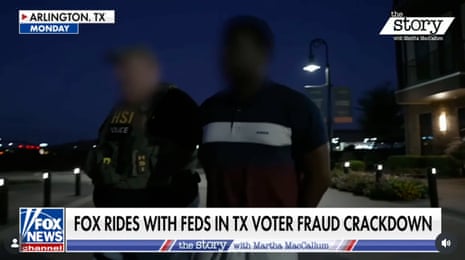
Even though the impact of the votes was described as almost immeasurably small, the administration framed the criminal charges against this handful of ineligible voters as a major enforcement action. Officials invited a Fox News crew to record the arrest of one of the green card holders: a 27-year-old from Nigeria who allegedly voted in 2018, two years after becoming a lawful permanent resident.
The resulting footage aired several times on Tuesday on the network. After a report on the arrest, the Fox host Will Cain remarked with sarcasm that he had been "reliably told this never happens," adding, "We know now at least it's happened seven times."
The decision to involve a television crew underscored how the announcement was packaged as much for public consumption as for the courtroom, with the attorney general's advance tease setting expectations for a development that, in raw numbers, touched a minuscule slice of the Texas electorate.
The claim that drove the investigation
The inquiry traces back to Trump's assertion that voting by non-citizens is widespread, a claim that has been repeatedly disputed but that nonetheless shaped the priorities of federal law enforcement. That framing helps explain why an announcement involving a handful of ballots was previewed in terms usually reserved for sweeping cases.
Supporters of the prosecutions argue that any number of illegal votes is too many and that enforcement deters future violations. Critics counter that the disparity between the rhetoric surrounding the charges and their actual electoral weight risks inflating a problem that remains rare while fueling doubts about the integrity of elections more broadly.

Other threads from a busy news day
The Texas announcement landed amid a day of rolling coverage on election law and policy. Kash Patel, the FBI director, was testifying before lawmakers on the Senate judiciary committee, part of a broader slate of Washington developments touching on ballot rules, the coming midterm elections and the intersection of politics and artificial intelligence.
What to watch next
The seven defendants now move through the federal court system in the Northern District of Texas, where the charges will be tested on the evidence rather than on the framing of a press event. How aggressively the Justice Department pursues similar cases — and how prosecutors in other districts follow suit — will determine whether Tuesday's announcement proves to be an isolated round of charges or the opening of a sustained enforcement campaign.
For now, the record contains both the charges and the arithmetic: seven people accused across eight years, six ballots cast in 2024, two of them never counted, and four apparently counted in error inside an electorate of more than 11 million voters.
This article is based on reporting by The Guardian. Read the original article.
Originally published on theguardian.com