Apple Folds TV and Arcade Into Cheaper iCloud+ Subscriptions
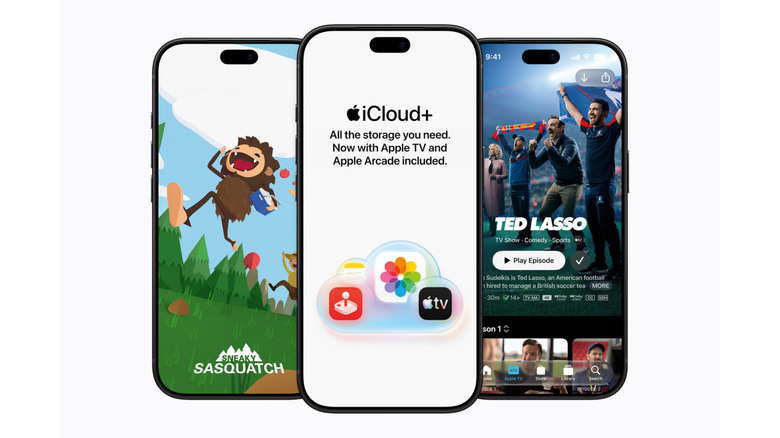
Apple is moving to blur the line between cloud storage and entertainment. The company is bundling more services — including Apple TV and Apple Arcade — into its cheaper iCloud+ subscription plans, a change that reaches roughly 100 countries, according to reporting from Engadget. Instead of treating storage as a standalone utility, Apple appears to be repositioning iCloud+ as a broader gateway into its services portfolio, with its entry-level paid tiers doing more of the work of attracting and holding on to subscribers.
The significance lies less in any single service than in the packaging. iCloud+ has traditionally been understood as the paid extension of iCloud: the plan users buy when the free allowance runs out, mainly for photo libraries, device backups and additional storage capacity. Adding Apple TV and Apple Arcade to that equation turns a maintenance purchase into something closer to an entertainment subscription — one that can reach people who might never have signed up for Apple's streaming or gaming catalog on its own.
What Is Actually Changing
The headline change is straightforward. Apple TV and Apple Arcade are being folded into iCloud+ subscriptions in certain regions, and the plans affected are the cheaper ones. The rollout covers around 100 countries, which points to a broad but not universal expansion — a regional push rather than a single global switch flipped at once.
- The base product: iCloud+ remains a paid storage subscription, the tier customers upgrade to when they need more space than the free allowance provides.
- The new inclusions: Apple TV and Apple Arcade, Apple's video streaming and games services, now form part of the bundle in participating markets.
- The affected tiers: The bundling applies to cheaper iCloud+ plans, not only the most expensive ones.
- The footprint: Approximately 100 countries are covered, described as certain regions rather than a worldwide launch.
That combination — lower-cost tiers plus a very wide country count — is the notable part. Bundling premium services into premium plans is a familiar upsell. Bundling them into the entry point of a paid storage product is a different calculation, and it suggests Apple is willing to trade some standalone subscription revenue for a larger base of iCloud+ subscribers.

Why Storage Became the Bundle Anchor
Storage is arguably the most universal paid relationship Apple has with its customers. Nearly every device owner eventually runs into a storage ceiling, and the upgrade path from free to paid iCloud+ is one of the simplest purchases in the company's ecosystem. That makes iCloud+ an unusually efficient place to attach additional services: the customer has already decided to pay Apple something, and the incremental step to a richer bundle is smaller than starting a separate subscription from scratch.
A different kind of subscription
Streaming and gaming services live and die on engagement. Storage subscriptions persist quietly in the background, renewed month after month with little thought. By merging the two, Apple gets a bundle that is sticky for reasons unrelated to whether a customer is actively watching or playing anything. The storage need keeps the subscription alive; the entertainment services give it a reason to feel worth more than the gigabytes alone.
The Regional Strategy Behind the Rollout
The phrase "certain regions" matters. A 100-country footprint is expansive, but it is deliberately not described as universal. That wording implies Apple is calibrating the offer market by market, weighing local competitive conditions, payment habits and the maturity of its services catalog in each territory. In some markets, standalone streaming and gaming subscriptions are already crowded and heavily discounted; in others, an all-in-one bundle may represent the most compelling way to introduce Apple's content services at all.
Regional rollouts also give Apple room to test the economics of bundling without committing its entire global pricing structure. If bundled storage plans perform well in the initial markets, the approach can be extended. If they cannibalize standalone subscriptions more than expected, the company can adjust before the model becomes universal.

What It Means for Existing Subscribers
For people already paying for iCloud+, the practical question is what changes on their bill and in their account. Bundling usually raises one of two outcomes: subscribers gain services they were not previously receiving, or they face a price adjustment that reflects the richer package. Which of those applies here has not been spelled out in the available details, and the answer will likely differ by region and by tier.
There is also the question of overlap. Anyone already paying separately for Apple TV or Apple Arcade while also holding an iCloud+ plan could end up with redundant subscriptions — a common friction point whenever companies consolidate services into packages.
Open Questions Worth Watching
- Whether the bundled services arrive automatically for current iCloud+ subscribers or require an opt-in.
- Whether pricing for the affected tiers changes alongside the added services.
- Which specific countries are included in the roughly 100-market rollout, and when each goes live.
- Whether existing standalone Apple TV and Apple Arcade subscribers are offered any migration path or credit.
- Whether the bundle eventually extends to higher-priced iCloud+ tiers or remains a feature of the cheaper plans.
These are not minor details. They determine whether this reads as a genuine value increase for subscribers or as a repackaging exercise that shifts spending from one Apple line item to another.

The Wider Bundling Trend
Apple's move fits a broader pattern across the technology industry, where subscription fatigue has made consolidation attractive. Consumers increasingly resist stacking separate monthly charges, and companies have responded by merging services into single packages. For Apple, bundling has an additional benefit: it deepens the relationship between hardware owners and the company's services business, which is a growing part of its overall revenue mix and is less tied to device upgrade cycles.
For subscribers, bundles cut both ways. They can reduce total cost compared with buying each service separately, and they simplify billing. They can also lock customers into ecosystems, make it harder to drop a single unwanted service, and mask price increases behind a longer list of included features.
The Bottom Line
Apple is folding Apple TV and Apple Arcade into its cheaper iCloud+ subscriptions across roughly 100 countries, turning a storage purchase into a broader entertainment and cloud package. The strategy is clear enough: use the near-universal need for storage as a funnel for services that might otherwise struggle to win subscribers individually in competitive markets.
What remains unclear is the fine print — pricing, eligibility, timing and how existing subscribers are treated. Those details will determine whether this reads as a generous expansion of iCloud+ or a quiet reshuffling of how Apple charges for the same set of products. Either way, it marks another step in the company's gradual conversion of iCloud+ from a utility bill into a bundle.
This article is based on reporting by Engadget. Read the original article.
Originally published on engadget.com