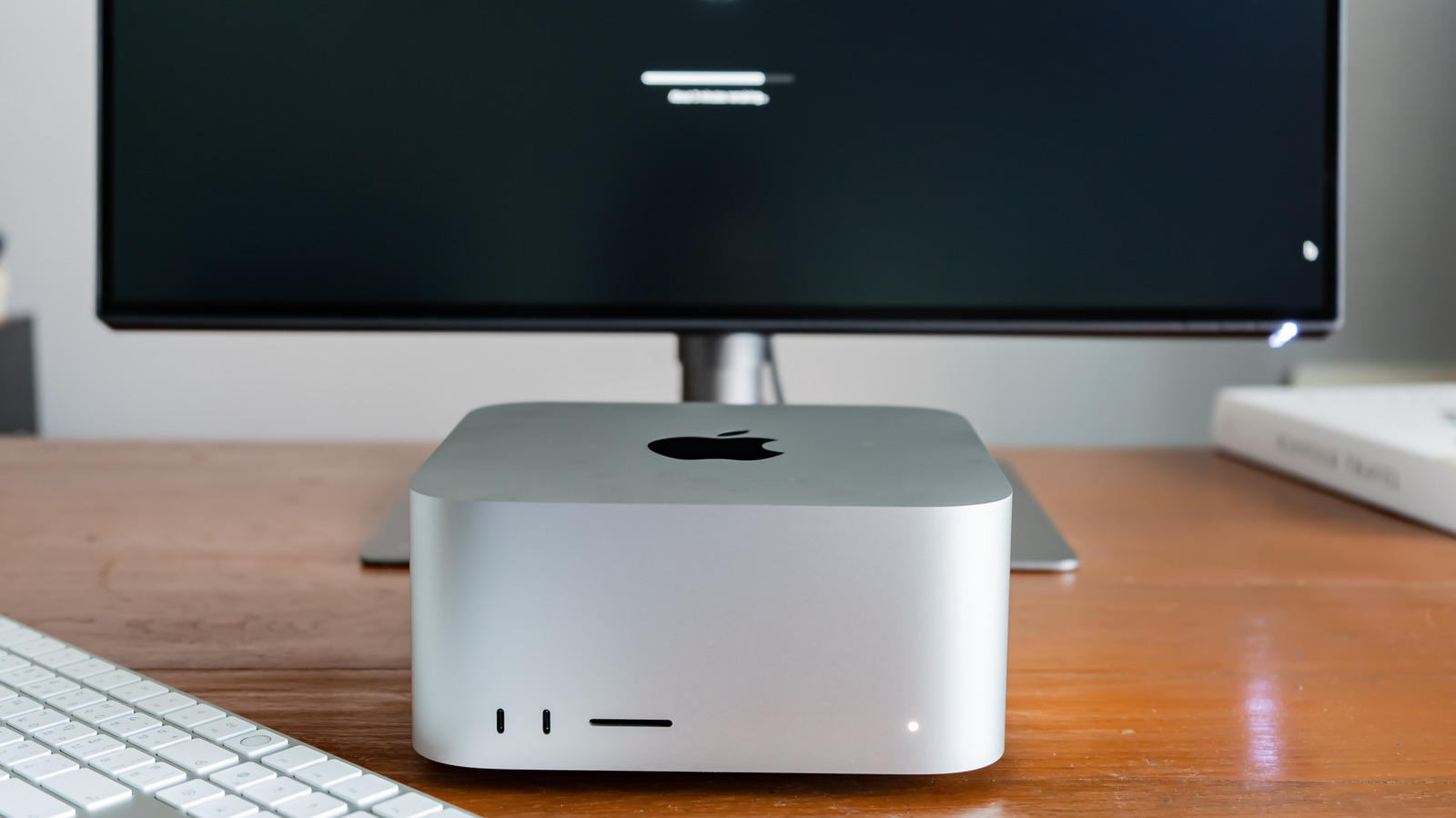
Few machines in Apple's lineup have followed as disciplined a script as the Mac Studio. According to Engadget's retrospective look at the product, the compact desktop has evolved mainly through internal upgrades, real-world performance gains and only subtle design changes — a pattern repeated with each new generation rather than a single dramatic reinvention.
That consistency is the story. Where other desktop lines have been reshaped, renamed or abandoned, the Mac Studio has kept its identity intact while its internals moved forward. For anyone tracking Apple's professional hardware strategy, the machine is a useful case study in how the company treats a mature product.
A Familiar Silhouette, a Moving Target
The most striking thing about the Mac Studio's history is how little its exterior has needed to change. Each generation arrives looking broadly like the one before it, with refinements rather than overhauls. Apple has effectively treated the chassis as settled hardware and concentrated its engineering effort where reviewers and buyers tend to look first: what sits inside.
That approach has consequences. A stable enclosure means accessory ecosystems, mounting solutions and desk setups keep working across generations. It also means the machine's improvements are less immediately visible on a spec sheet photo and more dependent on benchmarks, thermal behavior and sustained workloads to reveal themselves.
Internal Upgrades Drive Each Refresh
Engadget frames internal upgrades as the primary engine of the Mac Studio's evolution. Rather than chasing visual novelty, Apple has refreshed the components that determine what the machine can actually do, generation after generation.
That pattern matters because it shifts the buying conversation away from design and toward capability. Prospective owners are not asked to weigh a new look against an old one; they are asked whether the newer internals justify the cost of moving up.
- Successive generations have centered on updated internal hardware rather than external redesign.
- The enclosure has remained broadly consistent, making each refresh an internal rather than visual event.
- Design tweaks have been described as subtle, suggesting refinement instead of reinvention.
Performance Gains That Compound
The second pillar of the Mac Studio's arc is performance. Each generation has been positioned to deliver gains over the last, and those gains accumulate for anyone who skips a release or two before upgrading.
This compounding effect is what makes the product interesting beyond a single launch cycle. A buyer who jumps from an early model to a current one is not measuring a modest step but several years of incremental improvement stacked together. For creative professionals, developers and others running sustained workloads, that accumulated distance is often the real motivation to upgrade — not any single year's headline number.
Why Sustained Performance Matters More Than Peaks
Desktop workstations are rarely judged on a single burst of speed. They are judged on how they behave across long renders, large datasets, extended builds and multitasking under load. A machine that holds its performance steady over hours is more valuable than one that sprints briefly and then throttles.
Because the Mac Studio's changes have been internal and iterative, its story is less about spectacle and more about whether each generation handles sustained pressure better than the last.

Subtle Design Changes, Deliberate Restraint
Not every generation has been a pure internal exercise. Engadget notes that subtle design changes have also shaped the lineup, which is consistent with Apple's habit of refining rather than rebuilding products that already work.
Those tweaks tend to be the kind that matter in daily use more than in marketing images: how the machine fits a desk, how it handles heat, how it integrates with the rest of a workstation. They rarely dominate coverage, but they accumulate into a product that feels more considered with each pass.
Why Apple Favors Evolution Over Redesign
There are practical reasons a company would keep a successful compact desktop on a slow visual clock. Professional buyers invest in a workflow, not just a box. Monitors, docks, storage, stands and software licenses all assume a certain footprint and a certain set of expectations. Rewriting those assumptions every cycle creates friction for the exact customers Apple wants to keep.
Evolution also lets Apple spend its design budget on engineering. When the enclosure is stable, thermal and internal layout work can be refined generation over generation instead of restarted from scratch.

What This Means for Professional Workflows
For studios, labs and independent professionals, the Mac Studio's trajectory suggests a predictable upgrade rhythm rather than disruptive generational breaks. That predictability has value of its own.
- Teams can plan hardware refreshes around internal gains instead of waiting for a chassis redesign.
- Existing desk setups and peripherals remain relevant across generations.
- Buyers who skip a generation can still expect a meaningful jump when they finally upgrade.
- Secondhand machines retain relevance longer because the platform's identity stays stable.
The Buyer's Perspective
Anyone weighing a Mac Studio purchase should read the product's history as a signal about what future updates will look like. If the pattern holds, the next generation will again prioritize what is inside the box over how the box looks.
That favors buyers who care about workload performance and longevity over those who want each purchase to feel visibly new. It also means the decision to upgrade is best framed as a question about accumulated gains: how far has the platform moved since the model currently on your desk?
The Through-Line: Consistency as a Feature
Taken together, the Mac Studio's evolution reads as a deliberate strategy. Internal upgrades provide the substance, performance gains provide the argument, and subtle design changes keep the product feeling current without destabilizing it.
Engadget's overview captures a machine that has changed a great deal without ever appearing to change very much — a quiet, cumulative kind of progress that suits a desktop built for people who would rather think about their work than their hardware.
This article is based on reporting by Engadget. Read the original article.
Originally published on engadget.com