A regional cloud outage turns into a long reconstruction job
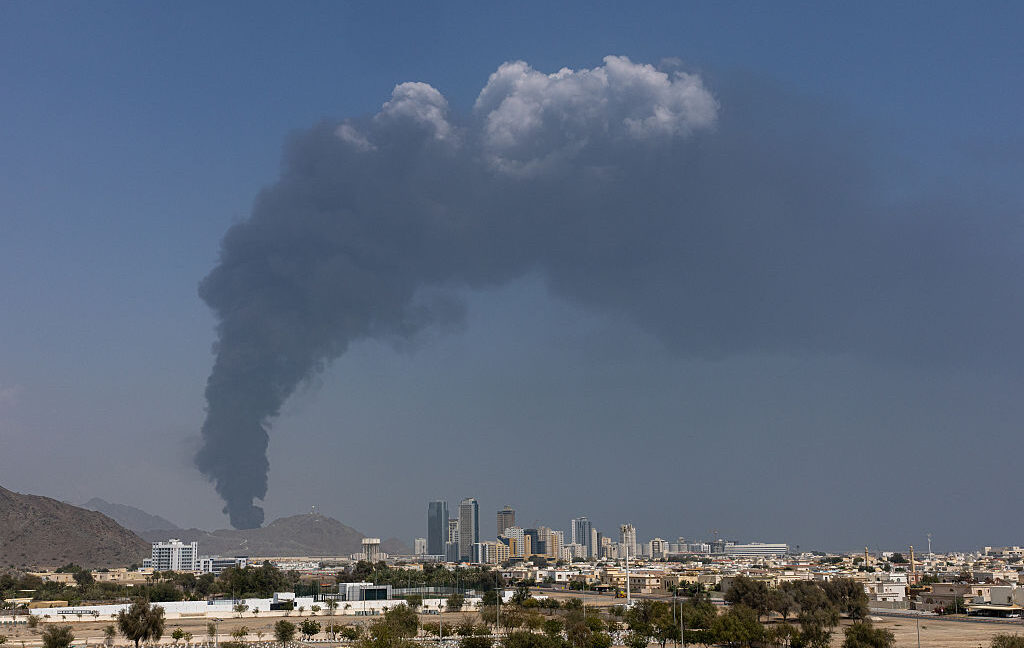
Amazon Web Services has warned that customers in two of its Middle East cloud regions may be waiting several more months for normal service to return after facilities in the United Arab Emirates and Bahrain were damaged during the conflict in the region. The company’s April 30 status update said the UAE and Bahrain regions suffered damage and remain unable to support customer applications, turning what first looked like an acute outage into a much longer recovery effort.
The timeline matters. The drone strikes took place about two months earlier, and AWS is now signaling that full restoration could take nearly half a year in total. That moves the story beyond a temporary disruption and into a more consequential infrastructure event for companies that depend on those regions for computing, storage, and application availability.
Billing stops while recovery continues
One of the clearest signs of the severity of the damage is AWS’s billing decision. The company said relevant billing operations are suspended while it works to restore normal operations. Ars Technica reported that AWS had already waived all usage-related charges for March 2026 in the affected regions, at an estimated cost of $150 million, and the latest update suggests that some form of billing relief will continue while restoration work remains incomplete.
That is not a routine customer-service gesture. It indicates AWS expects the impact to be material enough that normal commercial treatment would be difficult to justify while core services are still impaired. For customers, the suspended billing may soften the financial blow, but it does not eliminate the technical and operational cost of relocating systems or recovering inaccessible workloads.

Customers are being pushed to leave the affected regions for now
AWS is strongly recommending that customers migrate resources to other cloud regions and use remote backups to restore inaccessible systems. That guidance underscores a basic reality of large-scale outages: when physical damage is involved, there is often no quick software fix. The path back runs through hardware replacement, facility repairs, inspection, and staged restoration.
Some companies have already shown what that contingency response looks like. Dubai-based super app Careem, which provides ride-hailing as well as household, food, and grocery services, was able to return online after an overnight migration to other servers. That example illustrates both the resilience cloud customers can build into their operations and the sharp divide between firms that prepared for regional failure and those that did not.
For organizations without recent remote backups, duplicated infrastructure, or tested migration plans, the disruption is likely to be much more painful. The AWS update itself points to inaccessible resources, a reminder that cloud availability still depends on physical sites, power systems, network gear, and recovery procedures that can all be damaged at once in a conflict zone.
What the damage reportedly looks like
The scale of the repair window is consistent with the description of the underlying damage. Ars Technica cited a previously reported internal document describing one affected data center with 14 EC2 server racks knocked offline and five more impacted, along with flooding and water damage caused by fire suppression systems. Even without broader public detail on every site, that account helps explain why the recovery period is measured in months rather than days.
Cloud outages are often discussed in abstract terms such as zones, regions, failover, and resilience. This incident strips away some of that abstraction. Behind every region are buildings, cooling systems, fire controls, racks, and networking equipment that can be physically disabled by war. Once that happens, even the world’s largest cloud operator is constrained by construction timelines, replacement logistics, and the safety conditions around the damaged sites.

A stress test for cloud resilience in geopolitically exposed markets
The AWS disruption is also a reminder that cloud strategy is inseparable from geopolitical risk. For customers operating in or serving the Middle East, low-latency regional infrastructure can be attractive or essential. But concentrating workloads in a specific region also creates exposure when conflict spills into civilian and commercial infrastructure.
The incident does not suggest that regional cloud deployment is the wrong choice by default. It does, however, highlight the difference between using a region and depending entirely on it. Multi-region architectures, cross-region backups, tested recovery playbooks, and clearly prioritized workloads all become more important when the risk is not a software bug or a power failure but direct physical damage.
There is also a reputational dimension for AWS. The company is not being accused here of causing the outage, and the decision to suspend billing may help preserve trust. Still, the event shows that even hyperscale providers cannot fully insulate customers from the consequences of regional conflict. What they can do is make recovery pathways clearer, support migrations, and reduce the commercial burden while customers stabilize operations elsewhere.
The broader lesson
This is one of those moments when the cloud looks less like an invisible utility and more like strategic infrastructure. A regional outage lasting months affects not just internal IT operations but transportation apps, commerce systems, logistics tools, and consumer services that sit on top of cloud platforms. When the underlying facilities are damaged, resilience is no longer a theoretical architecture diagram. It becomes an operational discipline that determines which companies can keep serving users and which go dark.
For now, the central fact is simple: AWS says normal operations in its UAE and Bahrain regions will take several more months to restore. That makes this not just a service incident but a sustained infrastructure disruption, with consequences for customers, cloud planning, and the way companies assess geopolitical exposure in their digital operations.
This article is based on reporting by Ars Technica. Read the original article.

Originally published on arstechnica.com