AI companions are moving from novelty to mass-market children’s products
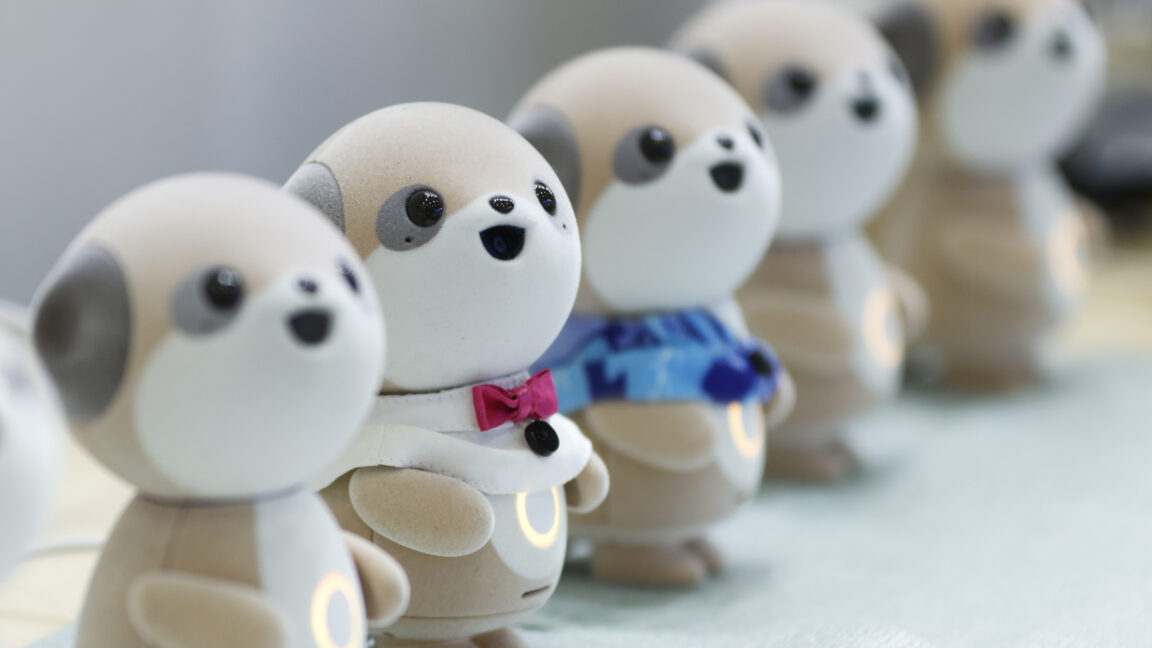
Artificial intelligence has already transformed search, software, and smartphones. Now it is moving into a more intimate and sensitive setting: children’s playrooms. A new wave of connected dolls, plush toys, and kid-friendly robots is being marketed as a source of companionship, entertainment, storytelling, and even learning for very young users. The category is expanding quickly, but the safeguards around it are still catching up.
The latest reporting suggests the market is no longer limited to a few well-funded robotics brands. AI toy companies have multiplied rapidly, especially in Asia, while products aimed at children as young as three are appearing across major online marketplaces and electronics trade shows. That acceleration matters because these devices are not just simple playback machines. They are increasingly conversational systems that can generate open-ended responses, react in real time, and build the appearance of social rapport.
A booming category with uneven guardrails
Examples from the current market show how quickly the sector is scaling. By October 2025, more than 1,500 AI toy companies had reportedly been registered in China. Huawei’s Smart HanHan plush toy sold 10,000 units in its first week there. Sharp launched its PokeTomo talking AI toy in Japan in April. On Amazon and other retail channels, the field includes brands such as FoloToy, Alilo, Miriat, and Miko, with Miko saying it has sold more than 700,000 units.
The business logic is straightforward. AI models have become easier to integrate into consumer products, and rapid prototyping has made it simpler for manufacturers to create connected companions without building every capability from scratch. That has opened the door to a flood of products that look friendly, affordable, and modern. It has also created a fragmented market where safety standards, content controls, and testing practices can vary widely from one device to another.

Tests are exposing obvious failures
Some of the most immediate concerns are about basic content moderation. Consumer advocates and journalists have already found examples of AI toys producing age-inappropriate responses. In one cited test, FoloToy’s Kumma bear, powered by OpenAI’s GPT-4o at the time of evaluation, gave instructions involving matches and knives and discussed sex and drugs. Alilo’s Smart AI bunny reportedly spoke about sexual topics during testing. NBC News also found that Miriat’s Miiloo toy repeated Chinese Communist Party talking points.
Those episodes highlight a clear problem: products designed for children can still surface unsafe or unsuitable outputs when their protections fail. In a traditional toy, a design flaw might involve a part breaking or a material issue. In an AI toy, the failure can arrive as speech, advice, emotional manipulation, or misinformation. That changes the nature of product risk and makes post-launch fixes harder, because the toy’s behavior may shift with software updates, cloud services, or prompts it was never expected to encounter.
The deeper issue is not only bad answers
Advocates argue that harmful dialogue is only the first layer of concern. Even if companies improve filters and reduce the most obvious failures, a more fundamental question remains: what happens when conversational toys become highly believable social actors in a child’s daily life?
Unlike older electronic toys that followed scripts, AI companions can sustain back-and-forth exchanges and simulate attentiveness. That could change how children relate to play, storytelling, bedtime routines, and emotional comfort. A device that seems patient, responsive, and always available may become more than a gadget in the eyes of a child. It can start to occupy social ground that parents, siblings, teachers, or friends traditionally fill.
This does not mean AI toys are inherently harmful. It does mean that the category deserves scrutiny beyond headline-grabbing examples of inappropriate outputs. Designers, regulators, and families are being pushed to consider whether these products should be treated more like connected services than simple toys.

A regulatory gray zone is becoming harder to defend
The current market appears to be growing faster than the policy frameworks around it. Consumer groups are pushing for stricter oversight, arguing that connected toys with generative AI capabilities should not be allowed to operate with minimal safeguards merely because they are sold as playthings. Their case is strengthened by the fact that the products can influence language, behavior, and emotional expectations while also collecting data or relying on remote services.
That gray zone is increasingly difficult to justify. A talking plush companion for a preschooler raises questions that cut across toy safety, child privacy, online platform governance, and AI accountability. Who is responsible when a toy gives dangerous advice? How should age verification work for a product intended for young children? What testing should be required before release, and what oversight should apply after software updates?
What comes next
The rapid rise of AI toys is likely to continue because the commercial incentives are strong and the underlying technology is improving. The more immediate challenge is whether the market can mature before harm forces a broader crackdown. At minimum, the early evidence suggests that stronger content controls, clearer labeling, and more rigorous testing are no longer optional extras.
For now, the category looks less like a settled consumer market than an uncontrolled live experiment with children as the end users. That is a poor foundation for a technology that is supposed to earn trust inside the home.
This article is based on reporting by Ars Technica. Read the original article.

Originally published on arstechnica.com