Introduction
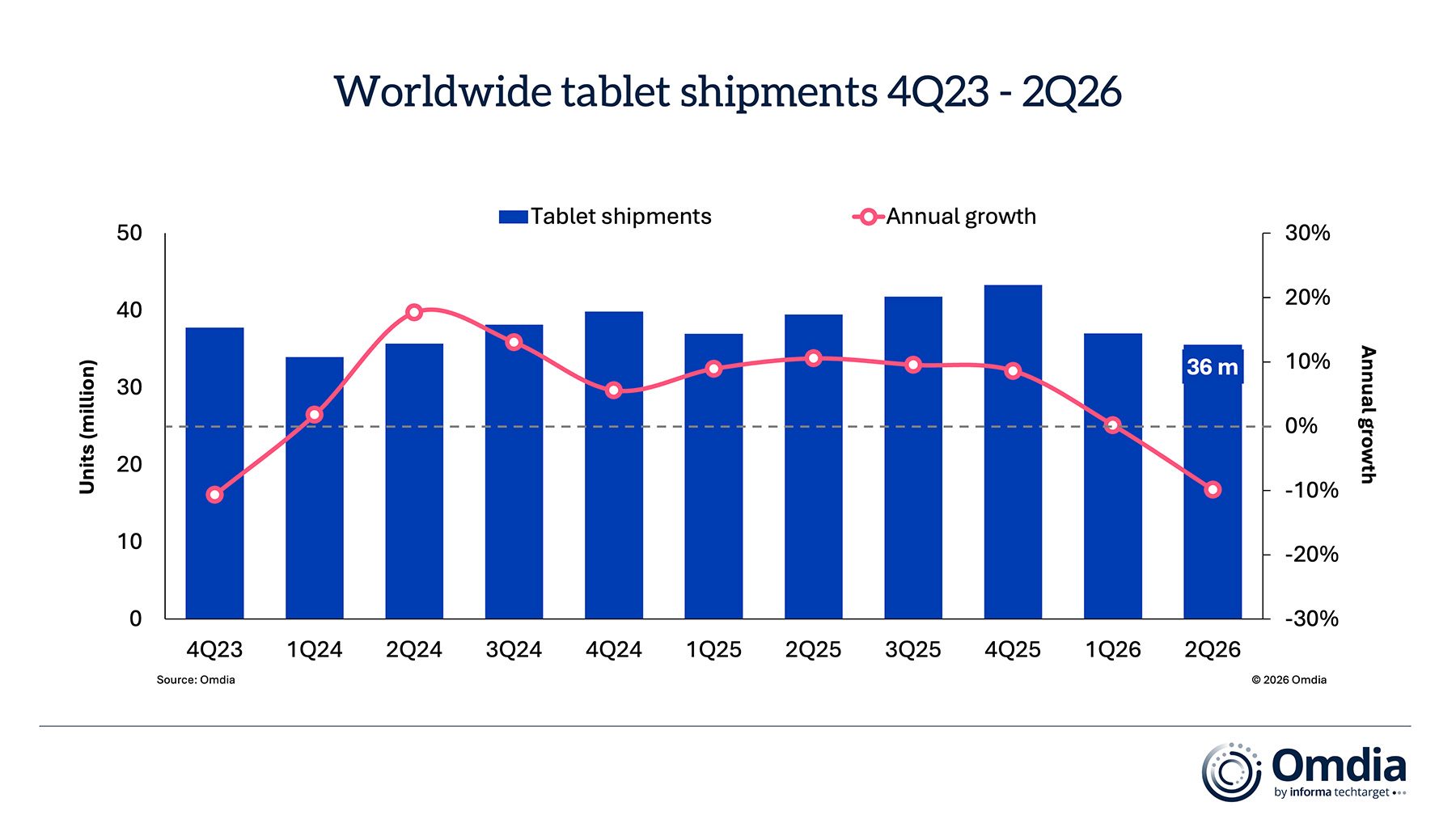
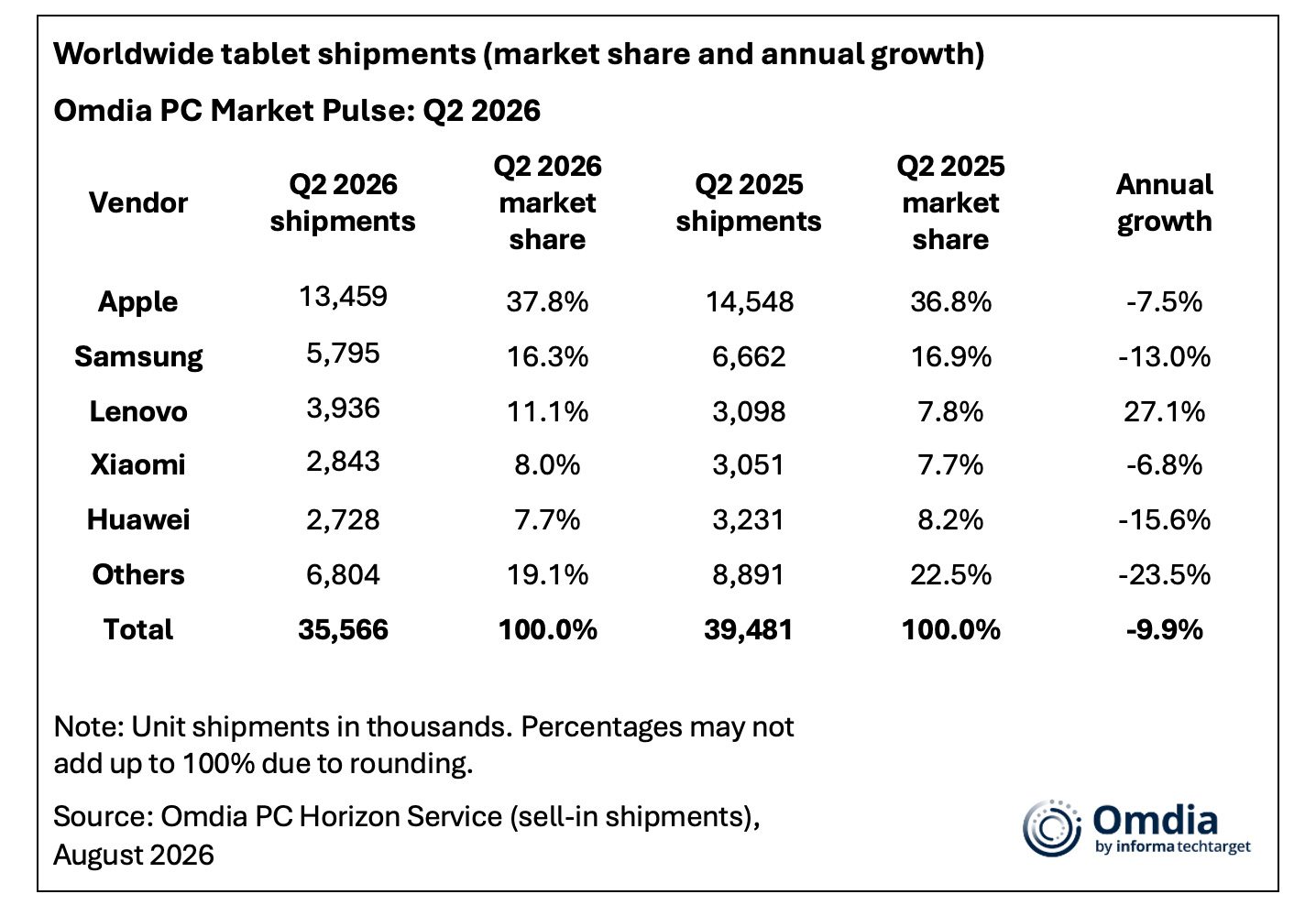
Apple's iPad business has faced headwinds in recent quarters, and new data from the second quarter of 2026 confirms that the tablet market is contracting. According to a fresh industry report, iPad shipments declined by 8% year-over-year in Q2 2026, aligning with a broader downturn in the global tablet market. This follows Apple's own earnings report last week, which revealed a 5% drop in iPad revenue for the June quarter. The new figures provide context for Apple's performance, suggesting that the company is not alone in facing challenges as consumer demand for tablets softens.
Global Tablet Market Trends
The global tablet market experienced a significant decline in Q2 2026, with overall shipments falling by a similar margin. Industry analysts attribute this downturn to several factors, including lengthening replacement cycles, economic uncertainty, and increased competition from other device categories such as foldable smartphones and lightweight laptops. Consumers are holding onto their existing tablets longer, and new buyers are increasingly opting for alternative devices that offer similar functionality with added versatility.
The report highlights that the tablet market's contraction is not uniform across all regions. While mature markets like North America and Europe saw moderate declines, emerging markets experienced sharper drops, partly due to currency fluctuations and reduced purchasing power. However, some segments, such as education and enterprise, showed resilience, with demand for rugged and specialized tablets remaining steady.

Apple's iPad Performance
Apple's iPad shipments fell 8% year-over-year in Q2 2026, a slightly steeper decline than the overall market's contraction. This suggests that Apple is losing some ground to competitors, particularly in the mid-range and budget segments where Android-based tablets offer compelling value. Despite this, Apple maintains a strong position in the premium tablet market, with the iPad Pro and iPad Air continuing to attract professionals and creative users.
The revenue decline of 5% reported by Apple for the June quarter is partially offset by higher average selling prices (ASPs). Apple has successfully shifted its iPad lineup toward higher-end models, which has helped mitigate the impact of lower shipment volumes. However, the overall trend indicates that the iPad, once a growth driver for Apple, is now facing saturation in its core markets.
Factors Behind the Decline
Several key factors are contributing to the decline in iPad shipments and the broader tablet market. One major factor is the increasing longevity of tablets. Unlike smartphones, which are often upgraded every two to three years, tablets are frequently used for five years or more. This extended replacement cycle reduces the frequency of new purchases.
Another factor is the rise of foldable devices and 2-in-1 laptops, which are encroaching on the tablet's traditional territory. Consumers who once considered a tablet as a secondary device are now finding that their smartphone or laptop can fulfill those needs. Additionally, economic pressures, including inflation and higher interest rates, have made consumers more cautious about discretionary spending on non-essential electronics.
Furthermore, the tablet market has seen a lack of compelling innovation in recent years. Incremental upgrades to processors, displays, and cameras have not been enough to entice existing owners to upgrade. The absence of a "must-have" feature has slowed the upgrade cycle considerably.

Competitive Landscape
Apple faces stiff competition from Samsung, Lenovo, and Amazon, among others. Samsung's Galaxy Tab series continues to be a popular choice for Android users, offering a wide range of price points and features. Lenovo has carved out a niche in the budget and education segments, while Amazon's Fire tablets dominate the low-end market with their aggressive pricing and integration with Amazon's ecosystem.
In the premium segment, Apple's iPad Pro remains the benchmark, but competitors are closing the gap. Samsung's high-end tablets now feature AMOLED displays and advanced S Pen support, while Microsoft's Surface Pro line continues to appeal to professionals who need a full desktop experience in a portable form factor. These alternatives are giving consumers more reasons to consider non-iPad options.
Future Outlook
Looking ahead, the tablet market is expected to remain challenging for the near term. Analysts predict that the market may stabilize in 2027 as replacement cycles begin to align and new use cases emerge, particularly in areas like remote work, education, and healthcare. For Apple, the path forward may involve further differentiation of its iPad lineup, possibly by introducing new form factors or integrating advanced features like augmented reality (AR) capabilities.
Apple's recent focus on the iPad as a productivity tool, with features like Stage Manager and improved multitasking, could help sustain demand among professionals. However, the company may need to consider pricing strategies to attract budget-conscious consumers, especially in emerging markets where Android tablets are gaining ground.

Conclusion
The 8% decline in iPad shipments in Q2 2026 is a clear signal that the tablet market is in a downturn. While Apple's premium positioning provides some buffer, the company must navigate a landscape where consumer preferences are shifting and competition is intensifying. The broader market's decline suggests that this is not just an Apple-specific issue but a reflection of the tablet's maturation as a product category. As the market evolves, Apple's ability to innovate and adapt will be crucial in maintaining its leadership position.
This article is based on reporting by 9to5Mac. Read the original article.
Originally published on 9to5mac.com