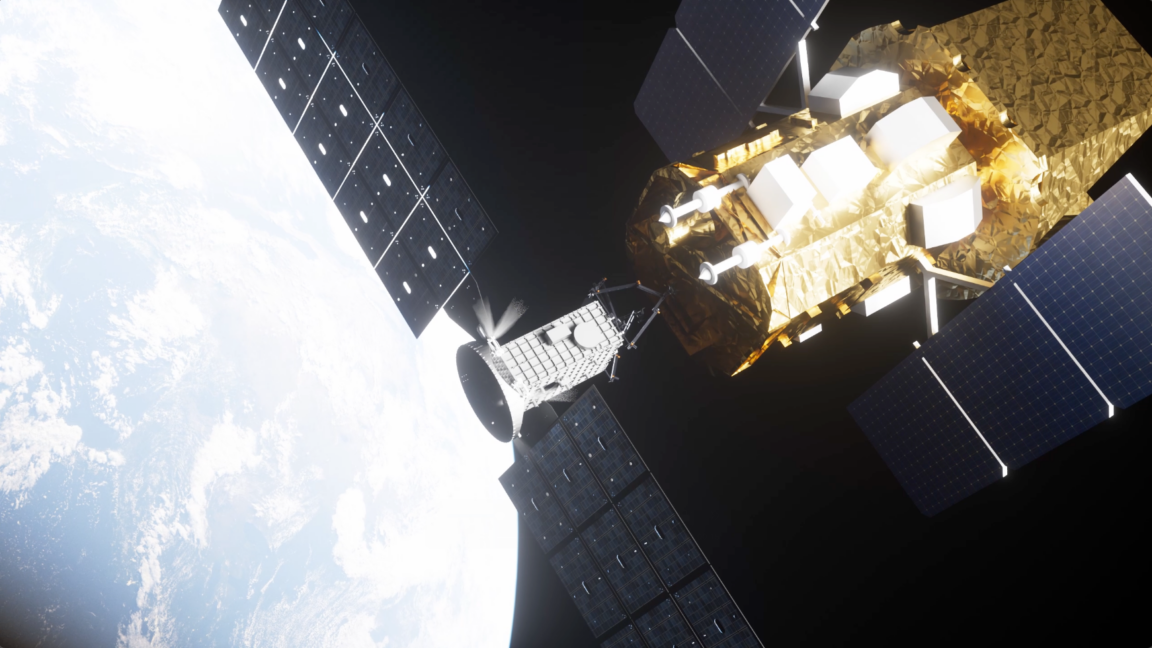
A commercial rescue mission for NASA’s Swift telescope is still alive
An unusually ambitious satellite servicing mission has entered its most fragile phase. Katalyst Space Technologies, the startup attempting to rendezvous with and boost NASA’s aging Swift gamma-ray observatory, is working to recover its Link spacecraft after the vehicle spun out of control in orbit. The incident disrupted communications, knocked out two of the craft’s three reaction wheels, and raised new doubts about whether the company can complete the rescue before Swift drops too low for capture.
Even so, the mission is not over. According to details reported August 1, Katalyst still has working propulsion, electrical power, and the rendezvous and robotics systems needed for a capture attempt. The company’s immediate task is to stabilize the spacecraft, restore reliable control, and buy enough time to resume the pursuit of Swift.
The stakes are larger than one troubled spacecraft. This is the first time NASA has contracted with a commercial company to service one of its satellites in orbit. If successful, the mission would mark a notable step for a space industry that has long promoted refueling, repair, relocation, and debris-management services as the next phase of orbital operations. If it fails, the reasons will be studied just as closely, because the mission sits at the intersection of tight timelines, startup execution, and real operational demand.
What went wrong
The Link spacecraft launched on July 3 to chase Swift, a NASA observatory valued in the report at $500 million. The mission had proceeded mostly according to plan until a week before the Ars Technica report, when the spacecraft began rotating on multiple axes more than 200 miles above Earth. That tumble made it difficult to maintain a reliable communications link with the ground and complicated efforts to regain attitude control.
Engineers later identified a problem involving some of the spacecraft’s cold gas thrusters, which are used for fine attitude control. At roughly the same time, two of Link’s three reaction wheels stopped working. That combination was serious because spacecraft normally rely on reaction wheels for precise pointing and on thrusters for control authority when those wheels are saturated, degraded, or unavailable. Losing redundancy in both systems during an active rendezvous mission is the kind of anomaly that can quickly end a campaign.
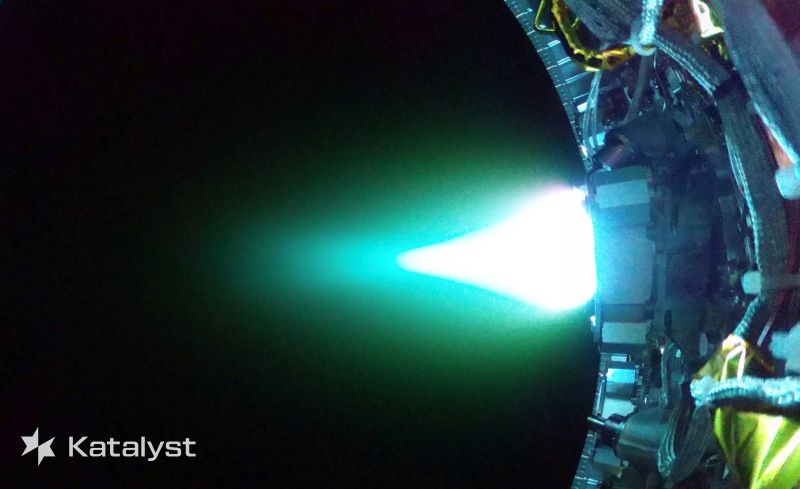
Katalyst has nevertheless reported that several core systems remain healthy. The spacecraft still has its power supply, three xenon-fueled electric thrusters, and the hardware required for rendezvous and robotic capture. Those surviving capabilities form the basis of the recovery plan now underway.
How engineers are trying to recover the mission
The first step is not to resume the approach to Swift, but to stop the tumbling. Katalyst’s ground team, operating from a control center near Denver, has been using the spacecraft’s plasma engines to gradually reduce the spin. Those engines were designed primarily for orbit-raising, not as the spacecraft’s main attitude-recovery tool, but they can vector thrust and therefore provide a path back toward stability.
That improvisation says a lot about how modern small-spacecraft missions are run. Commercial operators increasingly build vehicles with overlapping capabilities, software-defined control approaches, and propulsion systems that can serve more than one purpose in a contingency. Link’s current condition is a test of whether that flexibility is enough when multiple subsystems degrade at once.
Katalyst chief executive Ghonhee Lee said the company still believes a capture attempt is possible. That phrasing is careful. It does not promise success, and it leaves open the chance that the mission may shift from rescue to demonstration or controlled end-of-life operations if the vehicle cannot be stabilized quickly enough. But it also indicates that the company does not view the anomaly as automatically fatal.
The timeline is unforgiving. The report states that in a few months Swift will descend to an altitude low enough to make the rescue infeasible. That means every day spent recovering Link reduces schedule margin for rendezvous, approach, capture, and the subsequent orbit-boost maneuver. In orbital servicing, timing is not a secondary constraint; it is part of the mission architecture.
Why this mission matters beyond Swift
Swift is a scientifically important observatory, but the broader significance of this mission is industrial. Satellite servicing has been a recurring promise in the commercial space sector, yet successful, repeatable business models remain limited. Missions are technically hard, deeply mission-specific, and exposed to unforgiving on-orbit failure modes. Capturing and moving another spacecraft is more complex than conventional station-keeping or satellite deployment, and it introduces legal, operational, and insurance questions as well.
NASA’s decision to contract a startup on a compressed schedule made the mission especially notable. The report says the agency gave Katalyst less than a year to put the effort together. That speed demonstrates both urgency and confidence in commercial execution, but it also narrows testing and contingency margins compared with a longer, more traditional government program. The current anomaly will inevitably sharpen debate over how much schedule compression is reasonable for first-of-its-kind servicing missions.
At the same time, it would be a mistake to interpret the setback as evidence that commercial servicing is unworkable. Early space operations have often advanced through partial successes, unexpected failures, and design lessons learned under real mission pressure. If Katalyst can recover Link sufficiently to attempt a capture, even without full mission success, the result could still inform future vehicle architectures, propulsion choices, fault-management software, and contract structures for similar missions.
A pivotal test for on-orbit servicing
For now, the mission remains in a narrow corridor between recovery and expiration. Link still has functional systems that matter. The target spacecraft is still in reach, at least for the moment. NASA still has a live demonstration of whether a commercial partner can do something governments have long wanted but rarely operationalized: extend the useful life of an existing spacecraft in orbit.
The next milestone is straightforward in concept and difficult in practice. Katalyst must stabilize the vehicle enough to restore dependable command and control, then determine whether its remaining guidance and propulsion capability can support a safe rendezvous profile. Only after that can the mission return to its original objective of grappling Swift and raising its orbit.
That is why the anomaly has drawn so much attention. This is not merely a hardware glitch on a small satellite. It is a real-time test of whether the commercial servicing model can absorb failure, improvise with the systems that remain, and still deliver something operationally meaningful. Swift’s future now depends as much on that resilience as on the original mission plan.
This article is based on reporting by Ars Technica. Read the original article.
Originally published on arstechnica.com


