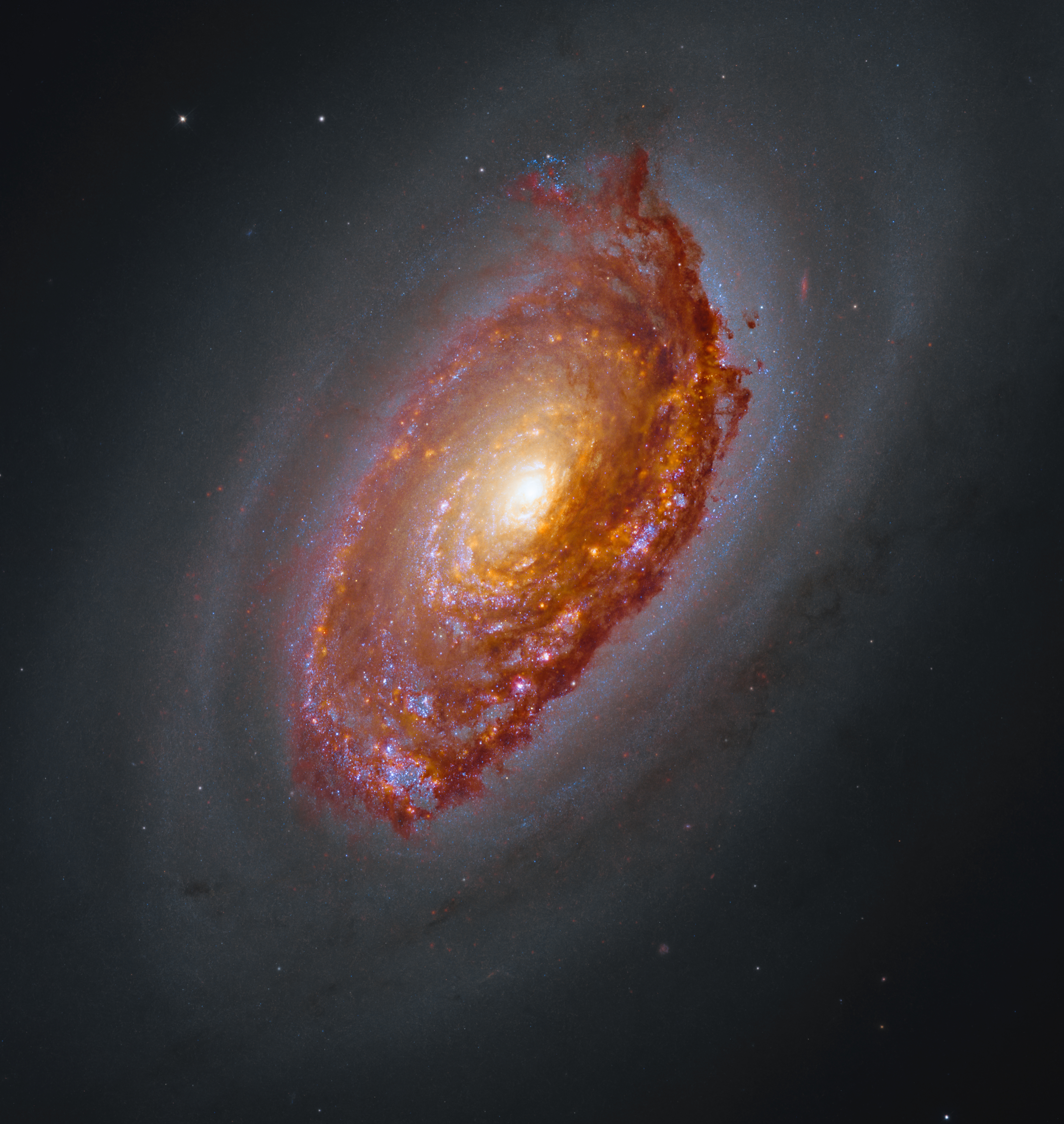
परिचित गॅलेक्सीचे अधिक स्पष्ट बहु-तरंगलांबी चित्रण
नासाने मेसियर 64, म्हणजेच ब्लॅक आय गॅलेक्सी, याची एक नवीन संयुक्त प्रतिमा प्रसिद्ध केली आहे. जेम्स वेब स्पेस टेलिस्कोप आणि हबल स्पेस टेलिस्कोप यांच्या निरीक्षणांना एकत्र करून तयार केलेल्या या प्रतिमेत तिची ठळक धूळपट्टी आणि तिच्या सर्वात विचित्र वैशिष्ट्यांपैकी एक दिसते: गॅलेक्सीच्या बाहेरील भागातील वायू केंद्राजवळील वायू आणि तार्यांच्या विरुद्ध दिशेने फिरतो.
ही प्रतिमा 20 मार्च 2026 ची आहे आणि नासाने ती 12 जून रोजी प्रकाशित केली. यात वेबचा नजीकचा आणि मध्यम इन्फ्रारेड डेटा हबलच्या अल्ट्राव्हायोलेट, दृश्यमान, आणि नजीकच्या इन्फ्रारेड निरीक्षणांशी एकत्र केला आहे. परिणाम केवळ आकर्षक चित्र नसून, बहु-तरंगलांबी खगोलशास्त्र एखाद्या साध्या सर्पिलसारखी दिसणाऱ्या गॅलेक्सीचा अंतर्निहित इतिहास कसा उघड करू शकते याची आठवण करून देतो.
मेसियर 64 ही तिच्या उजळ मध्यभागाला अंशतः झाकणाऱ्या गडद धूळपट्टीसाठी ओळखली जाते, ज्यामुळे “ब्लॅक आय” हे टोपणनाव पडले. ती वैशिष्ट्ये स्वतःच प्रभावी आहेत, पण नासाने वर्णन केलेली अंतर्गत गतिकी या वस्तूला वैज्ञानिकदृष्ट्या अधिकच रोचक बनवते.
स्वतःच्याच विरोधात फिरणारी गॅलेक्सी
दिलेल्या स्रोत मजकुरानुसार, मेसियर 64 च्या बाहेरील भागातील वायू, अंतर्गत भागातील वायू आणि तार्यांच्या विरुद्ध दिशेने फिरतो. अशा प्रकारचे प्रतिघूर्णन दुर्मिळ आहे, कारण याचा अर्थ गॅलेक्सीने शांतपणे, अलग राहून विकास केला नाही.
नासाच्या मते, हे विचित्र वर्तन कदाचित M64 आणि एका उपग्रह गॅलेक्सी यांच्यात एक अब्ज वर्षांहून अधिक काळापूर्वी झालेल्या विलयाचा परिणाम असू शकतो. दिलेल्या मजकुरात ही मांडणी पूर्णपणे निश्चित म्हणून मांडलेली नाही, पण दिसलेल्या गतीसाठी हीच आघाडीची व्याख्या म्हणून सादर केली आहे.
यामुळेच खगोलशास्त्रज्ञ विविध तरंगलांबींमधील सविस्तर गॅलेक्सी प्रतिमांचे महत्त्व ओळखतात. एकच प्रतिमा सर्पिल गॅलेक्सी शांत दाखवू शकते, पण तिच्या आत जुन्या धडकेच्या गतिमान खुणा असू शकतात. धूळरेषा, वायूचे वितरण, आणि तारकीय रचना ही लपलेली कथा पुन्हा उभारण्यास मदत करतात.

वेब आणि हबल एकत्र का उत्तम काम करतात
नवीन प्रतिमा हबल-वेब जोडगोळी किती प्रभावी आहे हेही दाखवते. हबल अल्ट्राव्हायोलेट, दृश्यमान, आणि नजीकच्या इन्फ्रारेड निरीक्षणांची माहिती देते, जी तार्यांचे, रचनेचे, आणि धुळीच्या विरोधाभासांचे मागोवा घेण्यासाठी उपयुक्त आहे. वेब नजीकच्या आणि मध्यम इन्फ्रारेड तरंगलांबींपर्यंत पाहण्याची क्षमता वाढवतो, ज्यामुळे खगोलशास्त्रज्ञांना धुळीतून आरपार पाहता येते आणि गॅलेक्सीतील वेगवेगळे घटक अधोरेखित करता येतात.
हे डेटासेट एकत्र आल्यावर केवळ सुंदर प्रतिमा मिळत नाही. ती वेगवेगळ्या भौतिक अवस्थांची संयुक्त नकाशा असते. धूळ, तापलेले पदार्थ, तारकीय लोकसंख्या, आणि झाकलेले भाग विद्युतचुंबकीय वर्णपटात वेगवेगळ्या प्रकारे दिसतात.
मेसियर 64 च्या बाबतीत, हे महत्त्वाचे आहे कारण त्या गॅलेक्सीची ओळख ठरलेली धूळपट्टी ही दृश्य खूणही आहे आणि अंतर्गत गुंतागुंतीचा सूचकही. इन्फ्रारेड निरीक्षणे दृश्य प्रकाशात काही प्रमाणात लपलेल्या वैशिष्ट्यांना उघड करतात, तर हबलची कमी तरंगलांबीतील तीक्ष्ण दृष्टी गॅलेक्सीचा ओळखीचा चेहरा टिकवून ठेवते.
प्रतिमा प्रसिद्धीचे वैज्ञानिक महत्त्व
नासाच्या प्रतिमा प्रसिद्धी कधी कधी केवळ जनजागृतीसारखी वाटू शकते, विशेषतः जेव्हा ती दृश्यदृष्ट्या आकर्षक लक्ष्यांवर केंद्रित असते. पण लहान प्रतिमा-लेखदेखील प्रत्यक्ष वैज्ञानिक प्रश्नांकडे निर्देश करतात. इथे मुख्य मुद्दा फक्त M64 कशी दिसते हा नाही, तर तिची अंतर्गत गतिकी इतकी विचित्र का आहे हा आहे.
गॅलेक्सीतील प्रतिघूर्णन घटक खगोलशास्त्रज्ञांसाठी महत्त्वाचे असतात, कारण ते अभिवृद्धी आणि विलय घटनांचे पुरावे जपतात. दीर्घ कालावधीत गॅलेक्सी लहान सहचरांना गिळून, वायू खेचून, आणि संरचना बदलून वाढतात. मेसियर 64 त्या प्रक्रियेचे वाचनीय उदाहरण वाटते.
संभाव्य विलय एक अब्ज वर्षांहून अधिक काळापूर्वी झाला असे सांगितले जाणे, खगोलशास्त्राच्या कालमानाची उपयुक्त आठवण आहे. दृश्यरूप शांत झाले तरीही गॅलेक्सी हिंसक भूतकाळाच्या खुणा दीर्घकाळ जपून ठेवू शकतात.

मेसियर 64 अजूनही लक्ष का वेधून घेते
ब्लॅक आय गॅलेक्सी ही नव्याने सापडलेली वस्तू नाही, आणि ही प्रतिमा प्रसिद्धी तातडीच्या ब्रेकथ्रू पेपरशी जोडलेलीही नाही. तिचे सातत्यपूर्ण आकर्षण म्हणजे सुलभता आणि वैज्ञानिक रस यांचा संगम. ती ओळखण्याजोगी, छायाचित्रासारखी, आणि संरचनात्मकदृष्ट्या इतकी विचित्र आहे की ती सामान्य प्रेक्षकांना आणि संशोधकांनाही आकर्षित करते.
ही दुहेरी भूमिका प्रमुख वेधशाळांसाठी महत्त्वाची आहे. हबल आणि वेब यांचा उल्लेख अनेकदा मोठ्या बातम्या देणाऱ्या शोधांच्या संदर्भात होतो, पण त्यांची किंमत म्हणजे ओळखीच्या वस्तूंचे अधिक समृद्ध नोंदी तयार करणेही. चांगली साधने किंवा विस्तृत तरंगलांबी कव्हरेज घेऊन परिचित गॅलेक्सींना पुन्हा पाहणे, गॅलेक्सी प्रणाल्या कशा विकसित होतात याबद्दलच्या सिद्धांतांना अधिक अचूक करू शकते.
मेसियर 64 साठी, परिणामी मिळणारी प्रतिमा पृष्ठभागी रूपाला खोल भौतिक इतिहासाशी जोडते. गडद धूळरेषा हे टोपणनाव स्पष्ट करते, पण उलटे घूर्णन गॅलेक्सीने पूर्णपणे मिटवू न शकलेल्या प्राचीन भेटीची आठवण करून देते.
गहिरा संदेश असलेले दृश्य अपडेट
नवीन संयुक्त प्रतिमा M64 विषयी प्रत्येक प्रश्न सोडवत नाही. मात्र ती आधुनिक खगोलशास्त्र कसे काम करते याचे संक्षिप्त आणि प्रभावी उदाहरण देते: उपकरणे एकत्र करा, तरंगलांबी एकत्र करा, आणि मग मिळालेल्या दृश्याचा वापर सौंदर्य आणि गतिकी यांना जोडण्यासाठी करा.
गॅलेक्सीच्या विचित्र अंतर्गत गतीबद्दल नासाचे वर्णन हेच खरे मुख्य वृत्त आहे. सर्पिल गॅलेक्सी बहुतेक वेळा व्यवस्था, सममिती, आणि सातत्य यांची भावना देतात. मेसियर 64 आपल्याला आठवण करून देते की व्यवस्था फसवी ठरू शकते. नीटस बाह्य आवरणाखाली एखादी गॅलेक्सी अजूनही फार पूर्वीच्या विलयाचे परिणाम वाहत असू शकते.
हेच ब्लॅक आय गॅलेक्सीला केवळ आकर्षक प्रतिमेच्या लक्ष्यापेक्षा अधिक बनवते. ती ब्रह्मांडीय उलथापालथीचा दृश्य नोंदवही आहे, जी धूळ, रचना, आणि हालचालींमध्ये एक अब्ज वर्षांहून अधिक काळ जपून ठेवली गेली आहे.
हा लेख NASA च्या रिपोर्टिंगवर आधारित आहे. मूळ लेख वाचा.
Originally published on nasa.gov