Two Instruments in One
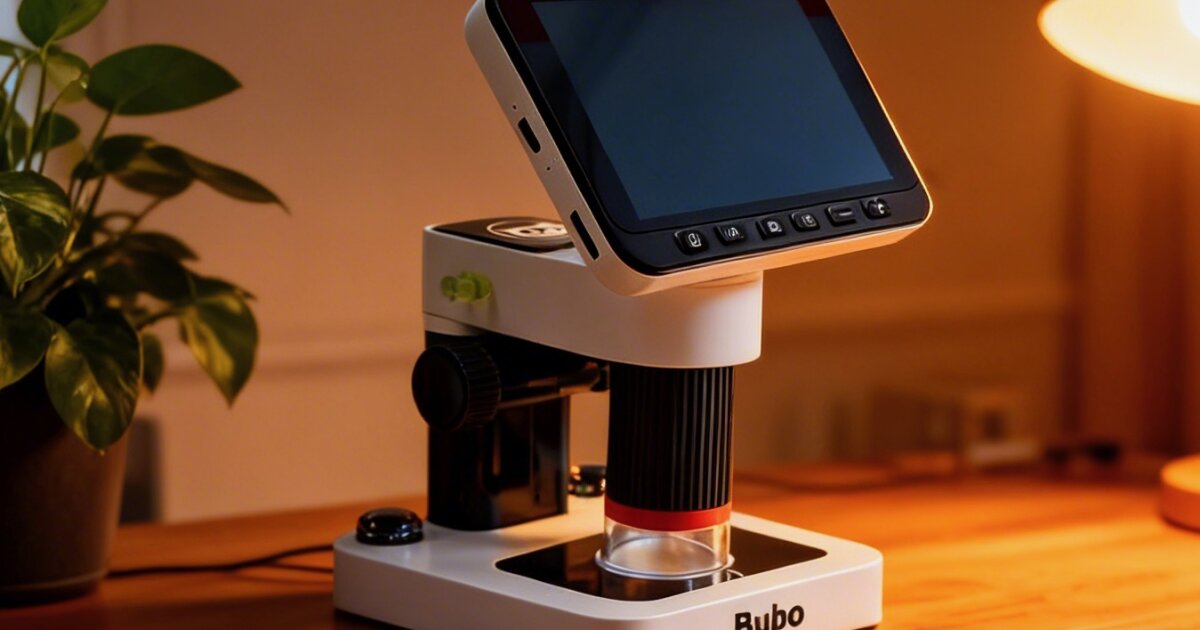
A new digital microscope called Bubo is challenging the assumption that microscopy requires choosing between portability and capability. The device seamlessly converts between a desktop microscope for detailed laboratory-style work and a handheld unit for field observations, combining two traditionally separate instruments into a single tool.
The dual-mode design addresses a genuine gap in the microscope market. Desktop digital microscopes offer stable, high-magnification viewing but are tethered to a workstation. Handheld microscopes are portable but typically sacrifice image quality, magnification range, and stability. Researchers, educators, and quality control professionals often need both capabilities but have had to purchase and carry separate devices.
How the Dual-Mode Works
Bubo achieves its versatility through a modular optical system that maintains its core imaging capabilities across both configurations. In desktop mode, the microscope sits on a precision-adjustable stand that provides the stability needed for high-magnification work. Fine focus control, consistent lighting, and a stable platform allow users to examine specimens at magnifications comparable to traditional compound microscopes.
When field work calls, the optical module detaches from the stand and converts to a handheld unit. The integrated lighting system, digital sensor, and optics remain the same, meaning image quality is maintained. What changes is the ergonomic form factor: grip surfaces, a simplified control interface, and a wider field of view optimized for scanning surfaces rather than examining prepared slides.
The transition between modes takes seconds and requires no tools or recalibration, making it practical to switch multiple times during a single work session. A researcher examining soil samples in the field could switch to desktop mode back in the lab without needing a separate instrument.

Digital Integration
Like most modern digital microscopes, Bubo streams its imagery to a connected device, whether a smartphone, tablet, or computer. This allows multiple viewers to observe simultaneously, makes image capture and documentation straightforward, and enables features like measurement overlays, time-lapse recording, and automated focus stacking that combine multiple focal planes into a single all-in-focus image.
The connected app also enables features that would be impractical with a traditional optical microscope. Image comparison tools allow users to place two specimens side by side on screen. Annotation features let researchers mark and label features of interest directly on captured images. And cloud synchronization means observations can be shared with collaborators in real time, regardless of location.
Applications Across Fields
The versatility of the dual-mode design opens applications across an unusually wide range of fields. In education, the microscope allows teachers to demonstrate concepts in the classroom using the desktop mode and then take students outdoors for field observations using the handheld mode, all with the same instrument. This continuity eliminates the jarring transition between different tools that can disrupt the learning experience.
Quality control professionals in manufacturing, agriculture, and food production frequently need to inspect materials both at a workstation and on the production floor or in the field. A single instrument that handles both contexts reduces equipment costs and simplifies training, since workers need to learn only one interface.
Field researchers in biology, geology, and environmental science benefit from being able to examine specimens in situ before deciding whether to collect them for later laboratory analysis. The ability to capture high-quality images in the field, then switch to desktop mode for more detailed examination of collected samples, streamlines workflows that currently require multiple instruments.
The Consumer Microscopy Market
Bubo enters a digital microscope market that has grown significantly in recent years, driven by improvements in sensor technology, declining costs, and growing interest in STEM education and citizen science. Consumer-grade digital microscopes that would have been unimaginable a decade ago are now available at price points accessible to hobbyists, students, and amateur naturalists.
The growth of citizen science initiatives, where non-professional volunteers contribute to scientific research by collecting observations and data, has also expanded the market. Projects that ask volunteers to photograph and identify insects, plants, fungi, or minerals have created demand for affordable microscopy tools that produce images of sufficient quality for scientific use.
Pushing Accessible Science Forward
What makes Bubo noteworthy is not any single specification but the design philosophy of eliminating the compromise between portability and capability. By refusing to accept that users must choose between a field tool and a lab tool, the designers have created an instrument that lowers barriers to microscopic observation in contexts where those barriers have historically limited who can participate in scientific exploration.
The device is currently available through Kickstarter, with the team targeting delivery in the second half of 2026. If the production version delivers on the prototype's promise, it could establish the dual-mode concept as a new standard in the consumer and prosumer microscopy market, pushing other manufacturers to rethink the traditional divide between portable and benchtop instruments.
This article is based on reporting by New Atlas. Read the original article.
Originally published on newatlas.com