
Study examines immediate effects of smoking and vaping
A single episode of vaping was associated with acute adverse changes in vascular-function markers in a small study using MRI and other measurements, according to research being presented at the Radiological Society of North America’s annual meeting. The reported effects included sessions involving e-cigarette aerosol without nicotine.
The findings do not settle the long-term health consequences of vaping, but they add to evidence that the absence of nicotine does not necessarily make a vaping exposure neutral for blood-vessel function. The researchers compared responses after a tobacco cigarette, an e-cigarette exposure with nicotine and an e-cigarette exposure without nicotine.
Study lead author Marianne Nabbout said the vaping challenge affected a greater number of markers than the smoking challenge. The work was conducted at the University of Pennsylvania, according to the report, and is scheduled to be presented at the RSNA meeting.
How the comparison was conducted
The study enrolled 41 healthy adult smokers and vapers between 20 and 50 years old, with an average age of 29.8. Participants had smoked, vaped or both on a daily basis for more than a year. Researchers also included 17 people aged 21 to 33 who had never smoked or vaped as a control group.
Participants in the exposure group attended three separate sessions. At each session, they underwent MRI examinations before and after one of three challenges: smoking a tobacco cigarette, inhaling vape aerosol containing nicotine, or inhaling vape aerosol without nicotine. The research team used MRI alongside other measurements to assess vascular function.
Because the same participants completed separate smoking and vaping sessions, the design was intended to compare acute responses across the three exposures. The report describes the study as an examination of immediate effects, not a study of disease outcomes over years or decades.

Nicotine-free aerosol was not without an observed effect
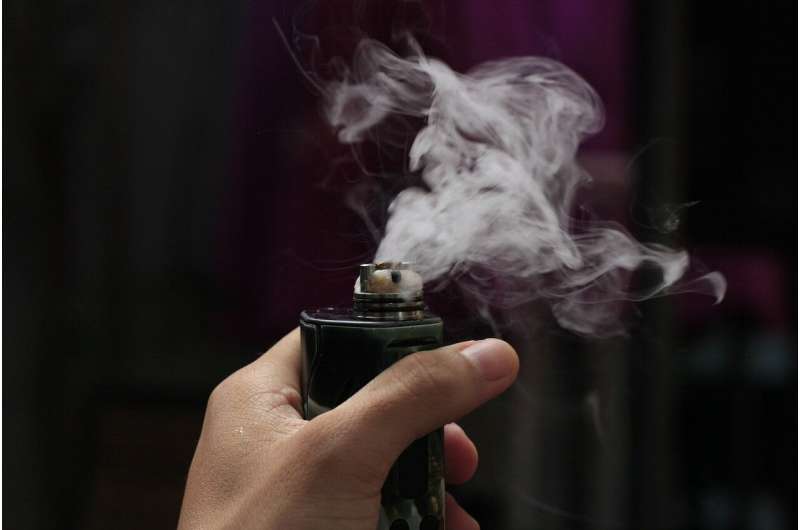
Vapes are battery-powered devices that heat liquid into an aerosol that users inhale. They are often perceived as less harmful than tobacco cigarettes because vaping products contain fewer chemicals and toxins than tobacco smoke. The study’s reported findings complicate any assumption that fewer toxic substances means no short-term vascular consequence.
The researchers said they identified acute negative effects of vaping even without nicotine. That is a notable part of the result because nicotine is frequently treated as the primary concern in discussions of e-cigarette exposure. The study instead points to the possibility that other elements of the vaping exposure may matter for vascular responses as well.
The available report does not identify a mechanism or establish which component of the aerosol produced the observed changes. It also does not establish that the measured changes will translate directly into a particular clinical outcome. Its narrower conclusion is that, in this group and under this testing protocol, vaping was associated with adverse changes in markers used to assess vascular function.
Use remains significant among young adults and students
The research arrives as e-cigarette use remains common, particularly among younger people. The report cites U.S. Centers for Disease Control and Prevention figures estimating that about 6.5% of U.S. adults use e-cigarettes. It puts use among adults aged 21 to 24 at 15.5%.
Among middle and high school students, an estimated 1.63 million—or about 5.9%—report e-cigarette use, according to the figures cited in the source. Flavors and the wide variety of devices are among the features associated with vaping’s popularity among young people.
For users and health communicators, the study’s key message is not that vaping and smoking are identical. The source explicitly notes that vapes contain fewer chemicals and toxins than tobacco smoke. Instead, it is that a reduced toxic-chemical profile should not be confused with an absence of possible harm to vascular function.

What the findings can—and cannot—say
The work has several boundaries that should shape its interpretation. It involved 41 regular smokers and vapers and a control group of 17 people, rather than a broad population sample. The participants were healthy adults, and the article describes acute measurements around individual exposure episodes. It therefore cannot, on its own, determine the long-term cardiovascular risk associated with every vaping pattern or product.
It is also being presented at a scientific meeting, as described in the source, rather than detailed here as a full peer-reviewed journal publication. Meeting research can be important early evidence, but the underlying methods and results warrant review in their complete form.
Still, the MRI-based comparison provides a focused warning: an individual vaping session was linked to measurable adverse changes in vascular markers, including when the aerosol lacked nicotine. Further research will be needed to replicate the findings, identify the responsible factors and connect short-term changes with longer-term health outcomes.
This article is based on reporting by Medical Xpress. Read the original article.
Originally published on medicalxpress.com

