
Berlin arts complex apologizes after military AI event
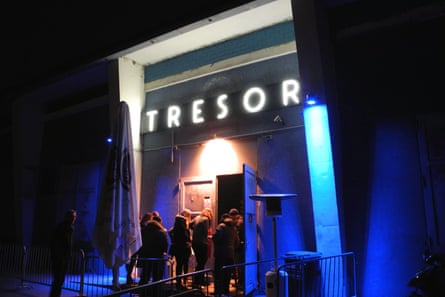
Kraftwerk Berlin, the post-industrial arts complex associated with the Tresor techno club and the experimental Atonal festival, has apologized after hosting an event for a military AI system developed by German defense startup Helsing.
The venue said the booking was a “serious error of judgment” and said it would revise the policies used by its commercial rental department. The controversy has prompted debate in Berlin’s music and arts communities over the boundaries between cultural spaces, defense-industry events and the changing security environment in Europe.
A launch staged as a war room
The event took place on 11 November in Kraftwerk Berlin’s central hall. According to accounts from the event, maps and aerial footage were projected on concrete walls, drones were suspended from the ceiling, and guards wearing flak jackets and accompanied by sniffer dogs were present.
The setting was used for the launch of Clarity, an AI targeting system from Munich-based Helsing. The company describes Clarity as an agentic intelligence platform intended to draw on drone, satellite and sensor data to identify and track targets. Helsing says human operators remain responsible for approving strikes.
The visual transformation of a venue closely identified with Berlin nightlife was a central point of criticism. Kraftwerk and Tresor occupy the same development, and the complex has been a home for experimental music and events that trade on Berlin’s industrial cultural history.

Helsing’s role in European defense technology
Helsing was founded in 2021 and has attracted prominent investors, including Spotify co-founder Daniel Ek, who is listed among its investors and board co-chairs. The company frames Clarity as a European-built and European-controlled alternative in a field dominated by major US defense software providers.
Its launch comes as European governments seek greater autonomy over military technology and data systems. The Guardian reported that Palantir’s Maven is the established market leader for battlefield software, while European governments have been looking for alternatives to systems developed in the United States. France’s domestic intelligence service has announced plans to replace Palantir with a domestic rival.
Those strategic considerations have made European defense technology a growing commercial and political priority. They have also made the cultural presentation of military AI more visible—and, in some settings, more contentious.
Why the backlash matters
The dispute is not simply about a single venue rental. It reflects a wider collision between Berlin’s long-standing cultural identity and the normalization of defense technology in public life. Nightlife and arts spaces in the city have often been associated with anti-militarist traditions, experimental expression and a skepticism toward commercial or state power.
Critics objected to the use of a renowned cultural venue to showcase a system connected to military targeting. The event’s staging—described as resembling a war room—intensified that reaction by placing the aesthetics and hardware of modern conflict inside a space associated with music, nightlife and artistic experimentation.
For Kraftwerk Berlin, the apology signals that future bookings will receive more scrutiny. Its promised revision of booking policy could become a test of how cultural institutions assess defense-sector clients, particularly as AI becomes more embedded in surveillance, intelligence and weapons-related decision-making.


Human control remains a key question
Helsing says that human operators are responsible for approving any strike involving Clarity. That distinction is significant in discussions around military AI, where the degree of human involvement in lethal decisions remains one of the most consequential ethical and policy questions.
Even where a person formally approves a strike, systems that combine data from drones, satellites and other sensors can shape what operators see, prioritize and act on. The debate therefore extends beyond whether a person presses a final button. It includes how targeting recommendations are generated, how reliable the underlying information is, and how much time or practical ability an operator has to challenge a system’s output.
The Berlin episode does not resolve those questions. It does, however, show how rapidly they are moving beyond government procurement and specialist defense circles into cultural spaces and public debate.
A sharper line for cultural venues
Kraftwerk Berlin’s response acknowledges that venue operators are not neutral hosts when a booking carries a strong political or ethical charge. Its decision to revisit commercial-rental policy suggests that arts organizations may need clearer standards for evaluating clients and events tied to military technology.
At the same time, the controversy highlights a broader European tension. Governments are seeking technology that can operate under European control, while communities are asking where—and how—the development and promotion of that technology should take place. In Berlin, that question has arrived in one of the city’s most symbolically charged cultural settings.
This article is based on reporting by The Guardian. Read the original article.

Originally published on theguardian.com