The core promise of embodied AI is changing
AGIBOT has released GO-2, a foundation model for embodied AI, according to The Robot Report. The company says the model enables robots not only to plan correctly but to execute reliably in real-world environments. Even in that brief description, the emphasis is revealing. The selling point is not simply intelligence in the abstract. It is dependable action in physical settings.
That is where the embodied AI market is increasingly headed. The early wave of excitement around robotics and foundation models focused heavily on what systems could understand, imitate, or generate in controlled conditions. The harder commercial question is what robots can do repeatedly, safely, and usefully when the world stops behaving like a clean benchmark. AGIBOT’s messaging suggests GO-2 is aimed squarely at that gap.
Why planning is not enough
For physical machines, correct planning and reliable execution are related but distinct problems. A robot may infer the right next step and still fail because the object is slightly misplaced, the floor has changed, a grasp slips, or timing breaks down. In robotics, these edge cases are not edge cases at all. They are the normal condition of deployment.
That is why the phrasing in the source matters. AGIBOT is not describing GO-2 purely as a planning model. It says the system helps robots go beyond planning to execute reliably in real-world environments. This suggests the company believes practical robotics progress will be judged less by isolated demonstrations of reasoning and more by whether robots can maintain performance amid physical variation.
The distinction also reflects a maturation of the foundation-model concept in robotics. In language systems, a strong answer can sometimes be enough. In embodied systems, an answer has to become motion, and motion has to interact with friction, clutter, timing, and hardware limitations. A foundation model that cannot bridge that gap may remain impressive but commercially marginal.
The industry is moving from capability theater to deployment pressure
Embodied AI has entered a phase where grand promises are colliding with operational expectations. Warehouses, factories, service environments, and research labs all want systems that can generalize better. But they also want systems that fail less often, recover more gracefully, and require less expensive babysitting. Reliability is therefore becoming the market’s most important word.
AGIBOT’s release speaks directly to that pressure. By positioning GO-2 around real-world execution, the company is aligning itself with the part of the robotics stack that customers actually experience. A planner that works beautifully in carefully staged trials may still be unusable if each deployment needs endless tuning. A robot that is less flashy but more dependable can be far more valuable.
The foundation-model framing is also important. It implies GO-2 is meant to serve as a general underlying capability rather than a one-off task model. That is the broader ambition in embodied AI today: build systems flexible enough to support multiple behaviors and environments, while robust enough to act consistently across them.
What we still do not know
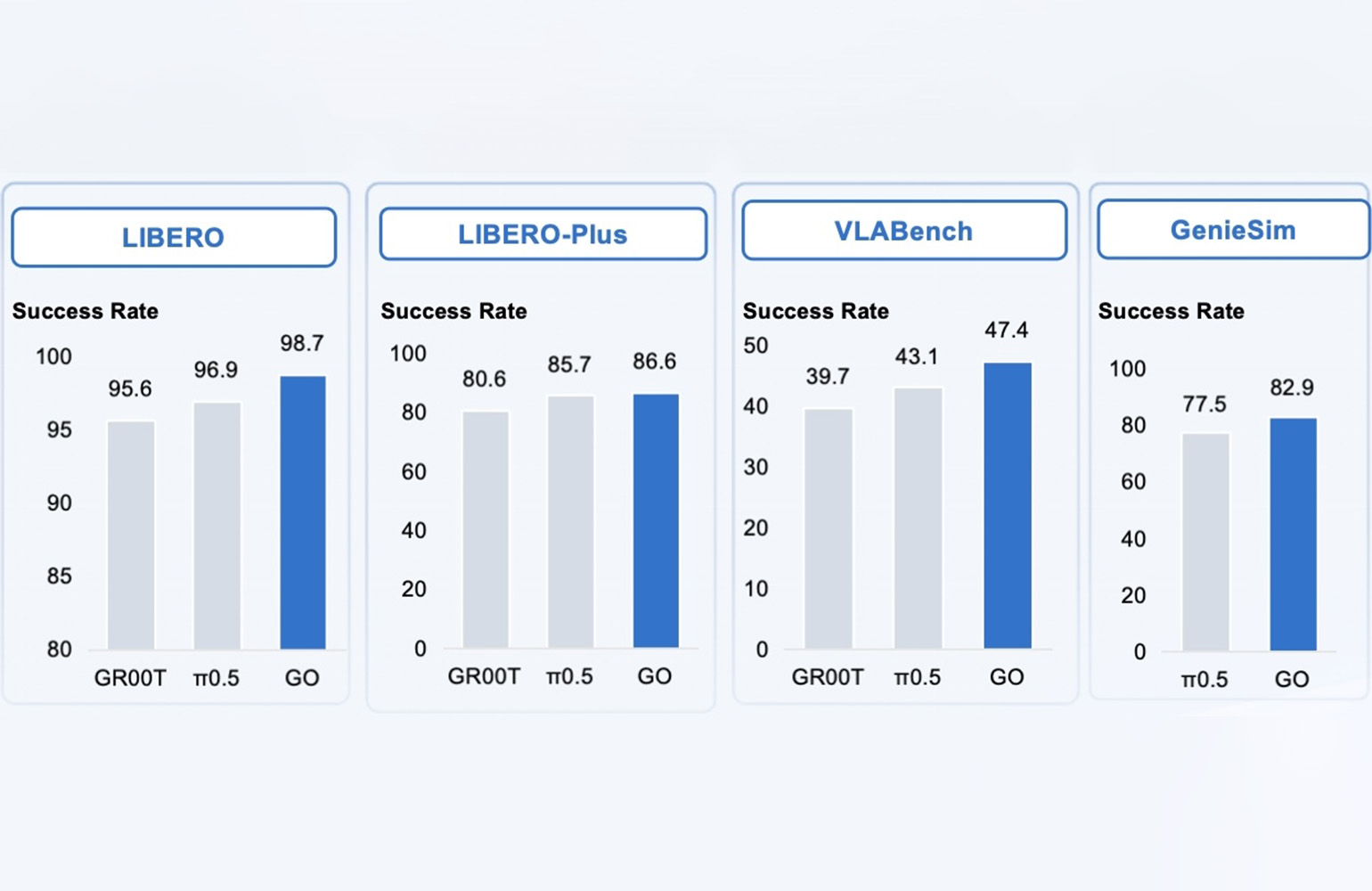
The available source text is limited, so it would be wrong to infer specific benchmarks, training methods, hardware targets, or deployment sectors. The release establishes the claim and the intended direction, not the full evidence base. That constraint is worth stating clearly because robotics announcements often outrun what can be validated from a brief product description alone.
Still, even a sparse release can be informative if read carefully. The phrase “execute reliably in real-world environments” tells us where AGIBOT believes differentiation will come from. Not from the existence of a model, but from a model’s ability to narrow the gap between simulated competence and field performance.
That makes the next obvious question straightforward: what proof will follow? In robotics, confidence comes from demonstrations across variability, not from a single polished clip. The market will want to see repeated task completion, adaptation to environmental noise, and evidence that the model reduces the brittleness that has long held back general-purpose robots.
Why GO-2 matters even as a signal
Even before those details arrive, GO-2 is meaningful as a signal of industry priorities. The embodied AI field is increasingly describing success in terms of reliability, not just intelligence. That shift matters because it points toward the commercial phase of robotics development. Customers buy outcomes, not model elegance.
If more companies follow the same line, the competitive landscape in embodied AI will start to look different from the one that governed the first foundation-model rush. Instead of asking which robot can do the most novel thing once, investors and operators will ask which platform can do ordinary but valuable things repeatedly, under changing conditions, with acceptable supervision and cost.
AGIBOT’s announcement fits that transition. GO-2 is being presented as a tool for moving robots beyond correct planning into reliable execution. That may sound like a technical nuance, but in robotics it is the whole game. The distance between a plausible plan and a trustworthy action is where most deployment value is won or lost. If GO-2 can materially shorten that distance, it will matter. If not, the market will move on quickly. Either way, the release captures the current state of the field with unusual clarity: embodied AI is no longer only trying to think better. It is trying to work better.
This article is based on reporting by The Robot Report. Read the original article.
Originally published on therobotreport.com