From Ukrainian Battlefield to Marine Corps Contract
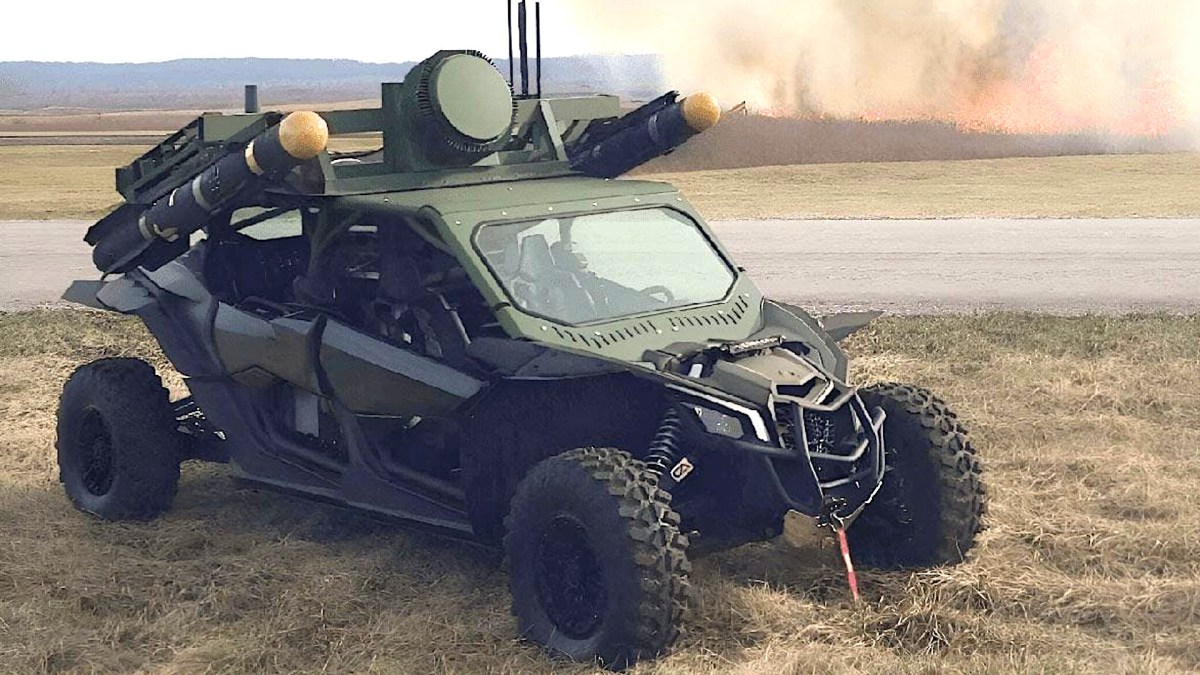
The U.S. Marine Corps is preparing to award a sole-source contract to defense contractor V2X for up to 50 Hellfire missile-armed mobile counter-drone systems, the same vehicle platform that has already appeared in combat in Ukraine. The system, designated as the Denied Area Sprinter-Hellfire or DASH, represents the Marines' latest investment in mobile counter-UAS capability for dismounted units operating in contested environments.
Marine Corps Systems Command issued a contracting notice for the DASH system, describing a unique and specific need for a counter-small unmanned aircraft system already at Technology Readiness Level 9, the highest level indicating proven capability in an operational environment. The specification points directly at V2X's Tempest, a high-mobility 4x4 vehicle fitted with launchers for radar-guided AGM-114 Longbow Hellfire missiles optimized for shooting down uncrewed aerial threats.
The Tempest Platform
The Tempest is a lightweight, all-terrain buggy that carries Hellfire missile launchers along with integrated radar and electro-optical sensors for detecting, identifying, and tracking small drones. The AGM-114L Longbow Hellfire, originally developed as a fire-and-forget anti-armor weapon for the Apache helicopter, has been adapted for the counter-drone role thanks to its millimeter-wave radar seeker, which can autonomously track small aerial targets in cluttered environments.
The vehicle's design emphasizes mobility above all else. Dismounted Marine units operating on expeditionary islands and austere forward positions need counter-drone protection that can keep up with infantry movements and displace rapidly when targeted. A fixed counter-drone installation is a sitting target. The Tempest is designed to shoot and move, providing protection to Marines while avoiding becoming a target itself.
Combat-Proven in Ukraine
At least two Tempest vehicles have appeared in Ukrainian service, where they emerged unexpectedly earlier this year. While details of their operational employment remain limited, their presence in an active combat zone provides the most rigorous possible validation of the system's capabilities. Ukrainian forces face perhaps the densest drone threat environment in the world, and any counter-UAS system that survives there has effectively passed the ultimate field test.
Contract Details
The Marine Corps intends to procure up to 50 DASH systems, including training, initial spares, and reimbursable repairs. The delivery timeline is aggressive: two systems are expected no later than May 30, 2026, with the remaining 48 systems delivered by December 2026. This accelerated schedule reflects the urgency with which the Marines view the counter-drone requirement.
The sole-source justification states that the DASH system fills a critical need to detect, identify, track, and defeat small UAS in a highly mobile, rugged form factor. The Marine Corps specifically requires a system that can support dismounted Marines, distinguishing this requirement from the larger, vehicle-mounted counter-drone systems that the Army and other services are fielding.
Why Hellfire Missiles
Using Hellfire missiles against small drones might seem like overkill, but the choice reflects practical considerations. The Longbow Hellfire's radar seeker provides autonomous terminal guidance, meaning the missile can track and engage a drone independently after launch. This fire-and-forget capability is essential when engaging multiple threats in rapid succession, as the operator does not need to maintain a targeting lock throughout the engagement.
The cost-per-shot is significantly higher than directed-energy or electronic warfare alternatives, but the Hellfire's reliability, range, and proven kill capability make it effective against the full spectrum of small and medium UAS threats. In combat, a system that works reliably every time is worth more than a cheaper system that works sometimes.
The Broader Counter-Drone Investment
The DASH procurement is part of a broader Marine Corps investment in counter-drone capabilities. The Marines recently received their first high-power microwave weapon for defeating drone swarms, and the service is procuring 10,000 new drones of its own this year. The dual investment in both offensive drones and defensive counter-drone systems reflects the emerging doctrinal reality that UAS operations are a two-way street.
For the Marine Corps, which is restructuring around the Force Design 2030 concept for distributed operations across Pacific island chains, mobile counter-drone protection is not a luxury but a survival requirement. Small units operating on austere forward positions cannot function if they are vulnerable to persistent drone surveillance and attack. The Tempest DASH system gives them a fighting chance.
This article is based on reporting by The War Zone. Read the original article.

Originally published on twz.com