Escalation signals: a second carrier enters the equation
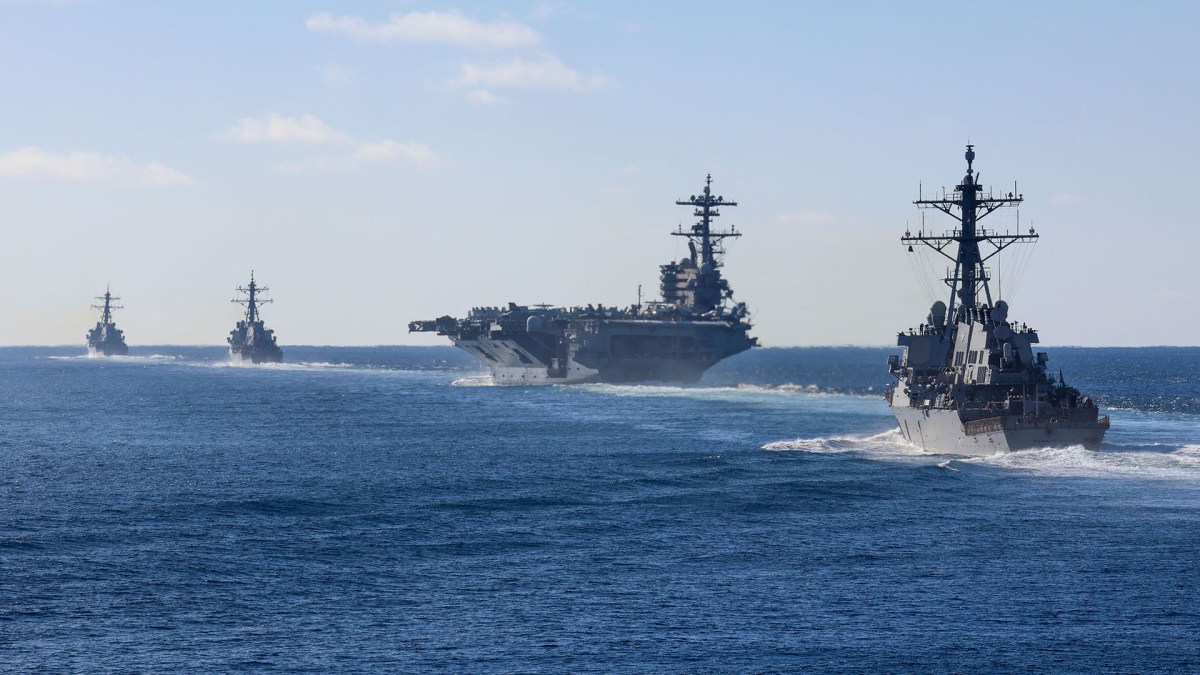
The Pentagon has reportedly instructed a second aircraft carrier strike group to prepare for deployment to the Middle East, according to the Wall Street Journal, as the United States continues building military assets in the region amid an unresolved standoff with Iran. The order, attributed to President Donald Trump, comes as the administration weighs whether to launch strikes against Iranian targets -- a decision that remains pending but appears increasingly plausible given the tempo of force movements.
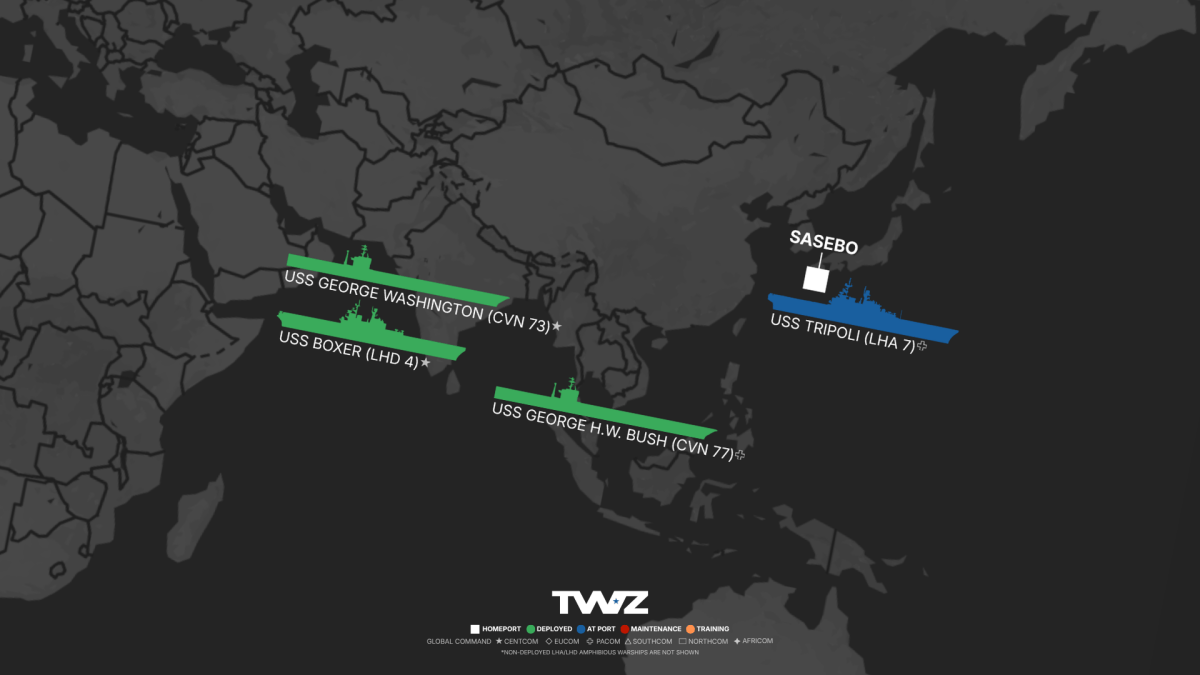
The USS Abraham Lincoln carrier strike group is already operating in the region, but military planners have assessed that its air wing alone would be insufficient for a sustained major operation against Iran. A second carrier group would roughly double the available tactical airpower at sea, providing additional F-35C stealth fighters, F/A-18E/F Super Hornets, and EA-18G Growler electronic warfare aircraft. The Wall Street Journal identified the USS George H.W. Bush, currently completing training exercises off the coast of Virginia, as the most likely candidate to receive deployment orders.
Weeks away, not days
Even if a deployment order were issued immediately, the timeline for a second carrier strike group to reach operational readiness in the Middle East would be measured in weeks, not days. An East Coast-based group would need to transit the Atlantic, pass through the Mediterranean, and potentially continue through the Suez Canal to reach the Red Sea or Persian Gulf. Even with truncated pre-deployment exercises, mid-March represents the earliest realistic arrival window -- a timeline that suggests the order is as much about signaling resolve as about immediate tactical necessity.
Meanwhile, land-based tactical aviation assets continue flowing into the theater. F-35A stealth fighters from the Vermont Air National Guard's 158th Fighter Wing, which previously participated in the operation to apprehend Venezuelan leader Nicolas Maduro, have been tracked departing RAF Lakenheath in the United Kingdom and heading toward Muwaffaq Salti Air Base in Jordan. A second group of Vermont F-35As is staged at Moron Air Base in Spain and may follow the same route. These deployments augment F-15E Strike Eagles, A-10 Thunderbolt IIs, and EA-18G Growlers already positioned at bases across the region.
The diplomatic backdrop: Trump, Netanyahu, and the Iran question
The military preparations are unfolding against an intense diplomatic backdrop. President Trump held a three-hour meeting at the White House with Israeli Prime Minister Benjamin Netanyahu, who traveled to Washington with the explicit goal of persuading the American president not to accept any agreement with Tehran that fails to address Iran's nuclear weapons ambitions and its extensive missile arsenal. The length and substance of the meeting underscore how central the Iran question has become to both leaders' strategic calculations.
Following the meeting, Trump posted on his Truth Social platform that he had "insisted that negotiations with Iran continue" and that a diplomatic resolution remained his preference. However, he coupled that language with an unmistakable threat, referencing a previous military operation codenamed Midnight Hammer and warning that Iran's prior refusal to negotiate "did not work well for them." The dual message -- openness to talks backed by visible force mobilization -- mirrors the coercive diplomacy playbook the administration has employed in previous confrontations.
Why it matters: force posture as foreign policy
The decision to spin up a second carrier strike group represents a significant escalation in American force posture, even if deployment has not yet been formally ordered. Carrier strike groups are among the most potent and visible instruments of U.S. military power, and the act of preparing one for deployment sends a message to Tehran, allied capitals, and the broader international community about the seriousness of American intent. Combined with the more than 30,000 troops already stationed at bases across the Middle East, an undisclosed submarine presence, and the steady buildup of tactical aircraft in the region, the military infrastructure for a major operation is being assembled in plain sight.
The critical question remains whether this posture is designed to compel Iran to the negotiating table or to provide the operational foundation for strikes if diplomacy fails. History suggests both interpretations may be correct simultaneously. For military planners, the distinction is academic -- the forces must be in position regardless of which path the political leadership ultimately chooses. For the region, and for the sailors and aircrews preparing for potential deployment, the stakes could not be higher.
This article is based on reporting by The War Zone. Read the original article.
Originally published on twz.com