The Viper Gets a Modern Brain
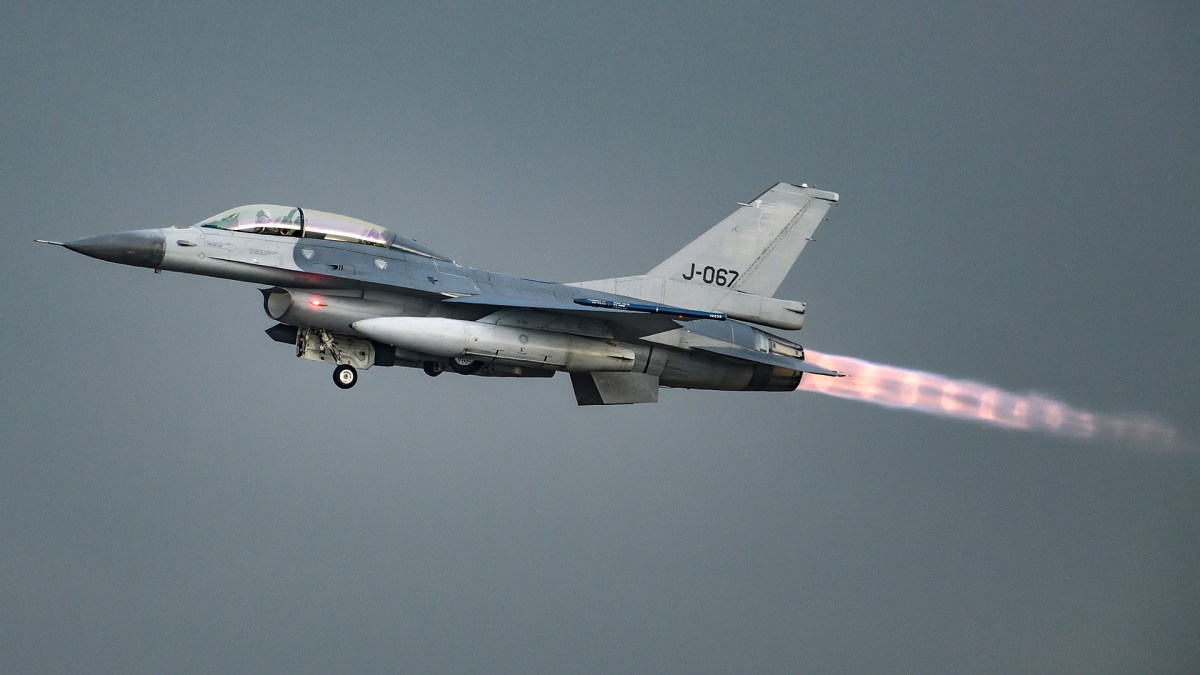
A new generation of F-16 operations is taking shape across Europe as NATO allies receive and integrate the F-16V Block 70 and Block 72 variants, the most advanced versions of the legendary Fighting Falcon ever produced. These aircraft bring capabilities that would have been unimaginable when the F-16 first entered service in 1978, including active electronically scanned array radar, advanced electronic warfare suites, and integration with the latest precision-guided munitions.
The modernization wave comes at a moment when European air defense has never been more critical. Russia's war in Ukraine has demonstrated the realities of modern aerial combat, and NATO's eastern flank nations are racing to field the most capable air forces they can afford. For countries that cannot justify the cost of F-35s, the latest F-16 variants represent a formidable and cost-effective alternative.
SABR Radar Transforms the Cockpit
The centerpiece of the F-16V upgrade is the Northrop Grumman AN/APG-83 Scalable Agile Beam Radar, known as SABR. This active electronically scanned array radar represents a generational leap over the mechanically scanned radars in earlier F-16 variants. SABR scans faster, acquires more targets at longer ranges, and produces more precise tracks of smaller and stealthier objects.
For pilots, the difference is transformative. Where an older F-16 radar might detect a target at 40 miles and track a handful of contacts simultaneously, SABR extends detection ranges significantly and can track dozens of targets while simultaneously mapping the terrain below. The radar also provides the foundation for advanced modes including synthetic aperture radar ground mapping and automatic target recognition.
Electronic Warfare for a Contested Environment
The F-16V and Block 70/72 aircraft come equipped with new electronic warfare packages that reflect the reality of operating in heavily contested airspace. Operators can choose between L3Harris' AN/ALQ-254(V)1 Viper Shield and Northrop Grumman's AN/ALQ-257 Integrated Viper Electronic Warfare Suite. Both systems provide comprehensive self-protection capabilities, including radar warning, missile approach warning, and active electronic countermeasures.
These EW suites are critical for operations near Russian-controlled airspace, where dense integrated air defense networks pose lethal threats to aircraft that cannot detect and defeat radar-guided missiles. The combination of SABR's detection capability and modern EW protection gives F-16V pilots a survivability advantage that earlier variants could not match.
European Modernization Programs
Several NATO nations are actively acquiring or upgrading to the latest F-16 standard. Poland has formalized a 3.8-billion-dollar defense agreement to modernize its fleet of 48 F-16C/D Block 52+ fighter jets to the advanced F-16V Block 72 configuration. Slovakia has trained pilots for new F-16 Block 70 fighters that are replacing its aging MiG-29 fleet. Bulgaria is incorporating a total of 16 F-16 Block 70 fighters in its own transition away from Soviet-era equipment.
These programs share a common strategic logic. NATO's eastern members need modern, interoperable fighters capable of operating alongside F-35s and other alliance aircraft in a potential conflict with Russia. The F-16V provides roughly 80 percent of a fifth-generation fighter's capability at a fraction of the cost, making it the rational choice for air forces that need to maximize capability within constrained budgets.
The Ukraine Factor
The F-16's role in Ukraine adds urgency to European modernization efforts. Ukrainian pilots are now flying F-16s donated by Western allies, graduating from streamlined training programs and going straight to war. Their experience is generating real-world data about the F-16's performance in contested airspace against modern Russian air defense systems and electronic warfare.
This operational feedback is flowing back into NATO training and tactical development, informing how European F-16 squadrons prepare for potential contingencies. The lessons learned in Ukrainian skies about radar tactics, electronic warfare employment, and low-altitude operations are being incorporated into alliance-wide training exercises.
Complementing the F-35
The F-16V is not intended to replace the F-35 in NATO planning. Instead, it complements the stealth fighter by providing a capable and affordable platform for missions that do not require low-observable characteristics. Air policing, close air support, and strike missions in permissive environments can all be effectively executed by F-16Vs, preserving the more expensive and maintenance-intensive F-35s for the highest-threat scenarios.
This high-low mix is becoming the standard force structure model for NATO air forces, combining a smaller number of F-35s for penetrating operations with larger fleets of advanced F-16s for volume and flexibility. For European defense planners, the F-16V Block 70/72 makes this model economically viable in a way that an all-F-35 force structure would not be.
This article is based on reporting by The War Zone. Read the original article.

Originally published on twz.com