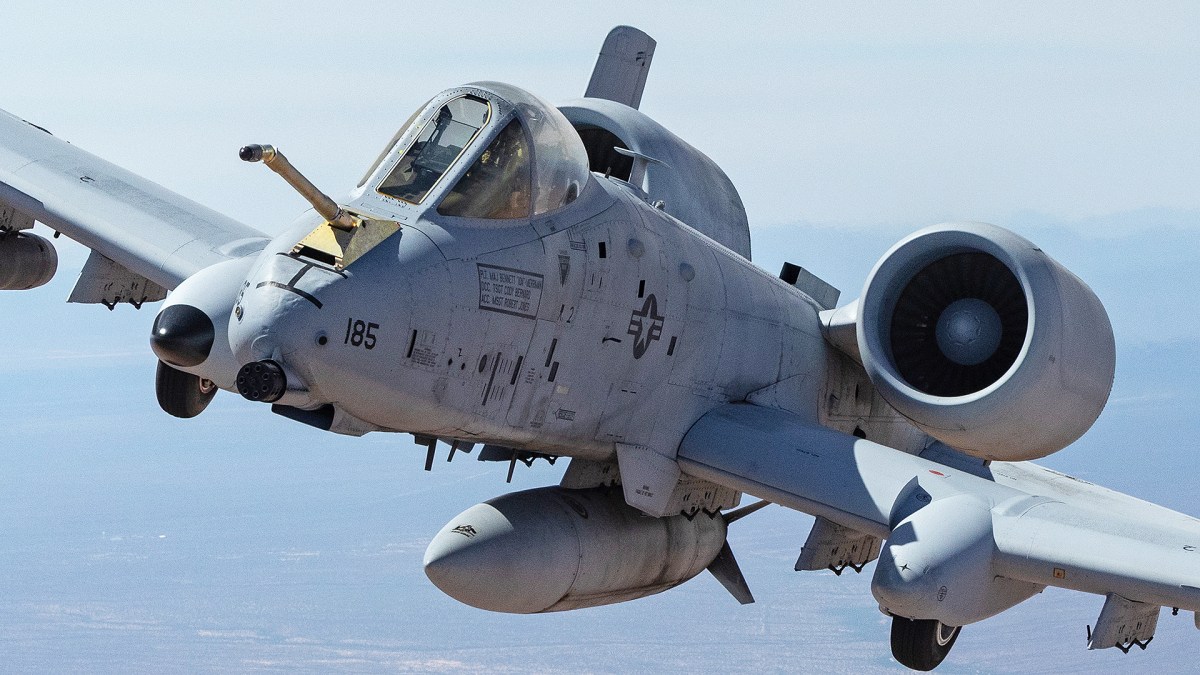
An unusual A-10 test has wider implications than the aircraft itself
The A-10 Warthog may be nearing the late stage of its U.S. Air Force career, but a fresh test involving the aircraft is notable for reasons that extend well beyond the platform. According to the supplied report from The War Zone, a test A-10 recently flew with an aerial refueling probe mounted on its nose in place of its usual nose-mounted aerial refueling receptacle. Within days of that first flight, the aircraft reportedly connected with a C-130 fitted with aerial refueling drogues.
On the surface, this is an eye-catching configuration change on an aircraft famous for its ruggedness and long service life. More importantly, the reported test touches a question that has gained urgency in U.S. airpower planning: whether the Air Force needs greater flexibility in how tactical aircraft take fuel in dispersed, contested environments.
From receptacles and booms to probes and drogues
The supplied source text draws a direct contrast between the Air Force’s current approach and the capability this A-10 test appears to explore. At present, the service’s tactical jets use receptacle-and-boom refueling, in which a tanker aircraft plugs into the receiver aircraft, typically at altitude. That method works, but it comes with operational assumptions about tanker availability, runway access, and where aircraft can safely recover and relaunch.
By contrast, a probe-and-drogue setup can expand the set of aircraft that can provide fuel, especially when paired with smaller platforms. The test described here involved a C-130 with drogues, which matters because the Hercules is already widely used, adaptable, and more closely associated with austere operations than large dedicated jet tankers.
The report says the test has been underway for some time, suggesting this was not a one-off publicity exercise. A successful connection with a drogue-equipped tanker, if it leads to further experimentation, would show that the concept is moving beyond a simple hardware mock-up and into functional evaluation.
Why the Pacific matters in this conversation
The strategic logic in the source text is explicit. The article ties the A-10 test to the Air Force’s Agile Combat Employment concept and to the demands of a potential Pacific fight. In such a scenario, aircraft may need to launch from short or damaged runways, hop between austere locations, and remain combat-relevant without depending on predictable, centralized basing.
That is where a probe-equipped tactical aircraft could become more interesting than the A-10 itself. The source argues that fighters able to take fuel from smaller tankers after launching heavy from short runways could gain meaningful flexibility. The idea is simple: get airborne from a constrained strip, then top off soon after departure and continue onward with a more survivable basing pattern.
This logic fits a broader military trend. Modern air operations are increasingly shaped by concerns about missile range, runway vulnerability, and the dangers of concentrating high-value assets at a small number of large bases. Any change that broadens fueling options or diversifies tanker support could therefore have outsized operational value.
An old airframe as a testbed for a future problem
There is an irony in the A-10 serving as the visible platform for this idea. The Warthog is often discussed in terms of retirement timelines and legacy mission sets, yet here it appears as a vehicle for testing something that could prove useful to newer tactical aircraft. That makes the development notable even for those who see little long-term future for the A-10 in frontline service.
The source does not say that the Air Force has decided to retrofit broad portions of its fleet, nor does it establish a program of record extending this exact configuration to other jets. Those would be stronger claims than the supplied text supports. What it does support is narrower but still significant: a real test aircraft flew with a probe replacing its normal refueling receptacle, and the broader argument being made around that test is tied directly to distributed combat operations.
That alone is enough to make the event more than an aviation curiosity. It is a signal of what military planners are examining as they try to square tactical aircraft design with the realities of long distances, austere basing, and contested logistics.
If the concept continues to mature, the real headline may not be that an A-10 took fuel from a drogue. It may be that an aging attack aircraft helped reopen a larger debate about how the U.S. Air Force wants its tactical fleet to survive and operate in the next major conflict.
This article is based on reporting by twz.com. Read the original article.
Originally published on twz.com