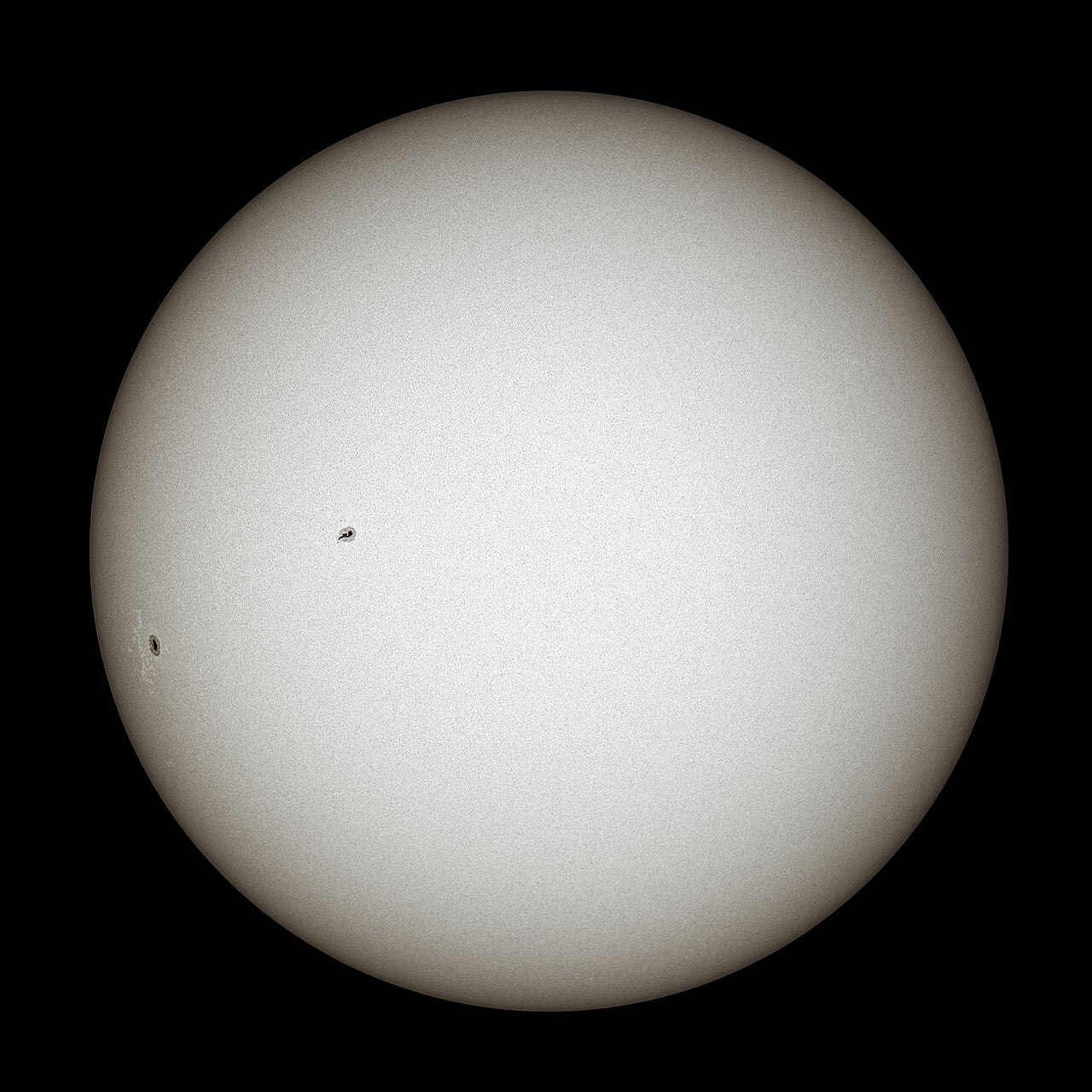
Four Decades of Listening to the Sun
For forty years, a network of telescopes has been listening to the Sun hum. Scientists from the University of Birmingham and Yale University have finally decoded what those subtle vibrations reveal about our star's hidden interior. A new study has found that the Sun's internal structure quietly shifts between solar cycles, producing measurable changes deep beneath its surface that function like a rhythmic heartbeat pulsing through the stellar interior.
The discovery, based on helioseismology data collected over four complete solar cycles, reveals patterns in the Sun's internal oscillations that had not been previously identified. These patterns show that the Sun's core and radiative zone undergo structural changes that are synchronized with the 11-year solar activity cycle but manifest in ways that are distinct from the surface phenomena like sunspots and solar flares that astronomers have long studied.
How Helioseismology Works
Just as geologists use seismic waves to probe Earth's interior, solar physicists use the Sun's natural oscillations to study its internal structure. The Sun is constantly vibrating, with millions of acoustic waves bouncing through its interior. These waves cause the solar surface to rise and fall by tiny amounts that can be detected by sensitive instruments on Earth and in space.
By analyzing the frequencies, amplitudes, and travel times of these waves, researchers can construct detailed maps of the Sun's internal conditions, including temperature, density, and rotation speed at different depths. The technique, known as helioseismology, has been one of the most powerful tools in solar physics since its development in the 1970s and 1980s.
The new study leveraged the exceptionally long baseline of data now available. Forty years of continuous observations provide the statistical power needed to detect subtle changes that shorter studies would miss.

What the Heartbeat Reveals
The researchers found that several properties of the Sun's interior change in a rhythmic pattern tied to the solar cycle:
- The speed of sound waves traveling through the solar interior varies systematically between solar maximum and minimum
- The boundary between the convective and radiative zones shows measurable shifts in position
- Internal rotation patterns change in ways that correlate with surface magnetic activity
- Temperature and density profiles at specific depths oscillate with the 11-year cycle
These findings suggest that the solar cycle is not just a surface phenomenon driven by magnetic field dynamics but reflects deeper structural changes throughout the Sun. The heartbeat metaphor is apt because the changes are periodic, predictable, and reflect the fundamental state of the system, much like a heartbeat reveals information about cardiovascular health.
Implications for Space Weather
Understanding the Sun's internal dynamics has practical importance for space weather forecasting. Solar storms, which can damage satellites, disrupt communications, and even threaten power grids on Earth, originate from magnetic activity that is ultimately driven by processes deep within the Sun.
Current space weather forecasting relies heavily on observations of the solar surface, which provides limited lead time for predicting dangerous events. If the internal structural changes identified in this study prove to be reliable precursors of surface activity, they could provide a new tool for forecasting solar storms with greater accuracy and longer lead times.
The economic stakes are significant. A major solar storm striking Earth's technology-dependent civilization could cause damages estimated in the trillions of dollars. Even modest improvements in forecasting accuracy could help satellite operators, power grid managers, and other stakeholders take protective measures before dangerous conditions develop.

A New Window on Stellar Physics
The discovery also has implications for understanding other stars. While the Sun is the only star whose interior can be studied in detail through helioseismology, the principles revealed by this research apply to similar stars throughout the galaxy. The finding that stellar cycles involve structural changes throughout the interior, not just surface magnetic effects, adds a new dimension to stellar physics that could improve models of stellar evolution and behavior.
The research team plans to continue monitoring the Sun's internal oscillations as the current solar cycle progresses toward its expected maximum. Additional cycles of data will help determine whether the patterns identified in this study are truly periodic or whether they vary from cycle to cycle in ways that reveal even deeper truths about the processes powering our nearest star.
Looking Ahead
The study represents a triumph of long-term scientific observation. The forty-year dataset that made the discovery possible required sustained investment in solar monitoring infrastructure and the patience to collect data over multiple solar cycles before drawing conclusions. It is a reminder that some of the most important scientific discoveries require not just clever experiments but the dedication to keep watching, year after year, until the patterns finally emerge from the noise.
This article is based on reporting by Universe Today. Read the original article.

Originally published on universetoday.com