変化を見られるほど長寿の望遠鏡
35年目を迎えたハッブル宇宙望遠鏡の最も注目すべき点の一つは、単なるスナップショットを撮る機械ではなくなったことです。今では「ビフォー・アフター」の天文学を行う装置になっています。もともと想定されていた15年の寿命をはるかに超えて稼働を続けてきたことで、ハッブルは数十年前に観測した天体を再訪し、人間が直接実感できるほど短い時間尺度で進む変化を明らかにできます。
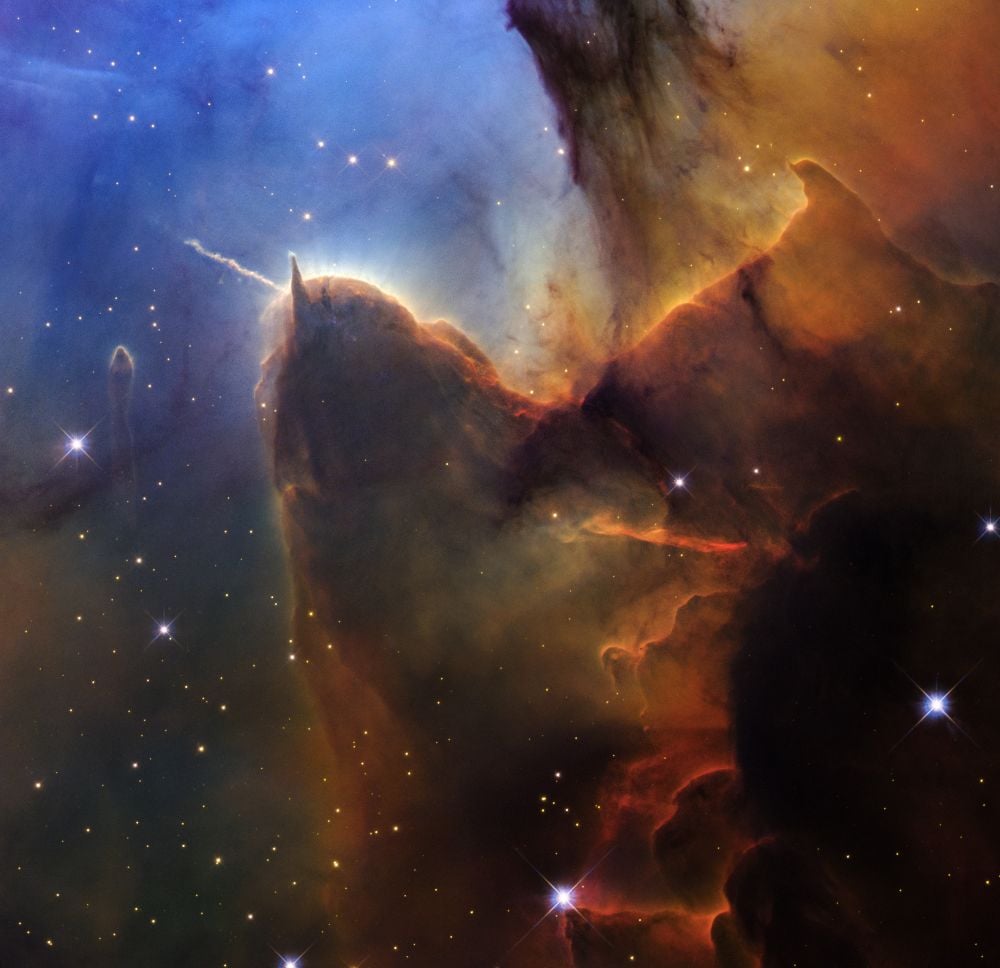
それが、約5,000光年先にある恒星形成領域で、NGC 6514およびメシエ20としても知られる三裂星雲への最新の再訪の背景です。ハッブルは1997年にこの天体を初めて観測しました。今回の再観測は、NASAによる望遠鏡35周年の記念企画の一環で、約30年離れた2枚の画像を比較し、恒星の誕生と流出によってなお सक्रिय に形作られている星雲の物理的な変化を特定することを可能にします。
三裂星雲が優れた観測対象である理由
三裂星雲は見た目が印象的なだけでなく、科学的にも非常に豊かな対象です。名前は「3つの裂片に分かれた」という意味のラテン語に由来し、この天体は放射星雲、反射星雲、暗黒星雲が一つの領域に共存している点で珍しい存在です。つまり、複数の物理過程が同じ広い構造の中で見えるということです。
この星雲を照らしているのは、HD 164492Aと呼ばれる若いO型星です。提供された原文によれば、この星は太陽の約20倍の質量を持ちます。その強烈な紫外線放射が領域を照らし、周囲の恒星集団がさらに環境へエネルギーを加えています。原文は、三裂星雲に3,000個を超える星の集団が含まれていると述べています。
ここは静かな雲ではありません。若く大質量の星とその恒星風が周囲のガスを形作る、活発な恒星形成 অঞ্চলです。これらの風は星雲の中に巨大な泡を作り出し、その衝撃波の縁がガスを圧縮することで、さらに恒星形成を引き起こす可能性があります。その結果、変化は宇宙的な時間尺度だけでなく、場所によっては数年から数十年のあいだに観測できる、動的な環境になります。

ハッブルが今見ているもの
新しいハッブル画像は、三裂星雲のごく一部に焦点を当てています。原文では中心の構造が、触角を持つウミウシのように見えると説明されており、天文学的な構造がなぜ一般の人々の印象に強く残るのかを示すのに十分鮮やかな描写です。しかし、重要な科学的特徴は、その「触角」の一つであり、これはハービッグ・ハロ天体の一部です。
ハービッグ・ハロ天体は、近くの若い原始星から噴き出すジェットが周囲の物質に衝突したときに生じる明るい星雲状の領域です。恒星形成が実際に進行していることを示す、最もはっきりした可視的な兆候の一つです。これらのジェットの強さは増減し、衝撃を受けたガスも動き続けるため、こうした構造は比較的短い間隔で形を変えることがあります。
繰り返し撮像が非常に価値を持つのはこのためです。原文によれば、ハッブルはすでに長年の観測の中でこうした変化のいくつかを捉えています。画像を比較することで、天文学者はジェットに含まれるエネルギーと、それが時間とともにどう変化するかを学べます。言い換えれば、ハッブルは遠方の恒星形成領域をタイムラプスの実験室に変えているのです。
老朽化した機器、拡大する科学的価値
ここには一つの皮肉があります。ハッブルの継続的な科学的有用性は、その年齢の直接的な結果です。打ち上げ当時、変化する星雲の長期的な視覚記録を作る能力は、この望遠鏡の最大の売りではありませんでした。今日では、その能力こそが最も特徴的な強みの一つです。15年の運用を想定していたミッションは、今ではかつて主に静的な天体風景と見なされていた場所で、目に見える進化を測定できるほどの歴史を蓄積しています。
三裂星雲の再訪は、観測所の長寿命がなぜ重要かも示しています。新しい望遠鏡は感度や波長カバレッジで古い望遠鏡を上回ることがありますが、科学的な問いが時間変化を扱うものであるなら、数十年にわたるアーカイブに代わるものはありません。その意味で、ハッブルのアーカイブは過去の仕事の記録にとどまらず、それ自体が一つの装置なのです。

これは恒星形成について何を示すのか
恒星形成は、しばしば大まかな概念として説明されます。雲が崩壊し、原始星が点火し、ジェットが現れ、風が空洞を削り、放射が周囲のガスを作り変える、というものです。三裂星雲の観測は、それらの考えをより具体的に示します。隠れた若い星からのジェットは単に存在するだけではなく、周囲の星雲を目に見えて変化させます。大質量星の風は、理論上構造に影響するだけでなく、泡や衝撃波面を作り、その結果は画像として捉えることができます。
三裂星雲には複数の星雲成分と活発な恒星集団が含まれているため、この相互作用を特に説得力のある形で見ることができます。ハッブルが何十年後に同じ領域へ戻れることは、この星雲を美しい天体から、運動とエネルギー収支を直接研究できる進化する系へと変えます。
なぜ重要なのか
新しい三裂星雲の画像は、天文学におけるきわめて稀な成果の一つを示しています。つまり、宇宙が私たちの目の前で変化する様子を見ることです。ハッブルの再訪は、数千光年の彼方にある恒星形成環境でさえ、人間の時間尺度で進化しうることを示しています。それは天文学者に、単により美しい画像以上のものを与えます。ジェット、風、圧縮されたガスが時間とともに恒星のゆりかごをどう作り変えるかを検証する手段を与えるのです。
この記事はUniverse Todayの報道に基づいています。元記事を読む。
Originally published on universetoday.com