A Small Monument With Large Historical Reach
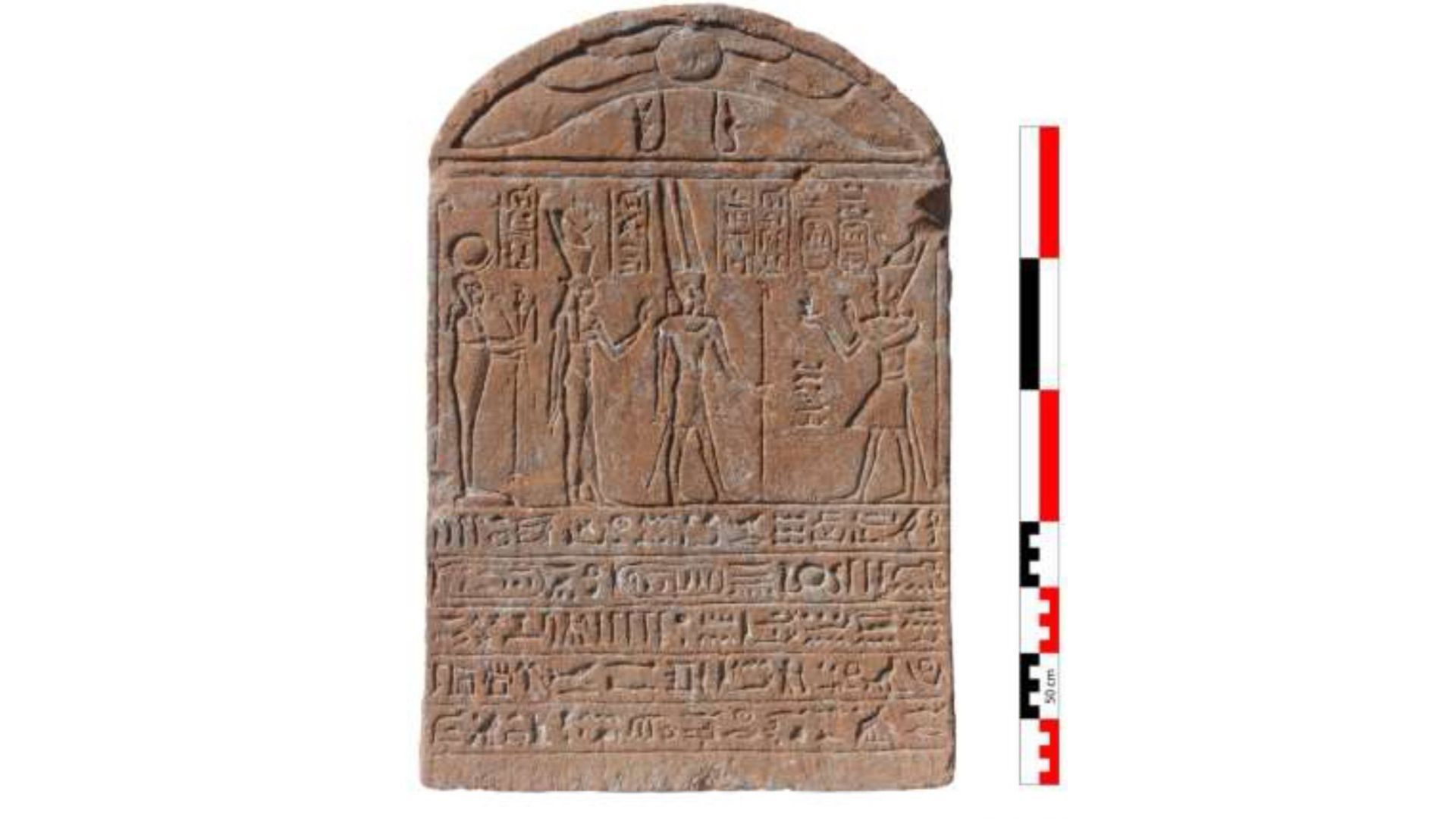
Archaeologists working at the Karnak temple complex in Luxor have uncovered a roughly 2,000-year-old sandstone monument depicting the Roman emperor Tiberius as a pharaoh. The discovery, reported by Live Science on April 12, was made during restoration work and offers a vivid example of how Roman political authority was expressed through Egyptian religious imagery.
The object is described as a small rectangular monument, known as a stela, and shows Tiberius alongside the Egyptian deities Amun, Mut, and Khonsu. That iconography matters because it places a Roman emperor inside a visual tradition associated with native kingship and divine legitimacy in Egypt. Even centuries after the height of pharaonic rule, the symbolic grammar of Egyptian power remained strong enough that Roman authority could still be framed through it.
Why Tiberius Appears as a Pharaoh
To modern viewers, the image may seem striking or even contradictory. Tiberius is remembered as a Roman emperor, not an Egyptian ruler. But in Roman-controlled Egypt, political legitimacy had to function across multiple cultural systems. Depicting the emperor as a pharaoh did not erase Roman identity. It adapted imperial authority to a local sacred and political vocabulary that temple audiences would recognize.
That kind of visual translation was a practical tool of empire. Egypt had deep-established traditions connecting kingship, ritual order, and divine favor. A ruler who appeared in temple art in a pharaonic role was not simply borrowing style. He was entering a long-running institutional language that linked state authority to the gods and to the maintenance of cosmic and social order.
The newly found stela makes that process tangible. Rather than seeing Roman rule only as an external overlay, the monument shows how imperial governance could be embedded within existing Egyptian forms. It is evidence not just of conquest, but of administrative and symbolic adaptation.
The Setting Matters
Karnak is one of the most significant temple complexes in ancient Egypt, and that alone gives the discovery extra weight. Finds from such a site are rarely just decorative fragments. They can illuminate how political, religious, and artistic systems overlapped in one of the most important ceremonial landscapes of the ancient world.
According to the Live Science report, the monument was uncovered during restoration work. That is an important reminder that major discoveries do not always come from dramatic new excavations in untouched ground. Restoration projects often reveal overlooked or buried elements precisely because they require careful attention to architectural and stratigraphic detail. In heritage sites used and reused over millennia, conservation and discovery are often part of the same process.
The stela’s imagery also underscores the continuing importance of the Theban triad, represented here by Amun, Mut, and Khonsu. Their presence places the emperor within a sacred setting rather than a purely political one. That suggests the monument was designed not only to commemorate rule but to situate that rule within divine relationships that mattered at Karnak.
A Window Into Cultural Continuity
One of the most revealing aspects of finds like this is how they challenge simple narratives of civilizational replacement. It is easy to imagine one empire ending and another beginning in a clean break. The archaeological record is usually messier and more interesting. In Roman Egypt, older religious and artistic systems remained active, and imperial power often expressed itself through those inherited structures rather than sweeping them away.
The Tiberius stela fits that pattern. It shows continuity in representation even under foreign rule. It also demonstrates that local sacred institutions retained enough authority to shape how rulers wanted to be seen. If an emperor was shown as a pharaoh at Karnak, that tells us something about the endurance of Egyptian temple culture well into the Roman period.
At the same time, the monument should not be reduced to a simple gesture of respect for local tradition. It was also a technology of power. By appearing in pharaonic form next to major deities, the emperor could be woven into a system that linked rulership with sacred order. That is a sophisticated political message, not merely an artistic curiosity.
What the Discovery Adds
The supplied report identifies the object as a sandstone stela and emphasizes its depiction of Tiberius as a pharaoh. Even with those limited details, the find adds value on several levels. It contributes to the corpus of Roman-period Egyptian monuments. It reinforces the importance of restoration-led archaeology. And it gives scholars and the public a vivid material example of imperial self-presentation in a multicultural state.
It also helps explain why ancient monuments continue to matter beyond aesthetics. A carved stone slab can preserve evidence of governance, religion, identity, and adaptation all at once. In a period where Rome controlled Egypt politically, monuments like this one show how authority still needed to speak through Egyptian symbols to function effectively within Egyptian sacred space.
That is why the discovery reaches beyond the object itself. The Karnak stela is a compact record of cultural negotiation. It shows a Roman emperor rendered legible in pharaonic terms and placed in relation to gods central to the temple complex where the monument was found. For archaeologists and historians, that is not a minor detail. It is a concrete trace of how empire worked on the ground, in stone, image, and ritual setting.
As further study continues, this small monument may yield more detail about its original placement and context. But even now, the core significance is clear: the Roman Empire in Egypt did not rule only through military and administrative power. It also ruled through images that made imperial authority look at home inside one of the ancient world’s oldest sacred traditions.
This article is based on reporting by Live Science. Read the original article.