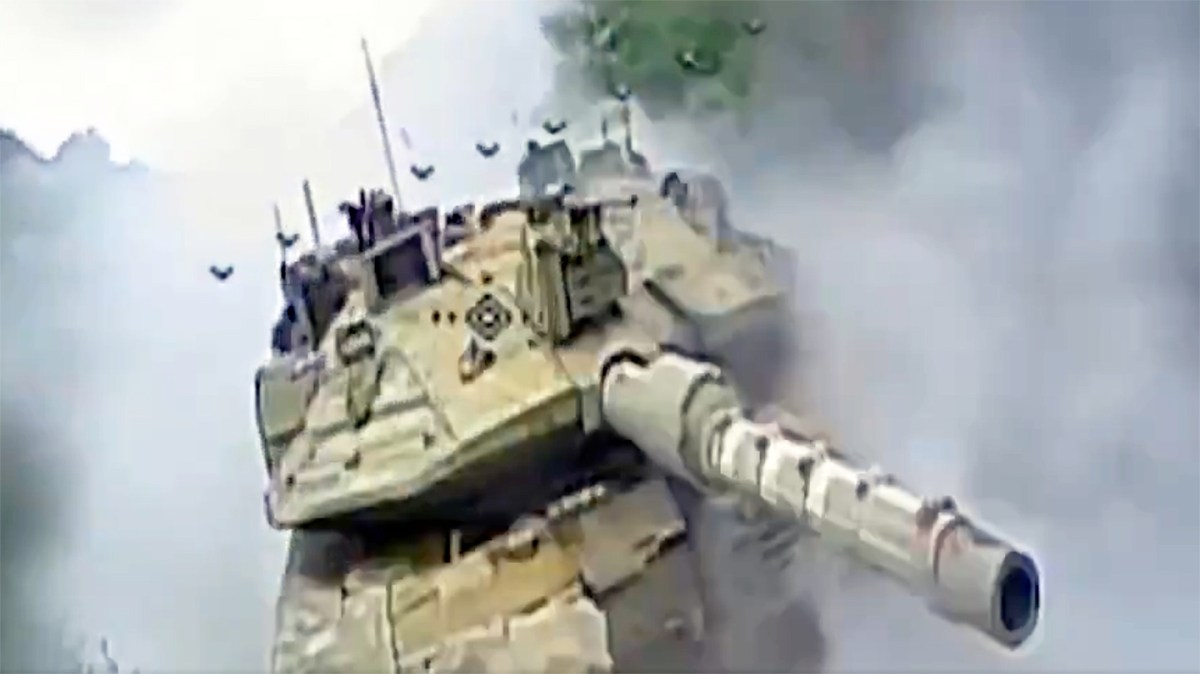
A cheap weapon with outsized effect
Hezbollah appears to be increasing its use of first-person-view drones against Israeli forces operating in Lebanon, according to reporting that cites recent strike footage and outside analysis. The attacks are notable not only because of the targets involved, including armored vehicles and personnel, but because they show how quickly a tactical method can move from one war to another.
FPV drones are small, fast, and comparatively inexpensive. They are flown directly by operators, often with a live camera feed, and can be guided into vehicles, positions, or exposed troops. Their rise in Ukraine turned them from improvised tools into a defining feature of modern combat. What is now becoming clearer is that the concept is no longer confined to one front.
The latest reports suggest Hezbollah has been using such systems since 2024, but that the pace and visibility of attacks have increased as Israeli ground forces have pushed farther north. More troops and more equipment in closer proximity to Lebanese positions create more opportunities for attack. That alone can explain part of the increase.
Why this matters now
The broader significance is that these drones compress the cost curve of war. Expensive armor, engineering vehicles, and troop concentrations can be harassed or damaged by systems that are far cheaper to field. Even when they do not destroy a target outright, FPV strikes can slow movement, force dispersion, and impose a constant psychological burden on units in the field.
That changes how militaries have to think about survivability. Protection is no longer just about artillery, anti-tank missiles, or aircraft. It is also about defending against a persistent layer of small, maneuverable, low-altitude threats that can appear with little warning and attack from awkward angles.
In Lebanon, this challenge is sharpened by terrain, range, and the density of possible firing positions. Small drones can exploit ridgelines, built-up areas, and short engagement windows. Their usefulness grows when they can approach from places that are difficult to fully monitor or suppress.

The fiber-optic question
One of the most important details in the report is the suggestion that Hezbollah may be incorporating fiber-optic-guided FPV drones. Analysts cited in the source material are cautious about the scale of that shift, but the possibility matters. A drone steered through a fiber-optic cable is less vulnerable to the radio-frequency jamming that has become standard in heavily contested environments.
Electronic warfare has become one of the main counters to the drone boom. Jam the link, break the connection, and many systems become ineffective. Fiber optics complicate that equation. They reduce reliance on radio control and can help maintain guidance where line-of-sight or terrain would otherwise interfere.
If such systems are becoming more available outside Ukraine, the implication is serious. Counter-drone defenses that depend heavily on jamming may not be enough on their own. Militaries may need a thicker defensive stack that includes physical barriers, sensors, interceptors, camouflage, mobility changes, and faster tactical adaptation.
Even if Hezbollah is only using limited numbers of fiber-optic platforms, the symbolic shift is important. It shows that innovations first seen in one theater can diffuse quickly through state and non-state networks.
A wider lesson for modern warfare
The most durable lesson is not about one militia or one front. It is about the speed at which workable battlefield ideas spread once they prove effective. FPV drones have moved from novelty to necessity in a remarkably short time. Groups with fewer resources can now threaten better-equipped opponents with tools that are easier to source, easier to modify, and harder to fully suppress than older precision systems.
That does not make every video clip decisive, and isolated strike footage should not be confused with strategic transformation on its own. But the pattern is hard to ignore. Drone warfare is becoming less centralized, less expensive, and more adaptive.
For professional militaries, that means doctrine and procurement cycles face a speed problem. Traditional acquisition timelines were not built for a threat ecosystem that changes month to month. For irregular forces and proxies, by contrast, this environment can be advantageous. They do not need dominance in the air to create danger from above.
The Lebanon fighting is therefore becoming another case study in a broader transition. Small drones are no longer an accessory to war. They are part of its everyday logic, shaping how units move, how armor is protected, and how commanders calculate risk.
Key developments from the report
- Hezbollah is reported to be increasing FPV drone attacks as Israeli forces operate deeper into Lebanon.
- Recent claimed strike footage includes armored and engineering vehicles among the targets.
- Analysts cited in the source material say the larger Israeli presence creates more nearby opportunities for attack.
- There are indications Hezbollah may be adopting fiber-optic-guided drones, which are harder to disrupt with radio jamming.
- The trend highlights how tactics refined in Ukraine are being adapted across other battlefields.
The practical consequence is straightforward: the spread of cheap, precise, adaptable drones is changing the balance between cost and vulnerability. Lebanon is the latest reminder that once a combat innovation works, it rarely stays local for long.
This article is based on reporting by twz.com. Read the original article.
Originally published on twz.com