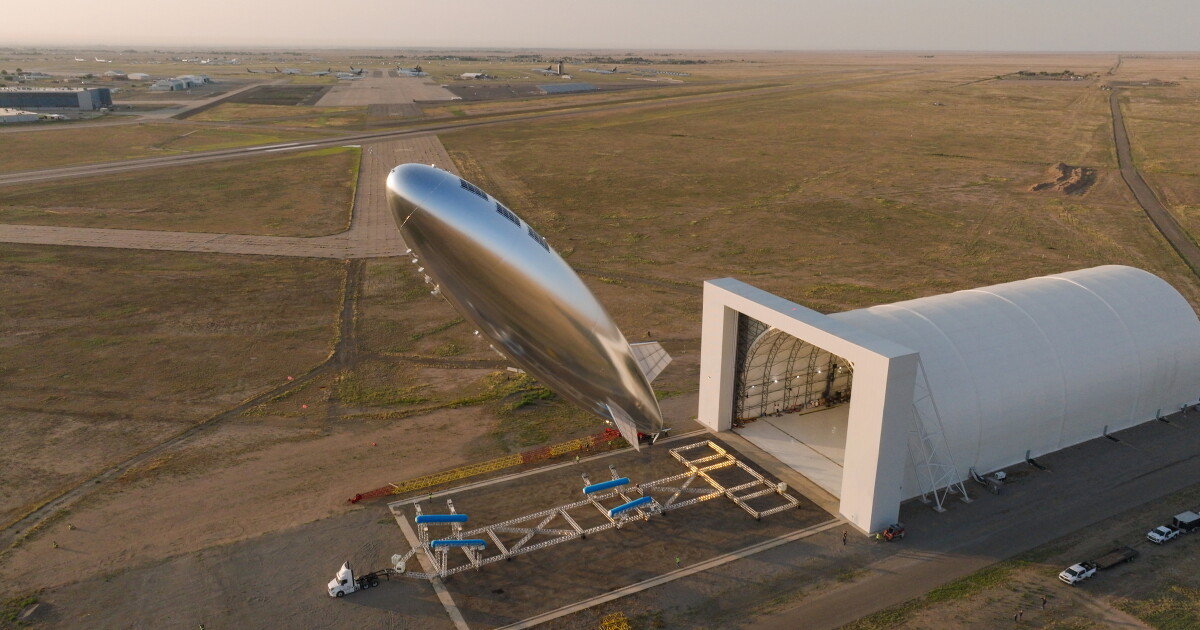
An Airship That Works Like a Cell Tower
Sceye, a US company developing lighter-than-air platforms, has completed a trans-Pacific demonstration in which an unmanned airship acted as a floating mobile base station. The vehicle delivered broadband service directly to ordinary, unmodified smartphones in Japan — no special hardware, no satellite dish, just standard handsets connecting to a tower that happened to be hovering roughly 10 miles overhead.
The technology belongs to a category known as HAPS, short for high-altitude platform station. In practice, that means placing telecommunications equipment in the stratosphere, the calm layer of atmosphere that sits above the flight paths of commercial airliners. Rather than building another mast on a hillside, Sceye's approach puts the mast itself into the sky and keeps it there.
From Roswell to Cape Muroto and Back
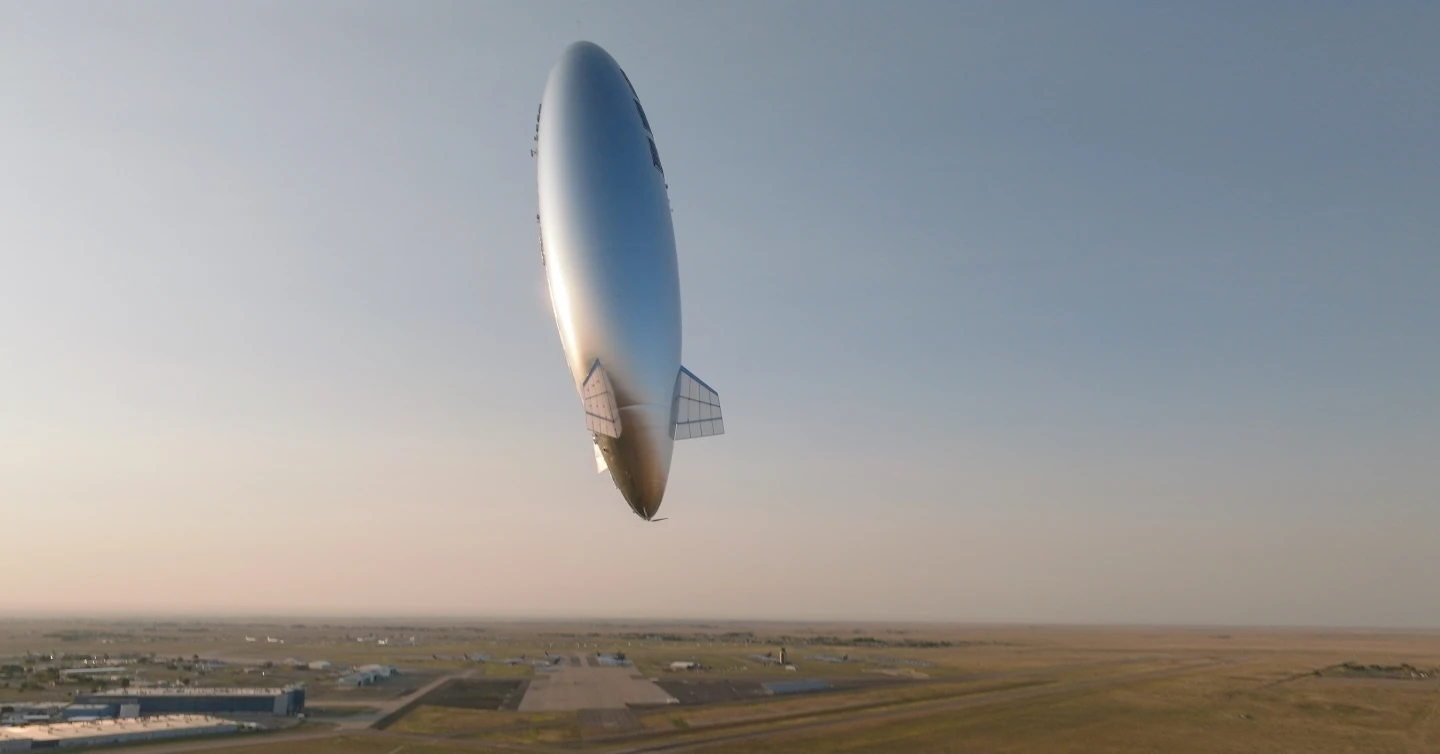
The mission, designated Service Test 1 or ST1, began on August 9 with a launch from Roswell, New Mexico. The airship needed 13 days to reach Japan, and over the course of the entire exercise it covered close to 30,000 kilometers — about 18,600 miles. It spent more than a week operating inside Japanese airspace, maintaining altitude between 16.5 and 17 kilometers, or roughly 54,100 to 55,800 feet.
Perhaps more impressive than the distance was the precision. The craft held a station-keeping radius as tight as 5 kilometers, about 3.1 miles, around its assigned area off Cape Muroto. After its work in Japan, the airship turned around, re-entered the continental United States on September 4, and touched down the following day near Sceye's headquarters in Moriarty, New Mexico. The round trip served as both an engineering demonstration and an endurance test for a platform that must eventually operate for long stretches with minimal intervention.
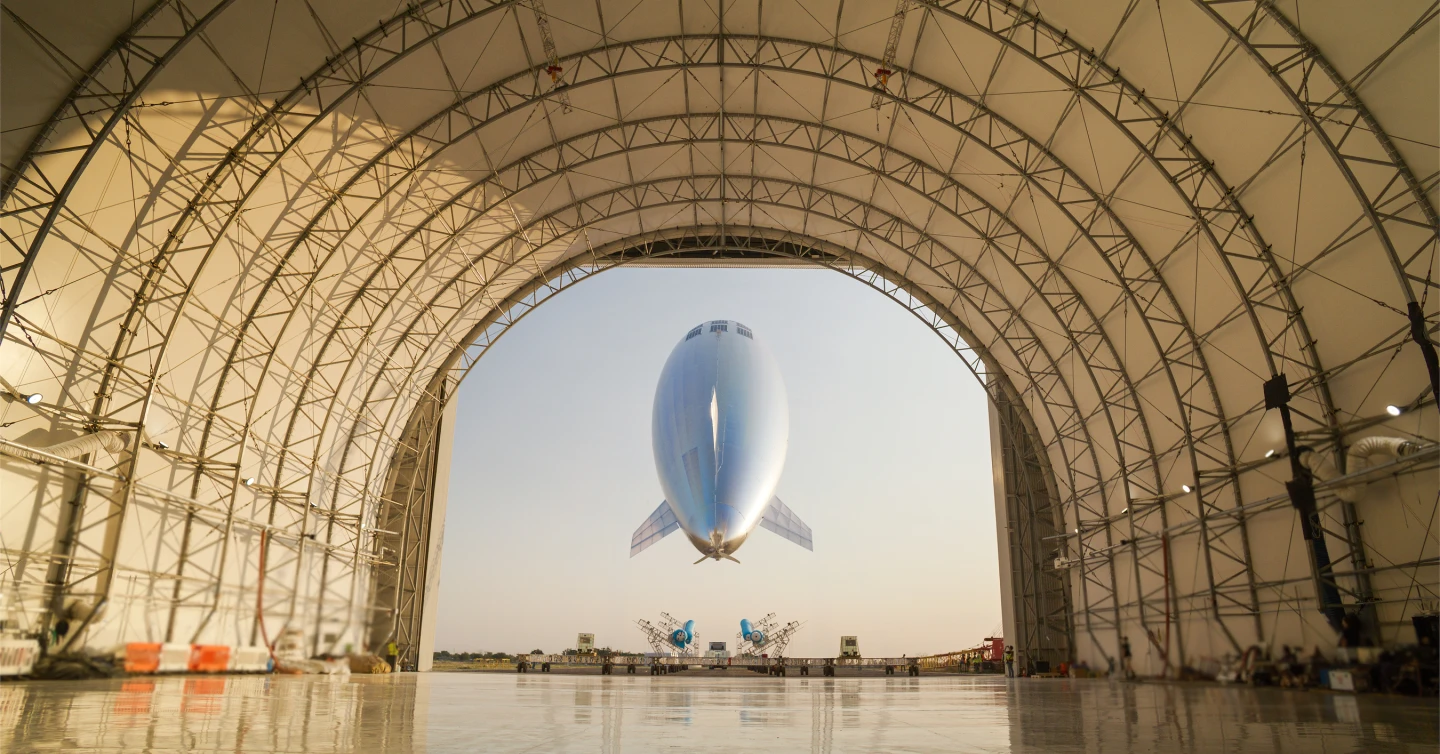

Connecting Phones Without Modifying Them
Aboard the airship was SceyeCELL, the payload that functions as the actual cell tower. It connected to the core network of SoftBank Corp., one of Japan's largest mobile carriers, and pushed mobile broadband to devices that had not been altered in any way. According to Sceye, SoftBank teams used the link to send messages, place calls, browse the web, and play video — indoors, outdoors, and beneath trees. The companies report that performance was comparable to what a ground-based tower would deliver and that interference with terrestrial networks was reduced.
Johnny Truong, Sceye's chief technology officer, described the result as evidence that the stratospheric layer can extend an existing mobile network rather than replace it. That framing matters: the pitch is not that HAPS will supplant the towers already in place, but that it can fill gaps, add capacity, and restore service when ground infrastructure fails.
- Voice calls and text messaging over a standard handset
- Web browsing and video streaming in varied outdoor and indoor conditions
- A disaster alert system, tested as part of the flight campaign
- Communications links with drones, supporting plans for a layered, three-dimensional network
Putting the Network's Brain in the Sky
The companies describe another element of ST1 as a world first: a server and a portion of the mobile network's core — the routing system that directs calls and data — were hosted on the airship itself. Ordinarily, a phone's request travels from the tower to distant servers before an answer comes back. In this test, the airship handled the routing aloft and returned the response directly.
The payoff showed up in latency. Average response time came in at 68 milliseconds, which the companies say is more than 40 percent lower than what the remote path would have produced. For everyday messaging and browsing, that difference may be hard to notice. For applications that depend on quick round trips — real-time video, remote control, industrial telemetry — it could be significant. It also hints at why carriers might view stratospheric platforms as more than a coverage patch.
Lasers on a Moving Target
ST1 also tested optical links. Ground lasers tracked a reflector mounted on the airship while it moved, and Japanese teams fired laser pulses at the craft during the campaign. Optical communication between the ground and a drifting platform is technically demanding, since the beam must stay locked onto a target that is kilometers away and never perfectly still. Demonstrating that tracking and pointing works under real conditions is a prerequisite for higher-bandwidth backhaul in future missions.
SoftBank's Timeline and the Distance Still to Cover
SoftBank is eyeing commercial service in Japan starting in 2027, according to the companies. That is an ambitious window for a technology that has so far been proven in a single, heavily instrumented campaign. HAPS platforms must eventually show they can stay aloft for months, survive weather and stratospheric conditions, and be produced and operated at a cost that makes sense for carriers.
Still, the ST1 results address several of the questions that have dogged the concept. The airship reached Japan and came home under its own power. It kept station within a few kilometers. It served ordinary phones through a commercial carrier's core network. It carried part of that core with it and cut latency in the process. And it did so while ground-based networks continued to operate alongside it.
If the model holds, the stratosphere could become another layer in the mobile stack — one that covers oceans, mountains, and disaster zones where towers are impractical or destroyed. For now, the flight stands as a proof of concept: a cell tower that crossed an ocean, parked itself off the coast of Japan, and answered the phones that called it.
This article is based on reporting by New Atlas. Read the original article.

Originally published on newatlas.com