Samsung pushes monitor specs further into ultra-high-resolution gaming
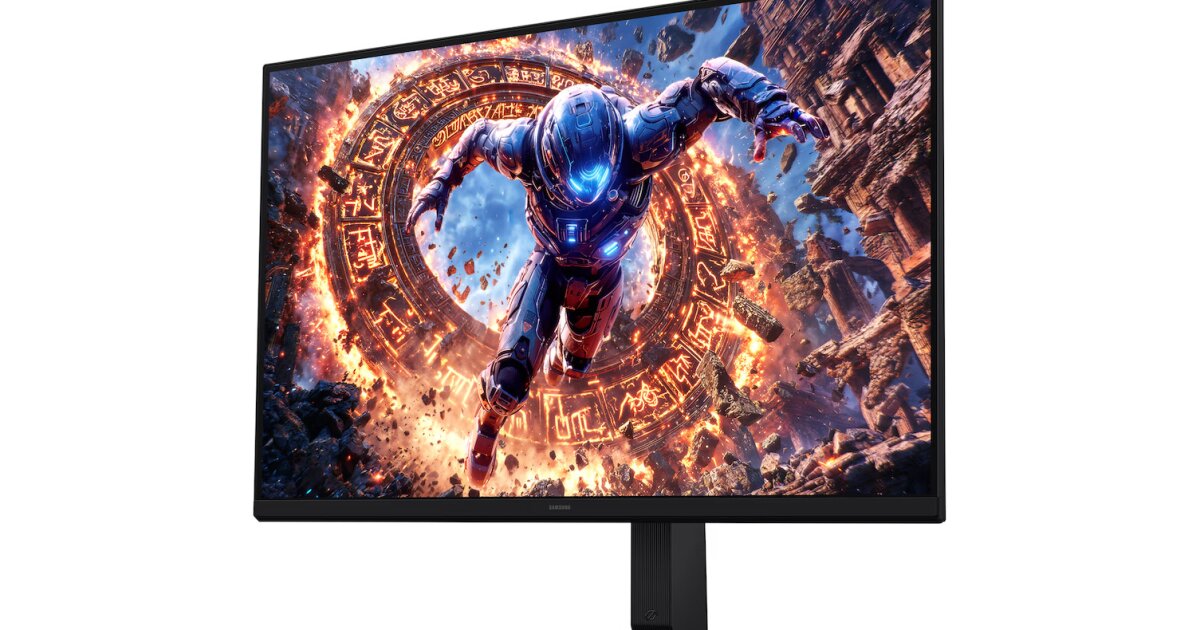
Samsung has launched the Odyssey G8 G80HS, a 32-inch gaming monitor the company says is the first to reach 6K resolution for gaming. The display packs a 6,144 by 3,456 IPS LCD panel running at 165Hz, a specification aimed less at mainstream players than at buyers chasing extreme pixel density and premium multiuse setups.
On paper, the screen is unusual even by high-end monitor standards. Gaming displays have often prioritized refresh rate and response time over sheer resolution, while productivity-oriented 6K monitors have typically targeted creators instead of players. Samsung’s new model tries to bridge those markets by positioning a high-resolution panel as both a gaming display and a screen that can handle media or editing workflows.
That hybrid pitch may be the product’s strongest argument. A pure gaming case for 6K remains difficult today, because rendering modern big-budget games at that resolution is punishing even for top-end hardware. The source text notes that users will likely need technologies such as DLSS to maintain triple-digit frame rates at 6K in AAA titles.
A dual-mode design acknowledges the hardware limits
Samsung appears to understand the practical constraint, which is why the G80HS includes a dual-mode option. Users can drop the panel down to 3K resolution and in return push the refresh rate to 330Hz. That makes the monitor more flexible than a fixed 6K design and gives it a second operating profile better suited to competitive play.
The tradeoff is straightforward:
- At 6K and 165Hz, the monitor targets visual sharpness and a premium all-around desktop experience.
- At 3K and 330Hz, it becomes more plausible for high-frame-rate gaming where responsiveness matters more than maximum detail.
This split mode reflects a broader truth in display technology. Buyers at the top end increasingly want one screen that can do several jobs well enough, especially when desk space and spending are both substantial. A monitor that can support creative work during the day and high-end gaming at night is easier to justify than one built only for benchmark-chasing.

Features, ports, and the panel question
Beyond resolution and refresh rate, the G80HS includes a familiar stack of premium gaming features. According to the source text, it supports both FreeSync Premium and G-Sync compatibility, along with HDR10. Samsung also lists 99% sRGB coverage and a 1,000:1 contrast ratio, figures that position the display as usable for mainstream photo and video workflows as well as entertainment.
Connectivity includes one DisplayPort 2.1 and two HDMI 2.1 ports, which is consistent with the display’s bandwidth demands. The included stand supports height, tilt, swivel, and pivot adjustments, a practical detail that matters more on a dense 32-inch panel where ergonomic tuning affects long sessions.
Still, the screen’s IPS LCD technology sets limits. The source notes that buyers should not expect the deep blacks and dramatic contrast of OLED. That distinction remains important in the premium monitor market, where OLED has become increasingly associated with flagship gaming visuals. Samsung is effectively trading some contrast advantage for a different proposition centered on very high resolution.
Who this monitor is really for
The most obvious question is whether anyone truly needs 6K for gaming on a 32-inch display. For most players, the answer is probably no. The graphics hardware needed to make full use of 6K at high frame rates is expensive, and many games will force compromises even on strong systems.
But this product is not really aimed at “most players.” It appears to target users who want a premium desktop centerpiece that can double as a productivity display. For those buyers, 6K is not merely about games. It is also about workspace density, sharp text, editing headroom, and running one large screen instead of multiple smaller ones.
That could make the G80HS more appealing to a narrower but credible audience: enthusiasts with powerful PCs who also create content, edit media, or simply want a top-tier general-purpose display. In that context, the gaming branding may be only part of the sales story.
Pricing and market positioning
Samsung’s announced U.S. price is $1,600, according to the source text, with availability expected soon in the United States. That places the monitor firmly in premium territory but below some exotic ultra-wide and specialty displays. For that money, the company is asking buyers to embrace a product category that is still somewhat experimental: ultra-high-resolution gaming-oriented monitors that blur the line between play and productivity.
The timing is notable. High-end PC hardware continues to advance, but display innovation has recently been shaped as much by form factors and panel types as by raw resolution. Samsung is trying to reopen the resolution race in gaming, arguing that there is room for a screen that goes beyond 4K while retaining fast refresh options.
Whether that becomes a meaningful segment depends on two factors. First, graphics hardware needs to keep improving to make 6K feel less aspirational. Second, buyers need to see clear value in owning a screen that serves more than one premium use case.
For now, the Odyssey G8 G80HS looks like a statement product: ambitious, costly, and aimed at a thin slice of the market. But statement products often preview where the broader display business wants to go. Samsung is betting that the next frontier in premium gaming monitors is not just faster or brighter. It is denser, more flexible, and increasingly designed to function as an all-purpose flagship screen.
This article is based on reporting by New Atlas. Read the original article.
Originally published on newatlas.com