A milestone in rotational quantum control
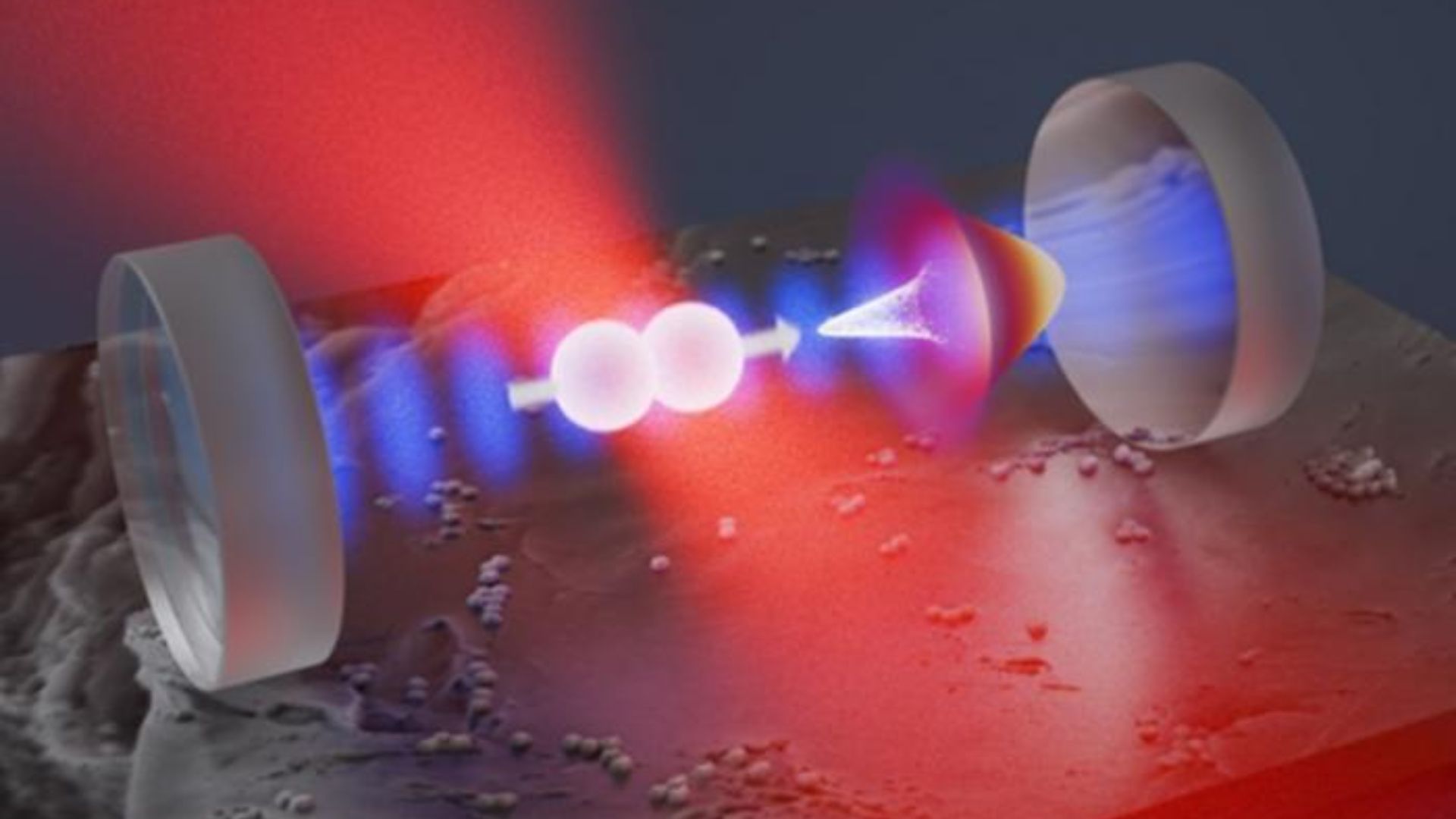
Researchers in Europe have reportedly achieved a world first: bringing the rotational motion of a silica nanorotor into its quantum ground state. Even in headline form, that is a meaningful claim. It suggests scientists are not only controlling where a nanoscale object sits or how it vibrates, but also how it rotates at the lowest quantum level accessible to that motion.
The result matters because rotation is an especially demanding degree of freedom to control. Translational and vibrational motion have been central targets in quantum experiments for years, but rotation adds a different layer of complexity. A rotor has orientation, angular momentum, and continuous motion that can be far harder to tame with high precision. Reaching the ground state of that motion implies that researchers have pushed noise and excess energy low enough to access a fundamentally cleaner regime.
That does not make the finding immediately commercial. It does, however, mark the kind of foundational advance that can widen the boundaries of what precision experiments can do. Quantum science often progresses by turning once-theoretical thresholds into laboratory realities. A reported ground-state nanorotor would fit that pattern.
Why a silica nanorotor matters
Silica is a familiar material, but a nanorotor built from it becomes a very different scientific object. At that scale, the challenge is less about the substance itself than about isolation, control, and readout. Researchers need to manipulate the object with extraordinary delicacy while preventing the surrounding environment from injecting heat, vibration, or other disturbances that destroy the intended state.
That is why ground-state claims attract attention. They imply that the system is no longer behaving like an everyday spinning particle buffeted by its surroundings. Instead, it is being prepared so close to its lowest-energy rotational condition that quantum effects become the relevant language for describing it. In practical terms, that can create a cleaner platform for measurement, testing, and new experimental protocols.
The fact that the work is described as a collaborative effort spanning multiple European institutes also tracks with the way frontier quantum research is usually done. These projects often depend on combining expertise in materials, optics, control systems, and theory. A single laboratory can push an idea forward, but firsts at the edge of quantum control increasingly come from coordinated teams.
What this could open up next
The immediate significance is scientific rather than industrial. If researchers can reproducibly control rotational motion at the quantum ground state, they may be able to probe new kinds of sensing, study how quantum systems behave under rotation, or test where the practical limits of mechanical quantum control really lie. It may also provide another path for comparing quantum theory with increasingly sophisticated experiments on mesoscopic objects.
That is the broader pattern across quantum technology right now. Not every milestone produces a product, but each one can unlock a new layer of experimental capability. The field advances through control: control of states, control of noise, control of measurement, and control of how quantum behavior is sustained long enough to be useful. A nanorotor result belongs in that lineage.
There is also a symbolic value in the achievement. Quantum headlines are often dominated by processors, networking, and encryption. This reported first is a reminder that the field is much wider than computation. It includes the disciplined manipulation of matter itself, one physical degree of freedom at a time.
For now, the right reading is careful optimism. The headline points to a genuine milestone, but its long-term importance will depend on replication, follow-on work, and whether the same methods can be extended into richer experimental systems. Still, the direction is clear. Researchers are learning to control not just tiny objects, but the ways those objects move through the world, including rotation. That is a deeper form of mastery than quantum science offered only a few years ago.
- The reported breakthrough concerns rotational motion, not just position or vibration.
- Reaching a quantum ground state implies much tighter control over energy and environmental noise.
- The advance is most significant as a foundation for future experiments and precision quantum systems.
This article is based on reporting by Interesting Engineering. Read the original article.
Originally published on interestingengineering.com