NASA Halts the Orbit-Raising Phase of the Swift Rescue Mission
NASA and Katalyst Space have abandoned the planned orbit boost for the Neil Gehrels Swift Observatory after a chain of malfunctions left the servicing spacecraft unable to carry out its most important task. The setback ends the most ambitious part of a mission that was designed to extend the life of one of NASA’s long-running space telescopes while also proving that autonomous satellite servicing can work in practice.
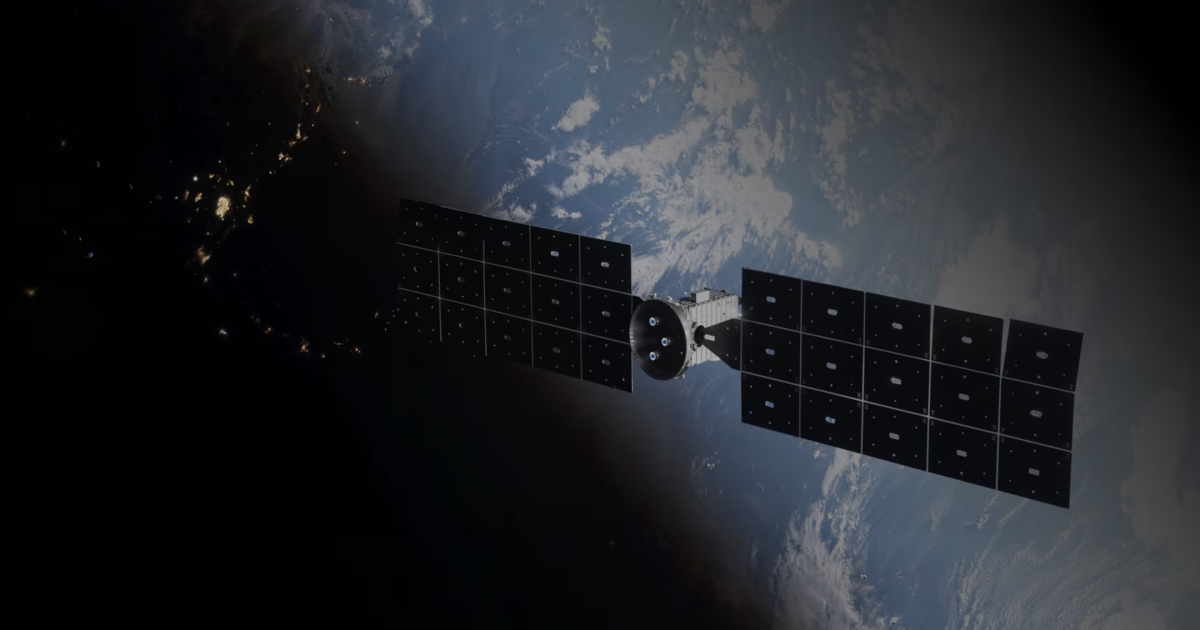
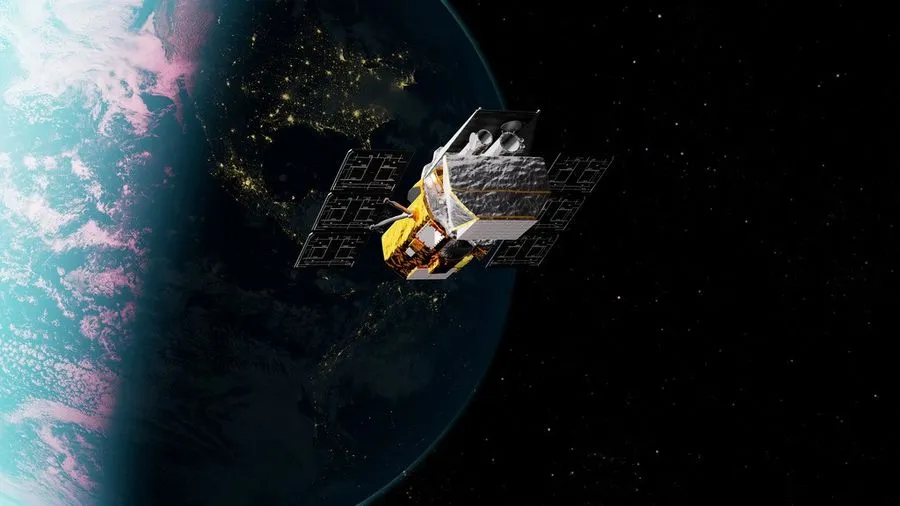
Swift, launched in 2004, has spent more than two decades studying gamma-ray bursts and other high-energy cosmic events. But its orbit had decayed enough to create a mounting risk that the observatory would eventually reenter Earth’s atmosphere. To prevent that outcome, Katalyst Space sent its LINK spacecraft to rendezvous with Swift, capture it with robotic arms, and use onboard thrusters to push the telescope into a higher orbit.
That was the mission’s central promise: preserve a valuable science asset and demonstrate a future model for satellite servicing in the same flight. Instead, the effort has become a case study in how quickly technically bold operations can be derailed by failures in core spacecraft control systems.
What Went Wrong With LINK
According to the supplied source text, the mission began on July 3, 2026, when a Northrop Grumman Pegasus XL launched LINK from Kwajalein Atoll in the Pacific. The spacecraft was expected to catch up with Swift and execute a complex proximity operation that relied on robotics and autonomous guidance.
Those plans unraveled in late July when LINK entered an uncontrolled spin. The immediate cause was not a single isolated fault but a combination of failures. Overheating electronics contributed to the loss of two of the spacecraft’s three reaction wheels, and that problem was compounded by a separate malfunction in its thruster system. Together, those failures struck at the center of spacecraft attitude control, the function that keeps a vehicle properly oriented in space.
Engineers were able to recover partial control and reduce the tumbling, but not enough to restore the spacecraft to a condition suitable for capture and orbit-raising operations. NASA and Katalyst then made the formal decision to abandon the boost attempt. That choice reflects the basic reality of on-orbit servicing: if a vehicle cannot maintain reliable control of its orientation, any close-approach or grappling maneuver becomes far riskier.
Why the Mission Still Matters
Although the orbit boost is off the table, the mission is not being written off as a total loss. NASA and Katalyst still intend for LINK to carry out rendezvous and proximity operations near Swift. In other words, the mission’s salvage path is to preserve whatever technical learning it can by demonstrating partial capabilities rather than the full rescue sequence.
That matters because satellite servicing has long been treated as an important but difficult frontier in space operations. If spacecraft can inspect, repair, reposition, or extend the lives of satellites already in orbit, operators could reduce replacement costs, protect high-value assets, and create new commercial and national-security capabilities. But those goals depend on mastering guidance, navigation, control, and robotic interaction in a domain where even small control errors can become mission-ending problems.
In that sense, LINK’s failure is not just a problem for one observatory. It is also a reminder that servicing missions have to clear a far higher bar than ordinary spacecraft operations. A vehicle trying to approach and physically interact with another object in orbit has less room for degraded performance than one simply maintaining its own trajectory.
NASA’s Framing: Risk Accepted, Lessons Preserved
NASA Administrator Jared Isaacman framed the outcome as a justified risk rather than a strategic mistake. In comments included in the source material, he said the agency should be willing to move quickly and take smart risks when the potential return is high. He also said the team moved with unusual speed in an effort to give Swift more time for science while advancing capabilities the United States will need for future servicing missions.
That framing is important. It suggests NASA sees the mission not only as an attempt to save Swift, but as an experiment in an operational model that could become more common. By that standard, the mission’s value is no longer measured only by whether Swift reaches a higher orbit. It is also measured by what engineers learn from LINK’s failures, recovery efforts, and proximity operations.
The agency now says it will extract as much knowledge as possible from the rendezvous attempt and apply those lessons to follow-on missions. That is a familiar pattern in experimental aerospace programs: technical disappointment on one mission becomes design data for the next. The difference here is that the experiment involved a working science telescope whose remaining lifetime may now stay constrained by orbital decay.

What This Means for Swift and On-Orbit Servicing
For Swift itself, the immediate implication is straightforward. Without the planned boost, the telescope does not receive the orbital reprieve the mission was built to deliver. The source text does not specify a revised end-of-life timeline, but it makes clear that the reboost will not happen.
For the wider industry, the implications are broader:
- Autonomous servicing remains a strategic goal, but reliability in attitude control is non-negotiable.
- Robotic capture missions combine multiple high-risk technologies, so failures can cascade quickly.
- Even unsuccessful missions can advance the field if they produce usable operational data.
The LINK mission was bold because it attempted to solve two problems at once: protecting an aging science observatory and proving a future service architecture. It has now succeeded at neither in full. But it may still contribute to the development path for orbital servicing if NASA and Katalyst can turn a failed rescue into a meaningful demonstration of rendezvous capability and system recovery under pressure.
That is a narrower legacy than originally planned, but it is not an irrelevant one. In spaceflight, the line between failure and progress is often drawn by what a mission teaches after its headline objective slips out of reach.
This article is based on reporting by New Atlas. Read the original article.
Originally published on newatlas.com