Introducing the HoverAir Versa: A Camera That Learns to Fly
The boundary between a pocket camera and a drone has been steadily dissolving, and HoverAir has now taken a sledgehammer to whatever remained. The company, widely recognized as a pioneer in self-flying cameras, has unveiled complete specifications for the Versa — a palm-sized gimbal camera that can transform into an autonomous aerial videographer with the snap of a propeller-equipped wing. Teased earlier this month, the Versa is now fully documented, and the numbers paint a compelling picture for creators who want seamless transitions between handheld and hands-free filming.
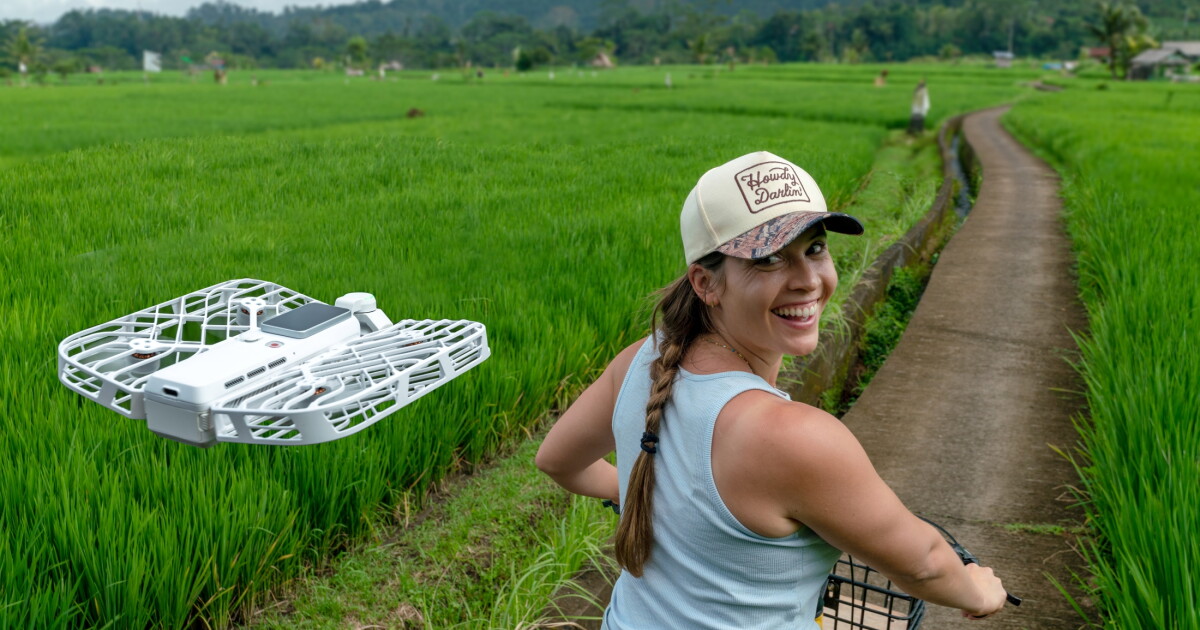
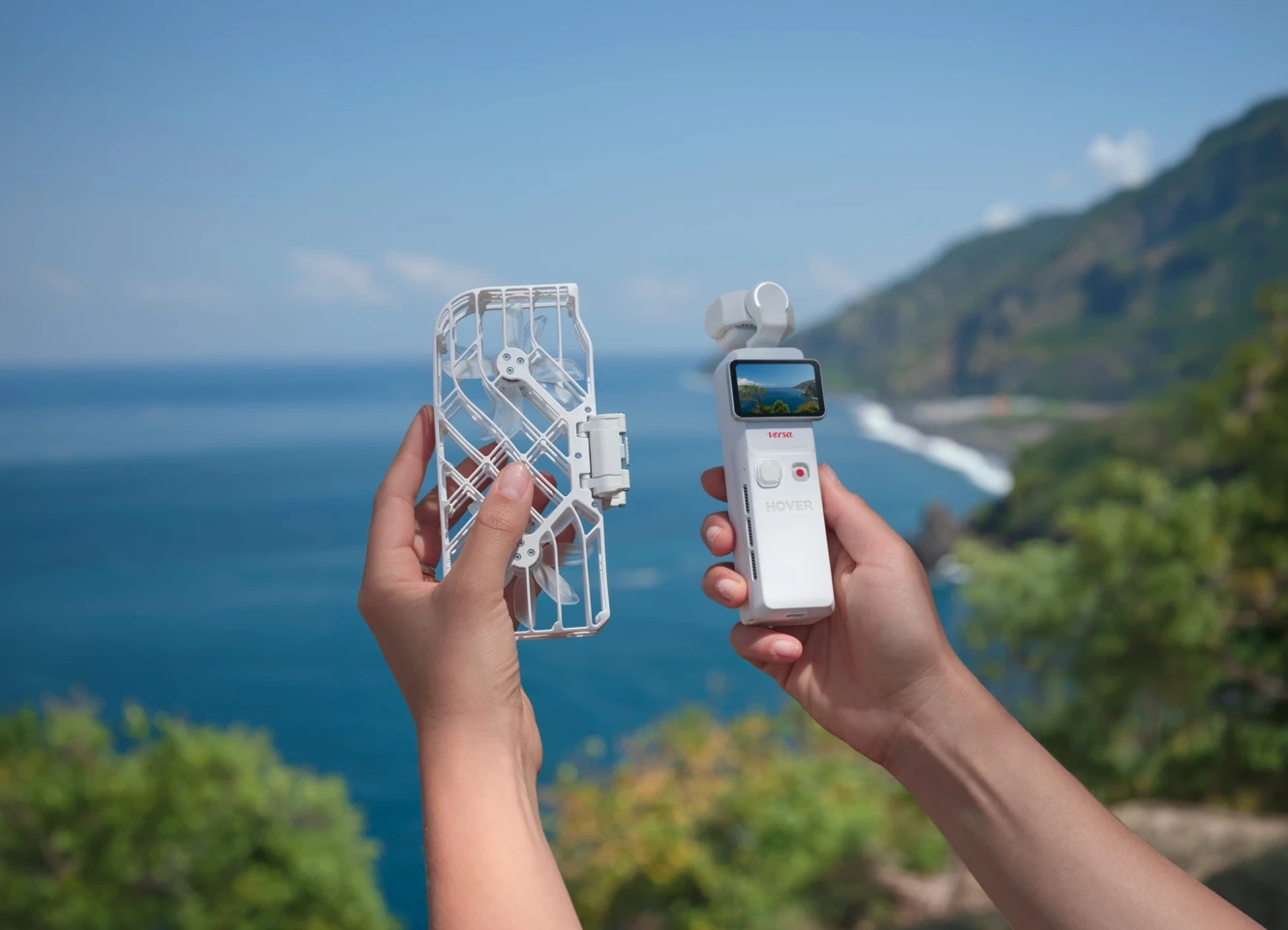
In its default state, the Versa resembles the compact vlogging cameras that many creators already clip to their bags, falling in line with gimbal shooters like DJI's Osmo Pocket 4. But unlike those devices, the Versa includes a second act: snap-on wings with enclosed propellers that turn the camera into a self-flying drone. The concept is not entirely new for HoverAir, but the Versa represents a critical evolution — it is the company's first device to handle both handheld and hands-free filming equally well, rather than starting in the air and staying there.
Handheld Mode: A Full-Featured Vlogging Camera
When held in the hand, the Versa is more than a capable video camera. At its heart lies a 1/1.3-inch-type CMOS sensor coupled with a 3-axis mechanical gimbal, a combination that HoverAir says delivers up to 17.5 stops of dynamic range. That impressive figure suggests strong performance in high-contrast scenes, allowing creators to retain detail in both bright skies and shadowed faces without resorting to complicated bracketing or external lighting.
Video recording tops out at 4K resolution at 60 frames per second, with 10-bit HDR available at 4K 30 fps for those who want rich color straight out of camera. For editors who prefer to color-grade their footage, the Versa also offers 10-bit H-Log capture, preserving latitude for a professional finish. Photography duties are handled by a 12-megapixel stills mode, while the field of view spans 98 degrees, expanding to 106 degrees in Ultra-Wide mode for sweeping scenes. A 2x zoom is also on tap, giving creators the flexibility to reframe without physically moving closer.
Creative Tools for Vloggers
HoverAir has clearly considered the vlogger workflow. AI Tracking and Auto Framing work to keep the subject centered and well-composed, even as they move around the frame. The flip screen allows creators to monitor their own performance when filming solo, making the Versa a self-contained tool for travel, lifestyle, and social-media content. With 64 GB of built-in storage and support for microSD cards up to 1 TB, the Versa also offers ample space for long shooting sessions, reducing the anxiety of running out of storage mid-click.
Snap-On Wings: The Transformation
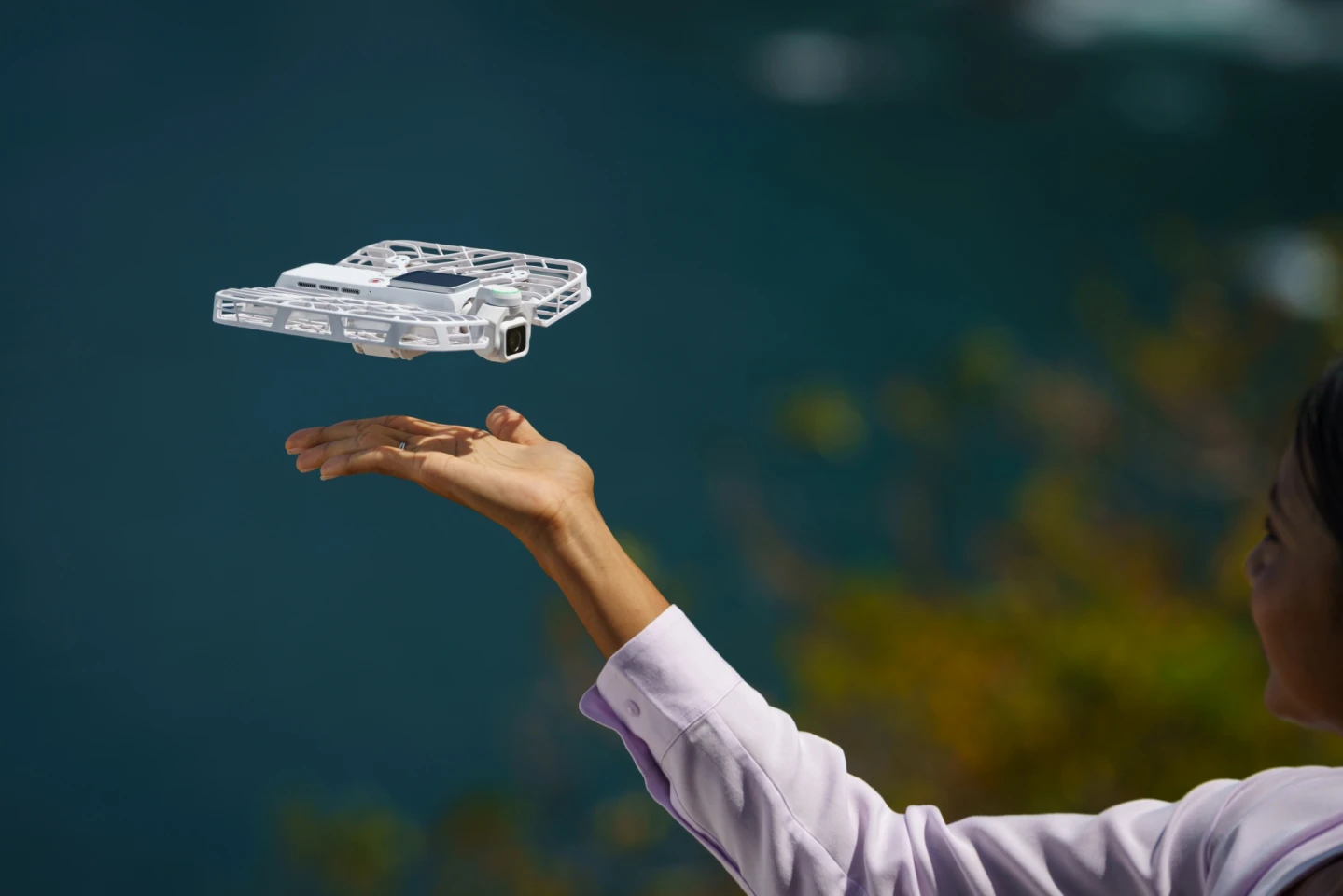
The true game-changer is the optional wing module. When snapped into place, the wings enclose four propellers and transform the Versa from a handheld camera into an autonomous flyer that can capture footage from above. HoverAir notes that the enclosed propeller design makes flying around people and pets safer than exposing spinning rotors, a key concern for users who might want to use the drone at a picnic, a family gathering, or a crowded event.
This safety focus speaks to the target audience: content creators who want aerial shots without the operational complexity of traditional drones. No remote piloting skills are required; the Versa handles the flying itself. Signature flight modes, including Orbit, Bird's Eye, and Zoom Out, allow users to select a cinematic movement and let the camera do the rest. These modes are designed to be intuitive, making aerial footage accessible to anyone, regardless of experience.
The Evolution of HoverAir's Self-Flying Vision
HoverAir has been circling the idea of a camera-drone hybrid for years. Earlier devices in the company's lineup were primarily aerial, focusing on self-flying capture from the moment they powered on. The Versa marks a departure by offering a true hybrid experience. It begins as a handheld vlogging camera and becomes a drone only when you choose to attach the wings. This dual personality gives creators a single device for both ground-level and aerial perspectives, eliminating the need to carry a separate drone and gimbal system.
The design philosophy is evident: the Versa is not simply a drone with a camera, nor a camera with a drone attachment; it is an integrated tool where both modes are equally polished. The fact that the wings are snap-on removable suggests that users can leave them at home when they only need handheld footage, reducing bulk and weight in the process.

Market Context and Availability
The Versa enters a market that has seen steady convergence between compact cameras and drones. DJI's Osmo Pocket series has dominated the handheld gimbal camera space, but those devices do not fly. HoverAir's approach offers a unique value proposition: one device that covers both use cases. For travelers, adventure sports enthusiasts, and vloggers, this could be a significant advantage, simplifying their gear bag and expanding creative possibilities.
The Versa launched on the Indiegogo crowdfunding platform, allowing early adopters to support the project and secure units at an early-bird price. A wider retail rollout is expected in fall 2026, according to HoverAir. As with any crowdfunded device, potential buyers should keep in mind that specifications and availability can change, but the product represents an exciting step forward in consumer camera technology. When it reaches store shelves, the Versa could well be the device that finally erases the line between a pocket camera and a drone, just as HoverAir promised.
This article is based on reporting by New Atlas. Read the original article.
Originally published on newatlas.com