An old idea finds the right manufacturing moment
Some inventions fail not because the idea is weak, but because the tools around them are not ready. That appears to be the case for the Y-zipper, a new MIT CSAIL project that revives a triangular zipper concept first proposed in 1985 and turns it into a practical mechanism for converting soft forms into rigid structures.
The original concept came from William Freeman, then an electrical engineer at Polaroid and now an MIT professor, who imagined a three-sided zipper that could transform items such as chairs, tents and purses from flat, flexible objects into load-bearing shapes. His proposal was rejected at the time, but he patented the idea. Decades later, advances in fabrication and computational design have given the concept a second life.
What the new Y-zipper does
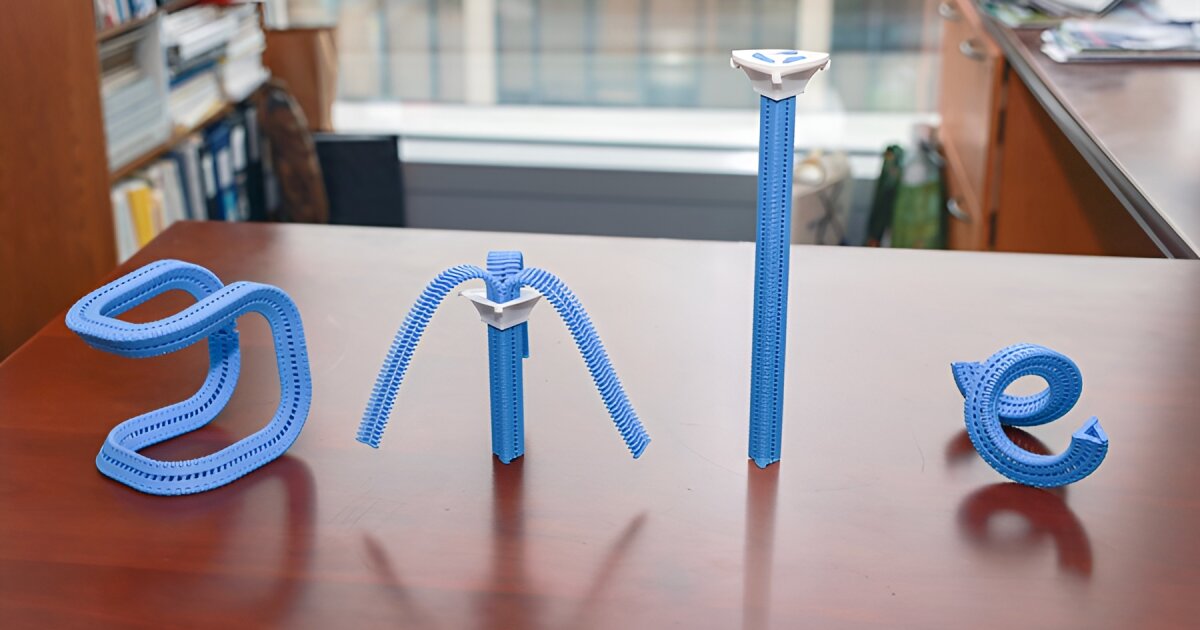
MIT CSAIL’s version is a 3D-printed fastener that forms a triangular tube when zipped. In the closed state, that geometry creates rigidity. When unzipped, the structure relaxes into a soft, flexible configuration. The effect is a mechanism that can drastically change the physical behavior of an object without requiring heavy frames, hinges or complicated assembly.
The project’s appeal lies in its simplicity. Zippers are familiar, inexpensive and intuitive, but they are usually confined to flat closures such as clothing and bags. By extending the principle into a three-sided geometry, the MIT team has turned a mundane fastening action into a transformation system for deployable products.

Why now is different from 1985
Lead author Jiaji Li said current fabrication technology makes it possible to turn Freeman’s more dynamic mechanism into real-world objects that can reliably shift from flexible to rigid. That reflects a broader pattern in innovation: digital design tools and modern additive manufacturing often unlock older concepts that were previously too difficult to prototype, customize or validate.
The team’s software modeling tool appears central to that transition. According to the source material, users can visualize how a Y-zipper will look in its rigid state while customizing features such as strip length, curvature direction and angle. That kind of design support matters because the usefulness of a transformable structure depends heavily on predictability. Designers need to know not just that it can stiffen, but exactly what form it will take.
Potential applications across products and robotics
The examples given by MIT are intentionally broad: chairs, tents, robots and purses. That range is a clue to the technology’s value. The Y-zipper is not being pitched as a single end product, but as a structural method that could reduce setup time, improve portability and simplify storage across categories.
In tents, for instance, the zipper could serve as rib-like supports that deploy quickly. In soft robotics or adaptive devices, it could offer a lightweight way to alternate between compliant and rigid behavior. In consumer goods, it could make bulky items easier to collapse and transport. The more the manufacturing workflow can be tailored to specific geometries, the wider that application space becomes.
The larger design lesson
The Y-zipper is a good example of why innovation is not always about inventing from scratch. Sometimes it is about recovering ideas that arrived before the ecosystem needed to support them existed. The novelty here lies as much in the combination of old concept, new materials and computational design as in the mechanism itself.
That does not mean every prototype will become a market product. Durability, production cost and user ergonomics will determine whether the Y-zipper moves beyond research demonstration. But the concept is strong because it addresses a real design tension: many useful objects need to be rigid in use and soft in storage. A fastener that resolves that tension elegantly could find a wide audience.
For now, MIT’s project stands as a reminder that the future of form-changing products may depend less on futuristic complexity than on reimagining one of the simplest tools most people already know how to use.
This article is based on reporting by New Atlas. Read the original article.
Originally published on newatlas.com