A Stick-On Sensor With a Much Bigger Job
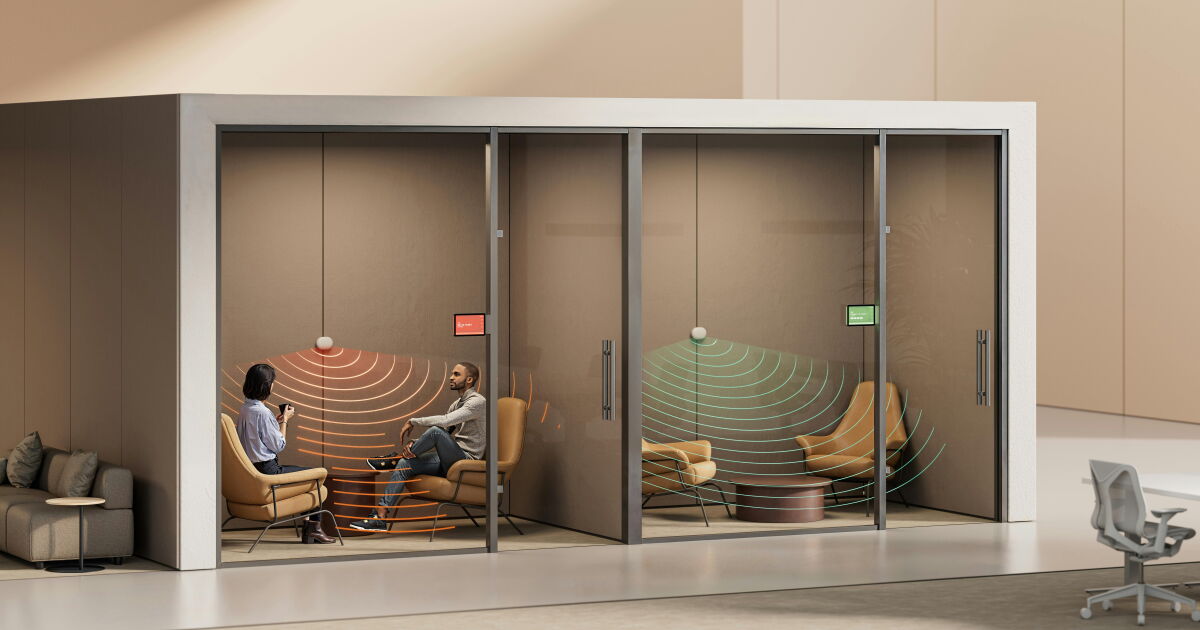
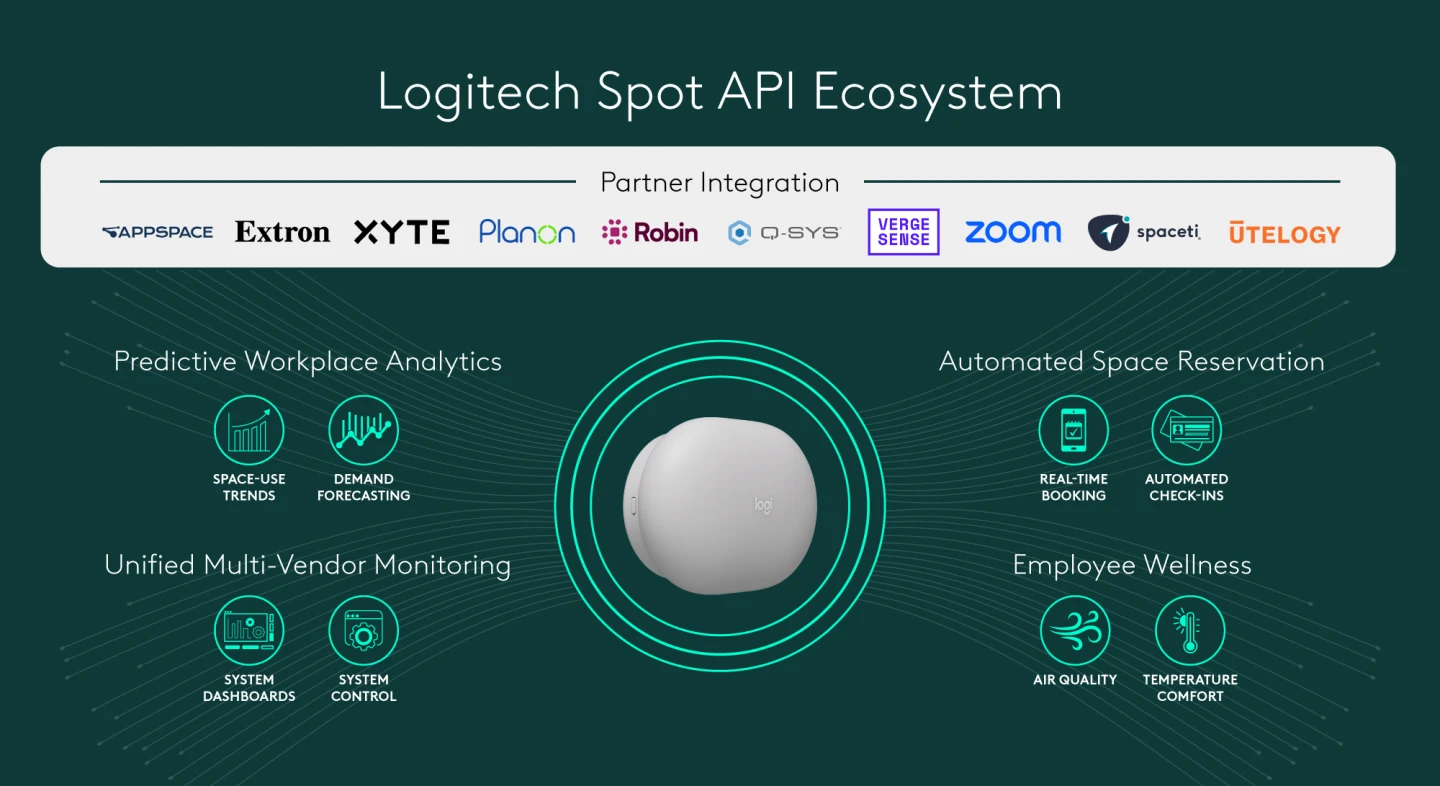
Logitech's Spot sensor has always been an oddity in the smart office catalogue: a compact, mountable module designed to sit inside meeting pods and conference rooms and report what is happening in them. The hardware has not changed. What has changed is how far its readings can travel. A new update adds integrations with ten workplace platforms, letting Spot push room occupancy and environmental data straight into the booking, analytics, AV control and employee wellness systems that companies already use to run their buildings.
The practical effect is that readings no longer stay trapped inside a standalone dashboard. Third-party software can now act on them — triggering automated rules from live meeting-room activity, checking people into spaces they have booked, forecasting which days are likely to be busy or quiet, and flagging problems with indoor air quality. Logitech frames the result as regular workplaces that can respond dynamically to the people inside them.
mmWave Radar Watches the Room
At the centre of Spot's sensing stack is mmWave radar, which detects presence and occupancy status in real time. Logitech rates its range at up to 8 m, roughly 26 ft, which is enough to cover a typical meeting pod or a mid-sized conference room from a single mount. Because the unit reports occupancy status rather than counting identifiable individuals, the data it produces is fundamentally about the space: is this room in use, and how heavily?
That distinction shapes what the integrations can do. Presence and occupancy signals are the trigger for room-level automation, and the ten new platform connections are built around feeding those signals into systems that manage rooms and buildings.

Environmental Readings in the Same Module
Occupancy is only half of Spot's pitch. The same unit carries sensors for temperature, humidity, CO2, volatile organic compounds, particulate matter and air pressure. A single device therefore reports both how a space is being used and what conditions are like inside it.
- Temperature and humidity — baseline comfort conditions
- CO2 — a common proxy for how well a room is ventilated
- Volatile organic compounds — airborne chemicals associated with furnishings, cleaning products and equipment
- Particulate matter — fine particles suspended in the air
- Air pressure — part of the broader picture of how a space behaves
Logitech Sync, the management layer that sits above the hardware, sorts everything Spot collects into three categories: Room Utilization, Room Health and Room Energy. Those three buckets give facilities teams a way to separate questions about how often a room gets used from questions about whether the room is pleasant and efficient to occupy.
Ten Platforms, Four Jobs
The new integrations span booking, analytics, AV control and employee wellness software. Because Spot's API ecosystem now reaches across those categories, the same sensor can serve several departments at once.
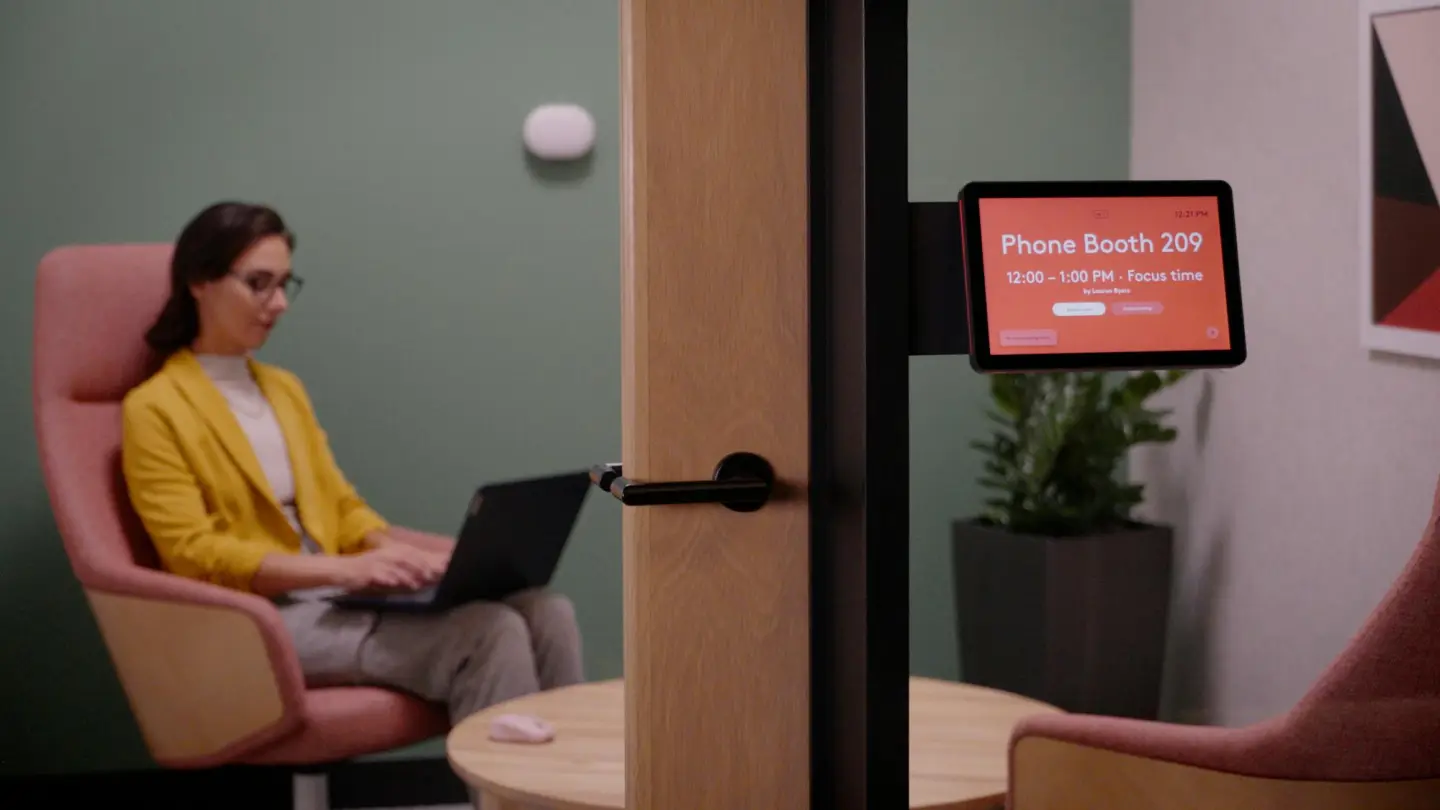
Three of the named partners illustrate the booking side clearly. Appspace, Robin and Zoom can take Spot's presence data and automatically reserve a room when somebody walks in, check people into meetings they have already scheduled, or release spaces that turn out not to be in use. Each of those behaviours addresses a familiar office problem: rooms booked but empty, rooms occupied but never checked into, and spaces that quietly sit idle while people hunt for somewhere to meet.
Analytics platforms can use the same stream to model demand, producing forecasts of which days are likely to be busy and which are likely to be quieter — useful when deciding how much space to open, heat, cool and light. Wellness-focused software, meanwhile, can surface indoor air quality problems when CO2, particulates or other readings drift out of range.

Floor Plans That Update Themselves
Occupancy data also feeds digital floor plan displays. Live room telemetry shown on those displays helps employees navigate a building and find an available workspace without wandering between floors. Combined with automatic check-in and room release, this turns the floor plan from a static diagram into a live picture of where space is actually free.
The Hardware Is Unchanged — the Plumbing Is Not
It would be easy to read the announcement as a new product. It is not. Spot's compact form factor, integrated mounting plate and port layout remain as they were, and the sensor's core capabilities are the same. The update is about integration: how the module connects to office management infrastructure, and what other software can do with its output once that connection exists.
That is a familiar pattern in workplace technology. Sensors are relatively inexpensive and plentiful; the value comes from what acts on their readings. By opening Spot's data to ten platforms rather than keeping it inside Logitech's own interface, Logitech is betting that the sensor's usefulness multiplies when booking tools, analytics suites, AV systems and wellness apps all draw from the same occupancy and environmental feed.
What It Means for the Smart Office
The larger argument behind Spot is that a building should be able to sense the people inside it and adjust. Presence-aware booking means space is allocated as it is used rather than as it was planned. Environmental monitoring means air quality problems can be caught by the same system that tracks occupancy. Forecasting means facilities teams can anticipate demand instead of reacting to it.
Whether offices end up genuinely responsive will depend less on radar range and sensor lists than on how well these integrations work in practice — how reliably rooms are released, how quickly air quality flags reach someone who can act, and whether the forecasts are accurate enough to plan around. Spot's hardware was never the hard part. With ten platforms now plugged in, Logitech is testing whether the software layer can deliver on the promise the sensor was designed for.
This article is based on reporting by New Atlas. Read the original article.
Originally published on newatlas.com