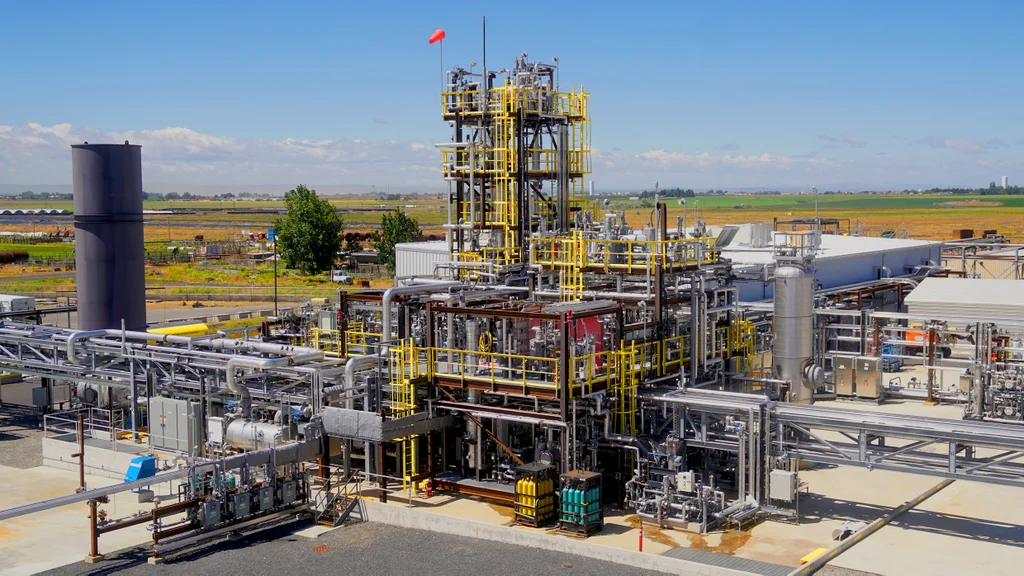
AirPlant One: A Milestone in Carbon Conversion
A sprawling new facility near farm fields in Washington State marks a turning point in the quest for sustainable aviation fuel. AirPlant One, officially opened today by startup Twelve, is now converting captured carbon dioxide into jet fuel at commercial scale. The plant represents over a decade of development and is poised to deliver fuel for passenger flights later this month.
How It Works: From CO2 to Jet Fuel
The process begins with a large tank of CO2 sourced from an ethanol plant, where the pollution is captured and fed into the system. Using renewable electricity, the CO2 is converted into syngas, then transformed into synthetic crude, and finally refined into a product Twelve brands as E-Jet sustainable aviation fuel. “You have a CO2 molecule going in at one end of the plant, and it is getting transformed into on-spec jet fuel on the other side,” says CEO and cofounder Nicolas Flanders.

Chemically Identical, but with a Blend Requirement
The resulting fuel is chemically identical to conventional jet fuel. However, current aircraft require a blend with petroleum-based fuel because conventional fuel contains aromatics—molecules that influenced the design of rubber seals in fuel systems. “A perfect kerosene, like we’re making, doesn’t include some of those impurities like aromatics,” Flanders explains. Newer aircraft have updated seals that can run on 100% CO2-based fuel, but the FAA currently allows up to a 50% blend. For now, the fuel serves as a drop-in replacement requiring no modifications to existing planes.
Emissions Reduction and Ramp-Up
Twelve’s E-Jet fuel is designed to have up to 90% lower emissions than conventional jet fuel. During the initial ramp-up, emissions are temporarily higher as the company fine-tunes certain steps in the process. Once Twelve hits its carbon intensity targets, Alaska Airlines—an investor and key partner—will begin using the fuel in its flights. The first batches are already being delivered to airlines for commercial use.

Diversifying Sustainable Aviation Fuel Sources
Alaska Airlines already purchases sustainable aviation fuel (SAF) made from waste oils and fats, such as used cooking oil. However, there are limits to how much can be produced from those sources. “At a certain point, you run out of those fats, oils and greases,” says Ryan Spies, Alaska’s sustainability director. The partnership with Twelve allows the airline to diversify its SAF options and scale up its use of lower-carbon fuels.
Implications for the Aviation Industry
The commercialization of CO2-to-jet fuel technology could significantly impact the aviation industry’s efforts to decarbonize. With air travel demand growing, sustainable aviation fuels are seen as a key lever to reduce emissions. Twelve’s process, powered by renewable electricity, offers a pathway to produce fuel without competing with food crops or limited waste feedstocks. As production scales and costs decline, such fuels could become a mainstream solution.

Looking Ahead
AirPlant One is just the beginning. Twelve plans to expand its technology to other locations, and the success of this facility will inform future projects. The aviation industry will be watching closely as Alaska Airlines begins using E-Jet fuel in commercial flights, demonstrating the viability of carbon-neutral jet fuel at scale.
This article is based on reporting by Fast Company. Read the original article.
Originally published on fastcompany.com


