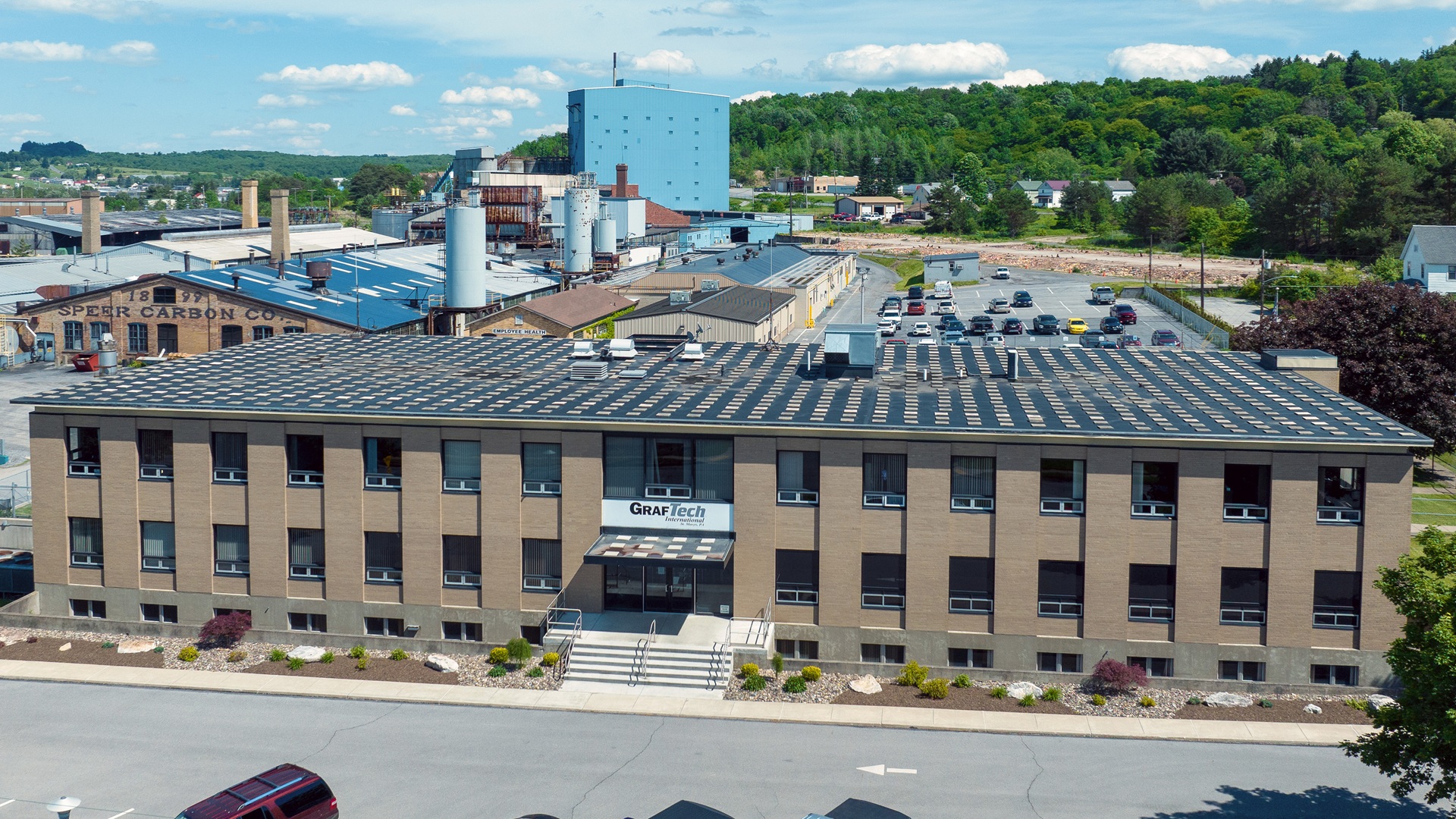
GrafTech International, a major manufacturer of carbon and graphite products, is teaming up with a thermal energy storage developer on carbon-based thermal batteries intended to supply round-the-clock, low-cost energy to American industry. The effort, reported by Interesting Engineering, places one of the established names in graphite manufacturing at the center of a storage category that is drawing growing attention as an alternative to conventional batteries for heavy industrial loads.
The premise is straightforward even if the engineering is not: rather than storing energy in chemical reactions the way lithium-ion cells do, a thermal battery stores it as heat inside a solid medium — in this case, carbon — and releases that heat when a factory needs it. For the many industrial processes that run on high-temperature heat rather than electricity alone, that approach maps directly onto the way plants actually consume energy.
Why Industrial Heat Is the Hard Problem
Heavy industry is one of the most stubborn sectors to decarbonize because so much of what it does depends on heat rather than mechanical or electrical work. Smelting, calcining, drying, curing, refining and chemical processing all demand sustained high temperatures, and the equipment that delivers those temperatures has historically been designed around combustion.
That creates two problems at once. The first is emissions: process heat from fossil fuels is a major share of industrial energy use and, by extension, of industrial carbon output. The second is economics. Replacing a gas-fired furnace with a system that runs on volatile wholesale electricity prices introduces a new kind of financial risk, because the plant's cost structure now depends on when it chooses to draw power.
Thermal batteries are positioned as a way of breaking that link. If a facility can absorb electricity when it is cheap and abundant — including during periods of high renewable output — and then discharge stored heat on demand, it can keep running continuously without paying premium prices for power. That is the round-the-clock value proposition GrafTech and its partner are pursuing.

What a Carbon-Based Thermal Battery Does
A thermal battery in this design takes electrical input and converts it into heat inside a storage medium. The heat is held in an insulated mass until the process needs it, at which point it is delivered as high-temperature thermal energy. Nothing about the sequence relies on the intermittent availability of a fuel delivery schedule; the constraint becomes how much energy the storage block can hold and how efficiently it can be recovered.
Several characteristics make carbon an attractive material for that role:
- High-temperature tolerance. Carbon and graphite materials are used in industrial settings precisely because they withstand extreme heat without losing structural integrity.
- Thermal performance. Graphite conducts heat effectively, which matters both for charging the storage medium and for extracting heat at a controlled rate.
- Established supply chains. Carbon and graphite are already produced at industrial scale for electrodes, furnace linings and other demanding applications.
- Cost profile. The economics of a storage medium depend heavily on the raw material being cheap enough to deploy in bulk rather than in small, precision-engineered quantities.
Those are the properties that make carbon-based storage a plausible answer to a problem that battery chemistry alone has struggled to solve economically at industrial scale.

The GrafTech and Antora Pairing
GrafTech's role in the collaboration is grounded in manufacturing. The company makes carbon and graphite products at scale, which means it brings material production and industrial processing expertise rather than storage-software or power-electronics specialisms. Its partner, the thermal energy storage company Antora, works on converting electricity into stored heat and delivering it back to industrial customers.
That division of labor is telling. Thermal storage for heavy industry is as much a materials and manufacturing challenge as it is an energy-technology challenge. Building storage that can sit inside a working plant, survive years of thermal cycling, and be produced in quantities large enough to matter requires the kind of heavy-industrial supply base GrafTech already operates.
The pairing also signals where the developers believe the market is heading: not toward consumer electronics or passenger vehicles, but toward the industrial customers whose energy demand is large, continuous and expensive to decarbonize.

Round-the-Clock Energy as the Selling Point
The phrase "round-the-clock" carries a specific meaning in this context. Industrial facilities do not stop when the sun goes down or when wind generation dips. A storage system that only shifts energy across a few hours does not solve their problem. What industry needs is a way to buy energy when it is cheapest and still operate continuously.
Thermal batteries address that by decoupling the moment of purchase from the moment of use. Electricity can be drawn during low-price windows, converted to heat, and held until the process requires it. For plant operators, the result is a more predictable cost base and a route to using lower-carbon electricity without redesigning the entire production line.
There is also a grid-level argument. Large industrial loads that can absorb power flexibly are useful to a system with growing amounts of variable renewable generation, because they can consume electricity when supply is plentiful instead of adding strain during peak hours. Thermal storage effectively turns a factory into a flexible asset rather than a rigid one.
What to Watch
The collaboration is a development to follow rather than a finished deployment story. How the technology performs will depend on several factors that become clearer as projects move forward:
- Cost per unit of stored heat. Thermal storage only displaces fossil-fueled process heat if the delivered cost is competitive.
- Integration with existing plants. Retrofitting storage into working industrial sites is an engineering problem distinct from building it in a laboratory.
- Material durability. Long service life under repeated high-temperature cycling determines whether the economics hold over decades.
- Manufacturing scale. Carbon and graphite production capacity will shape how quickly the technology can be deployed.
For GrafTech, the initiative extends a materials business into the energy transition, where graphite and carbon expertise has value beyond traditional industrial customers. For US industry, it represents one more attempt to make cheap, continuous, lower-carbon heat a practical option rather than a long-term aspiration. The underlying bet is simple: if heat can be stored as cheaply as it can be generated, the timing of electricity prices stops dictating when American factories can run.
This article is based on reporting by Interesting Engineering. Read the original article.

Originally published on interestingengineering.com


