Earbuds as productivity hardware
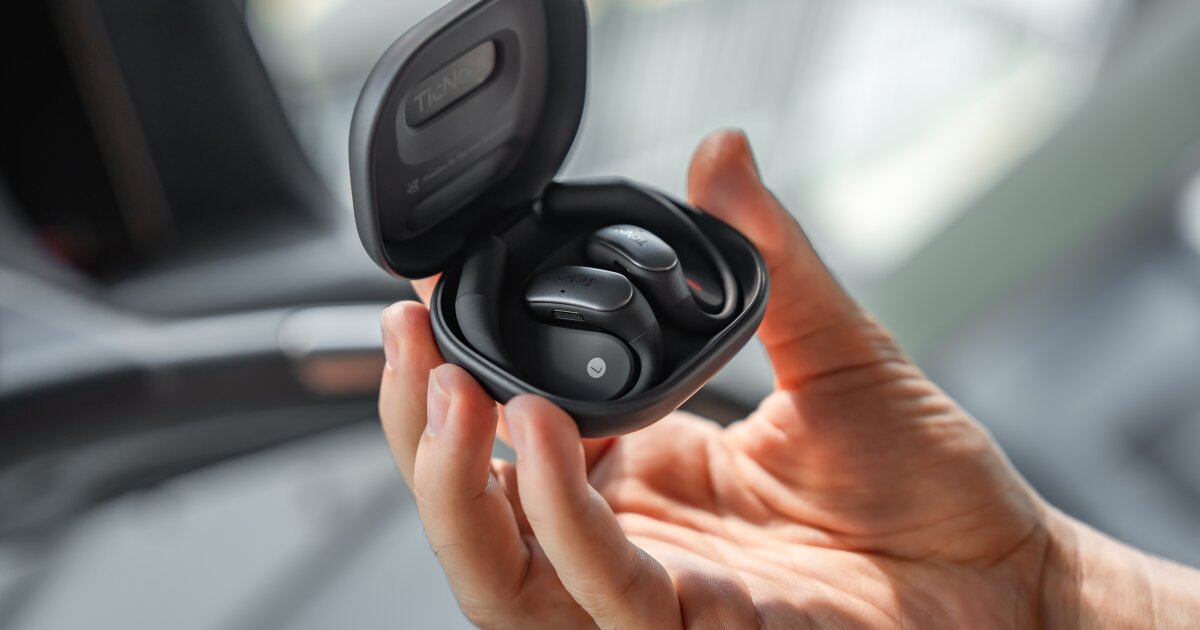
Mobvoi has launched a new product that tries to move wireless earbuds beyond audio playback and calls. Its TicNote Pods combine earbuds, 4G connectivity, onboard recording, and AI transcription with the goal of turning everyday conversations into searchable notes, summaries, tasks, and documents.
The pitch is narrow but clear: these are not just earbuds with an assistant bolted on. Mobvoi describes them as 4G-connected AI note-taking earbuds, emphasizing that they are designed for more standalone use than the usual phone-dependent headset. In a crowded wearables market, that distinction matters because it frames the device less as an accessory and more as a lightweight capture tool for work and study.
What the device is trying to do
The TicNote Pods are aimed at situations where information is easy to miss or hard to reconstruct later, including meetings, lectures, interviews, and ad hoc conversations. According to the source material, the system can record spoken exchanges, transcribe them, and organize the results into searchable notes and follow-up items. The charging case is part of that workflow rather than just a battery pack: it supports recording, storage, connectivity, and cloud-linked note capture.
That design choice is important. Many transcription tools rely on a phone app or laptop session. Mobvoi appears to be pushing toward a form factor that can begin capturing in-person speech with less setup, including a case mode that can record meetings from several meters away for later transcription and analysis.

Why 4G matters here
The 4G connection is the product’s clearest differentiator. Wireless earbuds already support voice assistants, calls, and health features, but they usually remain dependent on a paired smartphone. By adding cellular connectivity, Mobvoi is trying to reduce that dependency and make cloud synchronization and AI processing feel more immediate.
If the concept works in practice, it could make wearable note capture more useful in scenarios where taking out a phone would be awkward or disruptive. A lecture, a hallway conversation, or an impromptu interview all become easier to log if the recording device is already in the user’s ears or in a nearby case.
That said, the product’s value will likely depend less on the raw transcription feature than on how well it converts messy speech into organized output. Users already have access to many AI note tools. The question is whether Mobvoi’s hardware form factor reduces enough friction to change behavior.
The broader wearable shift
The launch fits a broader pattern in consumer technology: hardware makers are searching for AI features that feel native to a device rather than merely attached to it. In this case, the most plausible use case is not entertainment. It is memory support and information capture.
That opens an interesting path for wearables. Earbuds are socially normalized, small, and always nearby. If they can reliably handle recording, indexing, and task extraction, they could become one of the more practical categories for ambient AI. Unlike smart glasses, they do not require a visible camera. Unlike phones, they can remain unobtrusive during a conversation. Unlike laptops, they are available the moment speech happens.
Mobvoi is not creating the note-taking category from scratch, and the company itself acknowledges that AI note devices and applications already exist. What it is attempting is a tighter integration of capture hardware, connectivity, and cloud processing.

Limits and real-world questions
For all the appeal of the concept, real-world adoption will hinge on execution. Recording quality at distance, transcription accuracy in noisy rooms, battery reliability, privacy expectations, and the quality of the generated summaries will all matter more than the novelty of the form factor.
Battery claims in the source material point to up to five hours of continuous recording, extending to around 25 hours with the case, or roughly 40 hours for audio playback. Those figures sound adequate for targeted professional use, but actual workflows often involve interruptions, uploads, and inconsistent network conditions that can erode ideal lab numbers.
There is also the social side. Devices built to record conversations, especially from several meters away, can raise consent and privacy concerns depending on local laws and workplace norms. That is not unique to Mobvoi’s product, but it is more central here than it is for ordinary earbuds because recording is the core use case rather than a side feature.
A test case for purpose-built AI hardware
The TicNote Pods may not redefine wearables on their own, but they are a useful test of where AI hardware is heading. Instead of trying to be a general assistant for everything, the product focuses on one recurring problem: spoken information disappears quickly, and people are bad at capturing it consistently.
If Mobvoi can make transcription and organization feel reliable enough, the device could appeal to students, journalists, researchers, consultants, and managers who live in meetings. If not, it risks joining the long list of AI gadgets that sound compelling in product copy but struggle to beat a phone app.
Either way, the launch is a meaningful signal. Hardware companies are no longer just sprinkling AI into familiar categories. They are starting to redesign categories around specific AI workflows. In Mobvoi’s case, that workflow is listening, transcribing, indexing, and turning conversation into action. That is a more serious ambition than making earbuds slightly smarter, and it makes this launch worth watching.
This article is based on reporting by New Atlas. Read the original article.

Originally published on newatlas.com