From writing aid to thinking aid to discussion filter
Generative AI has already reshaped how students draft papers, summarize readings, and prepare assignments. A newer concern is emerging inside classrooms themselves: students may be outsourcing not just writing, but the early stages of thinking that make discussion vibrant, original, and unpredictable.
A report cited by Futurism, drawing on interviews published by CNN and a recent academic paper, describes a pattern that many instructors and students will find familiar. Rather than arriving in seminars with independently formed interpretations, some students are feeding readings and live prompts into AI tools, then recycling the output in class. The result, according to students quoted in the reporting, is a more homogenized style of participation in which contributions sound increasingly alike.
That concern matters because classroom discussion is not a side activity. In many college courses, especially seminars, it is one of the main ways students test arguments, encounter disagreement, and learn to refine their own views in real time. If AI systems become the primary intermediary between a student and the material, the damage may not show up only in written work. It may also appear in the thinning of live intellectual exchange.
Students describe a narrowing range of voices
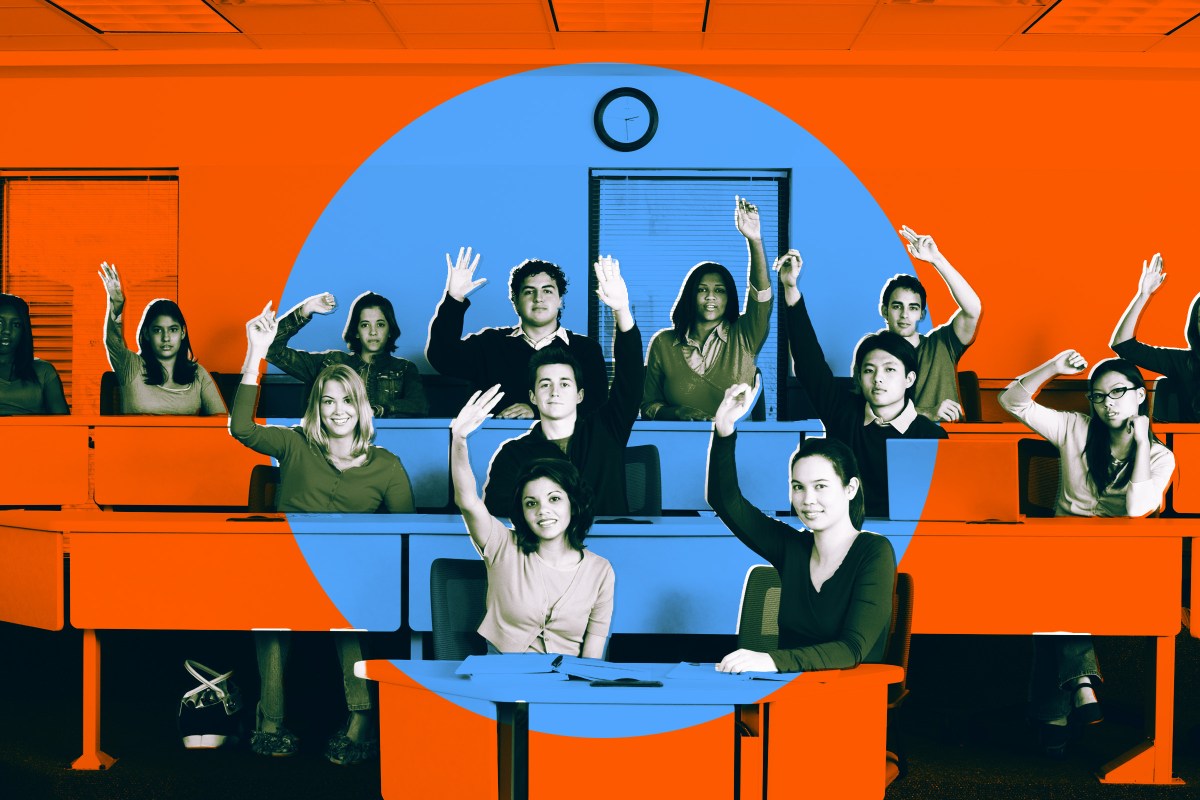
One Yale student identified as Amanda told CNN that seminar discussions have become flatter and more predictable as peers rely on AI to process course material. She described an incident in which, during an awkward silence after a professor’s question, another student appeared to be rapidly asking an AI system the same question instead of answering from their own reading and reflection.
Her description of the broader atmosphere was more striking than the anecdote itself. She said that classmates increasingly sound similar to one another, in contrast with earlier college discussions where students approached readings from different angles and added distinct forms of commentary. Another Yale student, Jessica, told CNN that at the start of class she could see many students uploading PDFs into AI systems.
Those accounts do not prove that all classroom participation is now AI-generated, nor do they quantify how widespread the behavior is. But they do identify a plausible shift in how students prepare to speak. AI is no longer just something consulted the night before class. It is also being used in the moment, turning spontaneous discussion into a kind of assisted performance.
Why sameness is the real warning sign
Much of the public debate about AI in education has focused on cheating, plagiarism, and grading integrity. Those issues are real, but the classroom accounts point to a subtler risk: the loss of cognitive diversity.
When students rely on large language models to frame arguments, summarize themes, and suggest interpretations, they are drawing from systems designed to produce plausible, generalized responses. That can be useful for brainstorming or clarification. But if many students use similar prompts against similar models, the outputs are likely to converge on the same language, same framing, and same familiar insights.
The consequence is not only weaker originality in written assignments. It is a classroom in which the range of thought narrows before the conversation even begins. Instead of disagreement sharpening ideas, students may be repeating a polished average of prior internet and training-data patterns.
That kind of flattening is especially concerning in disciplines that depend on ambiguity, interpretation, and contested readings. Seminar culture works because different people bring different assumptions, backgrounds, and analytical instincts to the same text. If AI becomes the first-pass interpreter for everyone, the discussion can become more efficient while also becoming less alive.
Researchers are beginning to frame the problem more directly
Futurism points to a recent paper in Trends in Cognitive Sciences arguing that large language models can dull how users approach issues, use language, and reason through problems. The article says the authors describe a trade in which people hand off parts of their own thinking to model output, replacing individual cognitive effort with a synthesized response derived from training data.
Morteza Dehghani, a professor of psychology and computer science at the University of Southern California and a co-author of the paper, told CNN that the implications are “quite scary” if people lose cognitive diversity or slide into intellectual laziness. That warning is not a claim that AI use inevitably harms learning. It is a claim that the mode of use matters.
Tools that help students understand difficult material may support education. Tools used as substitutes for interpretation, uncertainty, and verbal risk-taking may undermine it. The distinction is important because higher education is not only about obtaining correct answers. It is also about learning how to form judgments under conditions where answers are incomplete, debatable, or evolving.
The educational risk is larger than any one classroom
If this pattern spreads, the effect could extend well beyond seminars. Universities are one of the main places where people learn to defend claims, absorb criticism, and hear unfamiliar perspectives. Those habits matter later in workplaces, public debate, and civic life. A generation trained to outsource first-draft reasoning may become more fluent in polished language while becoming less confident in independent analysis.
That does not mean AI has no role in education. It likely does, and institutions will keep experimenting with where it helps. But the accounts in this reporting suggest that the most important educational questions are shifting. The issue is no longer simply whether students use AI. The issue is what kinds of thinking they stop practicing when they do.
Instructors may need to respond by redesigning discussion-based courses around methods that are harder to automate in real time: oral defenses, close reading with follow-up questions, comparative interpretation, and activities that require students to show how they arrived at a view rather than merely stating one. The goal would not be to exclude technology from classrooms altogether, but to preserve the part of education that depends on human variation.
An early signal of a broader cultural adjustment
The reports from Yale students and the concerns raised by researchers should be understood as an early warning rather than a settled verdict. The evidence here is suggestive, not comprehensive. Still, it captures something meaningful about how generative AI changes institutions: it does not only automate tasks, it can standardize habits of mind.
That may be one of the central cultural questions of the AI era. A tool that makes expression easier can also make expression more uniform. In education, that tradeoff is especially dangerous because the value of learning often lies in the struggle before the answer, not just in the answer itself.
If classrooms begin to sound more alike, the problem may not be that students have become less articulate. It may be that too many of them are speaking in the voice of the same machine.
This article is based on reporting by Futurism. Read the original article.
Originally published on futurism.com