उपग्रह तस्वीरें एक हिंसक भू-दृश्य परिवर्तन को पकड़ती हैं
NASA के Earth Observatory से प्राप्त नई तस्वीरें दिखाती हैं कि एक अस्थिर भू-भाग कितनी तेजी से रूपांतरित हो सकता है। घटना से पहले और बाद के Landsat 8 और Landsat 9 अवलोकनों का उपयोग करते हुए, NASA ने 10 अगस्त, 2025 के भूस्खलन और सूनामी के बाद की स्थिति को अलास्का के दक्षिण-पूर्वी हिस्से में स्थित एक हिमानी फियोर्ड, ट्रेसी आर्म, में दर्ज किया। ये तस्वीरें सिर्फ पहाड़ी ढलान पर एक नाटकीय निशान नहीं दिखातीं। वे एक ऐसे फियोर्ड-व्यापी व्यवधान को उजागर करती हैं, जिसने लाखों घन मीटर चट्टान के पानी में गिरने के बाद तटरेखाओं और द्वीपों से वनस्पति को उखाड़ दिया।
यह घटना साउथ सॉयर ग्लेशियर के तेज़ पीछे हटने के बाद शुरू हुई, जो एक व्यापक पैटर्न का हिस्सा है जिसमें सिकुड़ती बर्फ आसपास के भू-भाग के संतुलन को बदल सकती है। दिए गए स्रोत पाठ के अनुसार, कम से कम 64 मिलियन घन मीटर चट्टान फियोर्ड में ढलान से नीचे खिसकी। इस प्रभाव से एक सूनामी उत्पन्न हुई, जिसने फियोर्ड की विपरीत दीवार पर 1,578 फीट, यानी 481 मीटर, तक ऊँचाई पर पेड़ों और अन्य वनस्पति को उखाड़ दिया। केवल यह रनअप ऊँचाई ही स्पष्ट कर देती है कि यह कोई स्थानीय छींटा या तटीय व्यवधान नहीं था। यह एक बड़ा भू-आकृतिक घटना थी।
तस्वीरें क्या दिखाती हैं
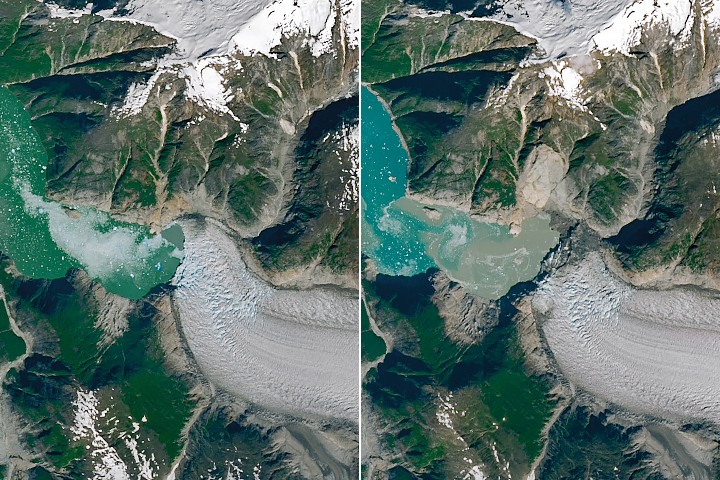
NASA ने 26 जुलाई, 2025 और 19 अगस्त, 2025 को ली गई तस्वीरों की तुलना की, जिससे आपदा को केवल कुछ हफ्तों के अंतराल में देखा गया। पहले दृश्य में, फियोर्ड के किनारे घनी वनस्पति से ढके दिखाई देते हैं। बाद की तस्वीर में, फियोर्ड के उत्तर की ओर एक चमकीला भूस्खलन निशान कटता हुआ दिखता है, जबकि एक चौड़ा साफ़ हुआ भू-भाग का घेरा उस स्थान को चिह्नित करता है जहाँ परिणामी लहर ने वनावरण को समतल कर दिया था। कक्षा से भी यह अंतर असामान्य रूप से स्पष्ट दिखता है।
दिए गए पाठ में भू-आकृतिविज्ञानी डैन शुगर को यह परिणाम फियोर्ड के चारों ओर एक तरह की बाथटब रिंग के रूप में वर्णित करते हुए उद्धृत किया गया है, एक वाक्यांश जो क्षति की दृश्य स्पष्टता को पकड़ता है। सबसे महत्वपूर्ण विवरणों में से एक Sawyer Island से संबंधित है, जो भूस्खलन के स्रोत से लगभग 6 मील दूर है। तस्वीरों में यह द्वीप हरे से भूरे रंग में बदल गया, जिससे संकेत मिलता है कि सूनामी का विनाशकारी प्रभाव तुरंत प्रभावित क्षेत्र से कहीं आगे तक फैल गया था। अधिक ऊँचाई पर केवल कुछ ही पेड़ खड़े रह गए थे।
ये अवलोकन महत्वपूर्ण हैं क्योंकि फियोर्ड लहर ऊर्जा को ऐसे तरीके से केंद्रित कर सकते हैं जो भूस्खलन-जनित सूनामियों को विशेष रूप से खतरनाक बनाते हैं। आसपास की दीवारें खड़ी होती हैं, पानी सीमित होता है, और अस्थिर ढलानों तथा संवेदनशील तटरेखाओं के बीच की दूरी कम हो सकती है। दूरस्थ क्षेत्रों में भी, परिणाम भू-दृश्य के भीतर तेज़ी और हिंसा के साथ फैल सकते हैं।
ग्लेशियर का पीछे हटना खतरे का नक्शा क्यों बदलता है
ट्रेसी आर्म की घटना केवल एक भूस्खलन की कहानी नहीं है। यह यह भी दर्शाती है कि ग्लेशियर का पीछे हटना पर्वतीय स्थिरता के तंत्र को कैसे बदल सकता है। ग्लेशियर लंबे समय में घाटियों को काटते हैं, और स्वयं बर्फ आस-पास की ढलानों को सहारा दे सकती है। जैसे-जैसे ग्लेशियर पतले होते हैं और पीछे हटते हैं, वे ढलानें अपना सहारा खो सकती हैं, जबकि नया उजागर हुआ भू-भाग तेज़ी से समायोजित होता है। टूटी हुई चट्टान, पिघला पानी, जमने-पिघलने की प्रक्रियाएँ, और खड़ी स्थलाकृति मिलकर ऐसी विफलता स्थितियाँ बना सकते हैं जो पहले की बर्फीली संरचनाओं में कम संभावित थीं।
दिए गए स्रोत पाठ में विशेष रूप से ट्रेसी आर्म के भूस्खलन को साउथ सॉयर ग्लेशियर के तेज़ पीछे हटने से जोड़ा गया है। यह संबंध महत्वपूर्ण है क्योंकि यह एक स्पष्ट खतरे को क्रायोस्फेरिक भू-दृश्यों में चल रहे भौतिक परिवर्तन से जोड़ता है। जब ग्लेशियर पीछे हटते हैं, तो खतरा केवल समुद्र-स्तर के प्रभावों या मीठे पानी में बदलाव तक सीमित नहीं रहता। यह अचानक भू-भाग धंसने, मलबे की आवाजाही, और झीलों तथा फियोर्डों में लहर उत्पन्न होने के रूप में भी सामने आ सकता है।
उच्च अक्षांशों और ऊँचे पर्वतीय क्षेत्रों में शोधकर्ता और खतरा प्रबंधक इस प्रकार की घटनाओं पर अधिक ध्यान दे रहे हैं। इस प्रयास में रिमोट सेंसिंग केंद्रीय है क्योंकि इनमें से कई भू-दृश्य जमीन पर निरंतर निगरानी के लिए कठिन हैं। उपग्रह तस्वीरें ढलान विकृति, वनस्पति हानि, तटरेखा परिवर्तन, और अन्य संकेतों को उजागर कर सकती हैं जो यह पुनर्निर्माण करने में मदद करते हैं कि क्या हुआ और आगे कहाँ इसी तरह की विफलताएँ हो सकती हैं।
पहले और बाद की पृथ्वी-अवलोकन तस्वीरों का महत्व
यह मामला इसलिए अलग दिखता है क्योंकि उपग्रह चित्रण बदलाव के पैमाने को कितनी स्पष्टता से संप्रेषित करता है। यह एक बात है पढ़ना कि एक भूस्खलन फियोर्ड में गिरा और सूनामी पैदा की। यह दूसरी बात है कि कुछ ही दिनों में विपरीत ढलानों और पास के द्वीपों से वन का एक पूरा पट्टा हटते हुए देखना। पृथ्वी-अवलोकन एक भूवैज्ञानिक विवरण को मापनीय साक्ष्य में बदल देता है।
यही एक कारण है कि NASA के Earth Observatory की तस्वीरें सार्वजनिक संचार से परे भी महत्वपूर्ण हैं। पहले और बाद का डेटा रनअप ऊँचाई, प्रभावित क्षेत्र, तलछट की आवाजाही, वनस्पति हानि, और घटना के बाद की पुनर्प्राप्ति के वैज्ञानिक विश्लेषण में सहायता कर सकता है। यह हिमानी भू-दृश्यों में भविष्य के जोखिम आकलन के लिए एक आधार भी बनाता है, जहाँ बर्फ के पीछे हटने के साथ अस्थिरता बढ़ सकती है।
ट्रेसी आर्म जैसी घटनाएँ वैश्विक जलवायु चर्चाओं में आसानी से छूट सकती हैं, क्योंकि वे दूरस्थ स्थानों में होती हैं और हमेशा तुरंत शहरी हताहत नहीं पैदा करतीं। लेकिन खतरे के दृष्टिकोण से, वे यह याद दिलाती हैं कि जलवायु-संबंधित भू-दृश्य परिवर्तन हमेशा क्रमिक नहीं होता। कभी-कभी यह एक सीमा-घटना के रूप में सामने आता है: अस्थिरता का लंबा संचय, उसके बाद अचानक और अत्यधिक विनाशकारी मुक्ति।
एक दूरस्थ फियोर्ड से व्यापक चेतावनी
सूनामी के बाद का ट्रेसी आर्म भू-दृश्य पर्यावरणीय परिवर्तन की एक श्रृंखलाबद्ध प्रक्रिया का उदाहरण है। ग्लेशियर के पीछे हटने से स्थानीय परिस्थितियाँ बदलीं। चट्टान का एक बड़ा द्रव्यमान विफल हुआ। प्रभाव ने एक सूनामी उत्पन्न की। उस लहर ने सामान्य तटरेखाओं से बहुत ऊपर और फियोर्ड के कई स्थानों पर वनस्पति को उखाड़ दिया। केवल कुछ मिनटों में, सहस्राब्दियों में आकार लिया हुआ भू-भाग स्पष्ट रूप से फिर से लिख दिया गया।
दक्षिण-पूर्वी अलास्का की दूरस्थता को इस सबक को दूर का महसूस नहीं कराना चाहिए। दुनिया भर में अवसंरचना, पर्यटन, शिपिंग, अनुसंधान संचालन, और स्थानीय समुदाय बदलते हुए पर्वतीय और हिमानी भू-भाग से जुड़ते हैं। असली चुनौती केवल इन परिवर्तनों को बाद में दर्ज करना नहीं है, बल्कि यह अनुमान लगाना है कि पीछे हटती बर्फ कहाँ नई विफलताओं की भूमिका तैयार कर रही है।
NASA की तस्वीरें ट्रेसी आर्म में भविष्य के जोखिम के बारे में हर सवाल का जवाब नहीं देतीं। लेकिन वे इस बात का असामान्य रूप से स्पष्ट प्रमाण देती हैं कि बर्फ की कमी, खड़ी स्थलाकृति, और पानी के परस्पर प्रभाव से ये वातावरण कितने गतिशील हो सकते हैं। यह घटना बताती है कि निरंतर उपग्रह निगरानी क्यों महत्वपूर्ण है: तेज़ी से बदलते भू-दृश्यों में, अगला खतरा जमीन पर किसी के देखने से पहले ही आकार ले चुका हो सकता है।
यह लेख science.nasa.gov की रिपोर्टिंग पर आधारित है। मूल लेख पढ़ें.
Originally published on science.nasa.gov